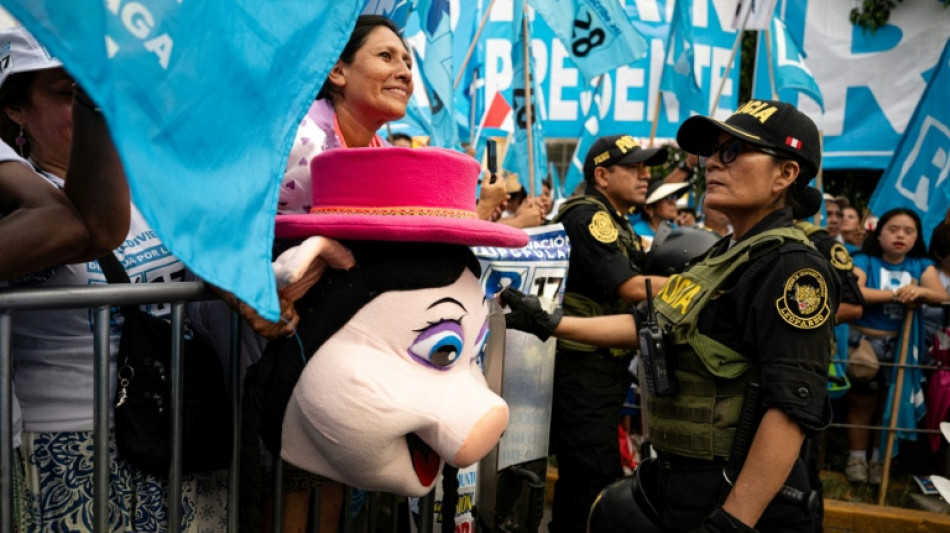
Peru's crowded presidential race zeroes in on organized crime / Photo: Ernesto BENAVIDES - AFP

 As Canada takes on US tariffs, what's behind the David and Goliath fight?

 UEFA 'likely' to drop threat to boycott FIFA tournaments: source

 US disrupts platforms allegedly used by Chinese hackers

 The foreign tourists missing in Nepal's flash floods

 Hundreds missing after Nepal-Tibet flood kills 98

 CIA director was on 'semi-routine' mission in Moscow: Trump
 Aldeguer switches to Rossi's VR46 for next season

 Rent TRON Energy and Reduce USDT Fees : TronBid Expands Marketplace

 Pakistan captain Babar Azam returns against England '90 percent fit'

 Stocks mixed as oil drops, inflation stays high

 Improving standards transform pole vault as spectacle, says Duplantis

 India close in on win despite Sri Lanka fightback in second Test
 MEXC TradFi Gala Concludes With Over 170,000 Registrations and $4.3 Billion in Daily Trading Volume

 Olympic skating champion Liu to skip new season

 Benfica sign midfielder Palhinha from Bayern

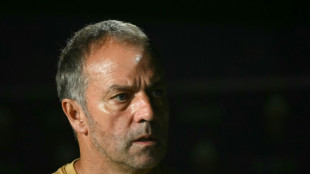 Flick says Barca may go without striker as Atletico resist Alvarez sale

 Too hot to incubate: Nile crocodiles hatch on their own in French reserve

 Spurs closing in on Man City's Marmoush after signing Savio

 Celtic count the cost of Champions League flop

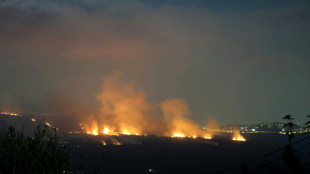 Lebanon accuses Israel of burning forest, farmland in south

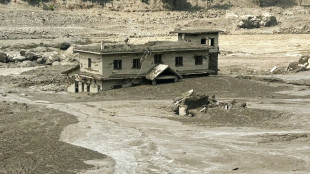 Nepal floods at China border kill 8, cause 'major casualties' in Tibet

 France eases cow diets as cheesemakers sweat
 America unites in mourning for Dolly Parton

 Meta and US states discuss settlement in landmark social media trial: report

 Fire haze threatens health of millions in Indonesia, ministry warns

For the 35 candidates vying to be Peru's next president, the question of how to beat back organized crime could be what it takes to break out ahead of the pack.
The record number of presidential hopefuls aiming to become the South American country's ninth head of state in a decade are campaigning amid a growing security crisis.
Homicides in Peru rose from about 1,000 in 2018 to more than 2,600 last year, and reported extortions surged from 3,200 to over 26,500 during the period, according to police data.
The rising crime rates coincide with the growing presence of international criminal groups, who compete with local gangs in extortion rackets and contract killings amid a perceived climate of impunity.
"Even the police are corrupt," Karen Santiago, a 29-year-old engineer, told AFP.
Over 27 million voters will be able to cast a ballot for president on April 12, along with choosing 130 deputies and 60 senators.
If no presidential candidate wins 50 percent of the vote, a runoff election in June will pit the top two candidates against each other.
- Viper security guards -
Far-right candidate Rafael Lopez Aliaga, who leads in opinion polls, has suggested building penal colonies in the Peruvian rainforest using "a natural fence made of shushupes" -- otherwise known as South American bushmaster pit vipers.
"They will take care of security," he told Latina Television.
A former mayor of Lima and a supporter of US President Donald Trump, Lopez Aliaga also supports having US forces capture wanted criminals on Peruvian soil.
Second-place candidate Keiko Fujimori, daughter of Peru's former president Alberto Fujimori from 1990 to 2000, said she wanted detained criminals to earn their sustenance while incarcerated.
"We will force prisoners to work for their food, for their protein," she told the press.
Carlos Alvarez, a comedian and TV presenter who is polling among the top five candidates, said he believed Peru must withdraw from the American Convention on Human Rights in order to "apply the death penalty to hitmen."
"Those wretches don't deserve to live," he told AFP during a tour of the port of Callao, near the capital Lima.
Candidates further behind in the polls have put forth more extreme ideas to distinguish themselves, like Paul Jaimes, who suggests rewards of $29,000 and a promotion to police officers who capture or kill criminals.
Left-wing candidate Ronald Atencio, meanwhile, has revived the memory of paramilitary groups in Peru.
"We are going to form an annihilation squad against crime" with 500 elite police officers, Atencio told a recent business forum, though he clarified they would not conduct "extrajudicial executions."
- 'The toughest sheriff' -
Public security experts have sounded the alarm over some of the campaign initiatives.
"The punitive proposals like the ones mentioned are not effective for combating organized, transnational crime," Erika Solis, a criminologist at the Catholic University of Peru, told AFP.
For Javier Llaque, the former head of Peru's National Penitentiary Institute, the solution is not "more laws" but rather "tougher sentences, changes to what already exists. We just have to act, but in a strategic manner."
"Candidates shouldn't try to be the toughest sheriff," he said.
A.Taylor--AT