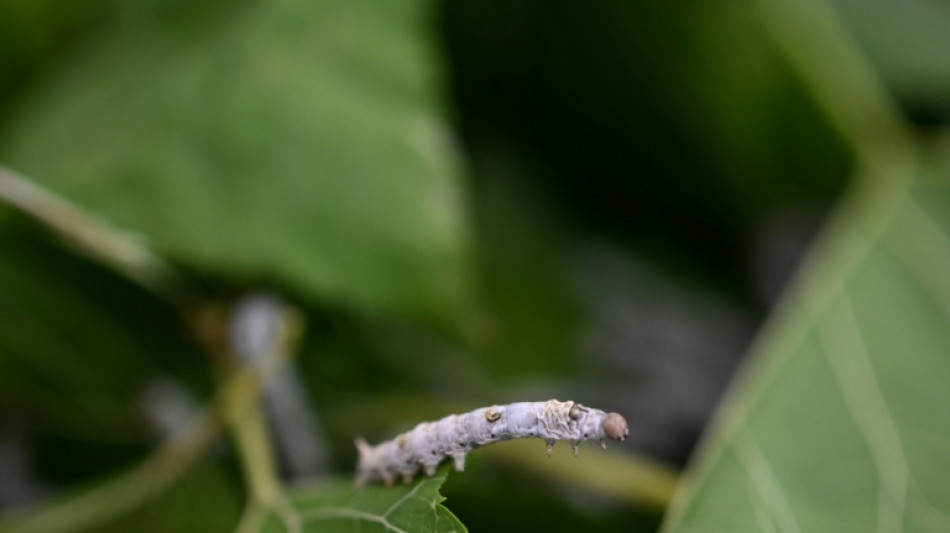
'Silk of peace' weaves new bonds in post-quake Turkey / Photo: Ozan KOSE - AFP

 Scheffler and Burns to face Im and Lee in Presidents Cup opener
 Crushing wins for Lyon and Barca in women's Champions League
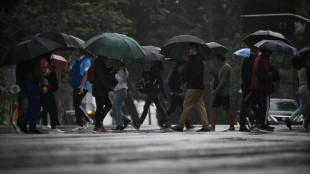 Rio breaks record for rainiest September amid powerful El Nino
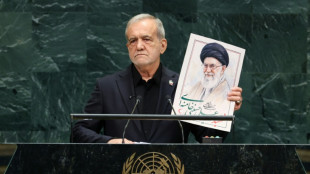
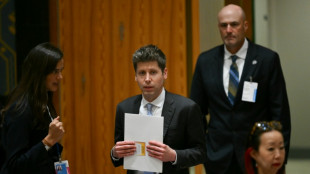 At UN, tech chiefs urge caution in AI development
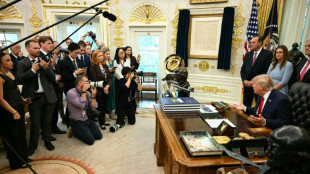
 Russian strikes kill seven in Ukraine, Zelensky vows winter campaign
 Venezuelan shot by ICE needs urgent medical care, mother tells AFP
 Zelensky says Putin using fighters from 47 countries in Ukraine war
 Klopp calls on Germany to 'rise above ourselves' as new era begins

 Russian strikes kill seven in Ukraine as Russia vows no 'pause' to war

 ArcPoint Expands Globally with Institutional Intelligence Platform for Modern Investors

 Ronaldo focussing on 'present' ahead of Wales test

 Outgoing UN chief makes final climate push at New York summit

 Grief and pain flow at hearing for Canadian suicide poison vendor
 Ireland boss Hallgrimsson says timing of Israel remarks 'not clever'
 Weinstein resentenced to 15 years in prison for 2006 sex assault

 Fendi brings disco bling, Italian style, to Milan Fashion Week

 French court confirms rape trial for PSG and Morocco star Hakimi
 President tells Trump that Iran will never 'bend at the knee'

 أليكس بودي والبروفيسور الدكتور شتيفان هاوبت يتفقان على التعاون من أجل مجموعة فنية أسطورية في رومانيا
 U2 at 50: Irish rockers reveal anniversary album
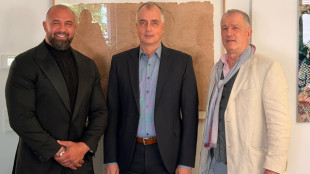
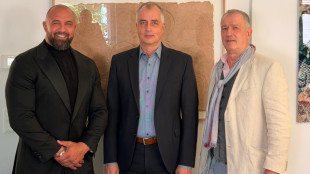 Алекс Боді та проф. д-р Стефан Гаупт домовилися про співпрацю щодо легендарної колекції мистецтва в Румунії
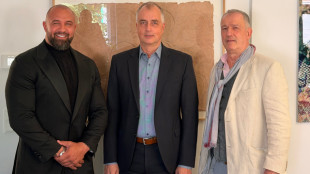
 Alex Bodi și prof. dr. Stefan Haupt încheie un acord de cooperare pentru o colecție de artă legendară în România
 Alex Bodi and Prof. Dr Stefan Haupt agree to collaborate on a legendary art collection in Romania

 Stocks dip, oil rises as traders eye chances of Iran deal

 Israel squeezing UN Palestinian refugee agency ahead of polls: chief
Nearly all the workers lost their houses, the accountant and vet disappeared along with their families, but after the deadly earthquake that devastated Turkey's Hatay province, "the silk of peace" is helping make new connections.
"I had to convince myself to start up again," admits Emel Duman, rolling between her fingers a small and incredibly fine ball of fibres.
The yellow cocoons, with which she spins and weaves natural silk, have been her life's project.
Duman's home was destroyed in the February disaster and she lives with her family in a silk cooperative workshop on the heights overlooking Antakya.
Following the quake, about 100 people who had lost everything crammed into the building for shelter.
They had survived but at least 50,000 people died in southern Turkey.
"Apart from the workshop, everything collapsed. It's difficult to start over," says the 57-year-old.
Seventy people had been employed by the Appollon cooperative, mostly women often working from home.
Only a handful have come back, including the designer who had already moved in to live.
When Duman had first started the business 25 years before, Hatay -- on one of the silk routes of antiquity -- had lost the refined production skills. Weaving continued but with white cocoons imported from China.
- Yellow cocoon -
Hatay's special cocoon is yellowish and Duman obsessively tracked down the last place breeding the bombyx mori domestic silk moth around the city of Antakya.
Her husband, Fikret, says she talks to the insects.
"It's like with plant species, you have to fight against the loss of biodiversity," she says.
On dry and rocky land Fikret and Emel planted their first mulberry bushes, fragile plants which need watering day and night. The couple had water brought in by truck until a well was sunk.
Today, the 15,000 bushes nourish thousands of white worms, kept in the shade on large wooden platforms. If you listen carefully, you can hear the worms munching the fresh mulberry leaves.
"It's an orchestral symphony, the most beautiful music in the world," says Fikret after spreading out more freshly-picked leaves.
Emel lets nature do its work. The silkworm egg hatches a caterpillar which eventually pierces a hole through the cocoon it has spun and flutters off as a moth.
Working with sericulture or silk production specialists from Hatay's Mustafa Kemal university and from Izmir, Duman heard of "the silk of peace", or ahimsa silk, an Indian term for silk produced without pain.
"Industrial (production) boils the cocoon to kill the worm," she explains.
At the cooperative each cocoon is stretched out to a thread of up to 1,700 metres of silk, says her 32-year-old daughter Tugce, who studied textiles and design.
"But all of it cannot be used because of the hole which damages the filament."
- Marriage trousseau -
Silk production gradually declined in Hatay after the end of the Ottoman Empire in the early 20th century.
Emel recalls how brides would traditionally receive a silk trousseau for their marriage.
She lost nephews and cousins to the quake that was "so strong I thought no one had survived" and was then caught up helping families who needed aid.
But Emel struggled on to kickstart silk production again.
She found her own help from The International Organization for Migration which sent Syrian refugees to work at Appollon.
Now Emel is seeking official recognition for the "peace silk of Hatay" and has filed for a protected designation of origin.
About 350,000 people worked in 3,000 clothing and textile businesses in the provinces hit by the February 6 earthquake.
Today, the numbers have been halved, according to the United Nations Development Programme (UNDP), which is running a campaign to recruit women.
A.Moore--AT