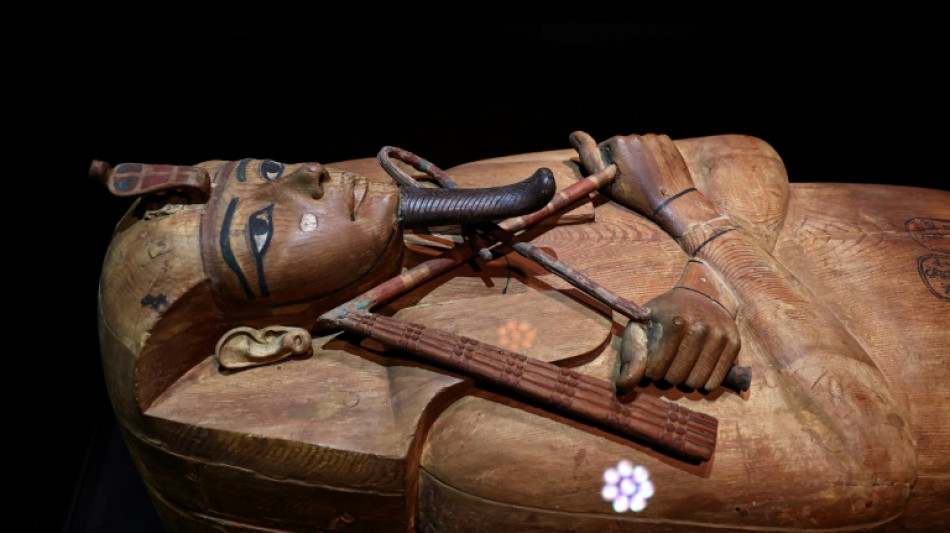
Ancient Egypt artists altered their work, study shows / Photo: Anne-Christine POUJOULAT - AFP

 Scheffler and Burns to face Im and Lee in Presidents Cup opener
 Crushing wins for Lyon and Barca in women's Champions League
 Rio breaks record for rainiest September amid powerful El Nino
 At UN, tech chiefs urge caution in AI development
 Russian strikes kill seven in Ukraine, Zelensky vows winter campaign
 Venezuelan shot by ICE needs urgent medical care, mother tells AFP

 Zelensky says Putin using fighters from 47 countries in Ukraine war
 Klopp calls on Germany to 'rise above ourselves' as new era begins

 Russian strikes kill seven in Ukraine as Russia vows no 'pause' to war

 ArcPoint Expands Globally with Institutional Intelligence Platform for Modern Investors

 Ronaldo focussing on 'present' ahead of Wales test

 Outgoing UN chief makes final climate push at New York summit

 Grief and pain flow at hearing for Canadian suicide poison vendor
 Ireland boss Hallgrimsson says timing of Israel remarks 'not clever'
 Weinstein resentenced to 15 years in prison for 2006 sex assault
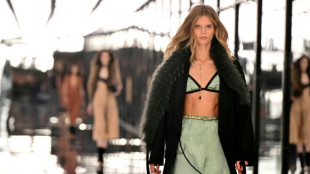 Fendi brings disco bling, Italian style, to Milan Fashion Week

 French court confirms rape trial for PSG and Morocco star Hakimi

 President tells Trump that Iran will never 'bend at the knee'

 أليكس بودي والبروفيسور الدكتور شتيفان هاوبت يتفقان على التعاون من أجل مجموعة فنية أسطورية في رومانيا
 U2 at 50: Irish rockers reveal anniversary album
 Алекс Боді та проф. д-р Стефан Гаупт домовилися про співпрацю щодо легендарної колекції мистецтва в Румунії
 Alex Bodi și prof. dr. Stefan Haupt încheie un acord de cooperare pentru o colecție de artă legendară în România
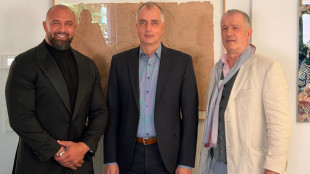
 Alex Bodi and Prof. Dr Stefan Haupt agree to collaborate on a legendary art collection in Romania

 Stocks dip, oil rises as traders eye chances of Iran deal

 Israel squeezing UN Palestinian refugee agency ahead of polls: chief

From subtly shifting the position of Ramses II's sceptre, to touch-ups on a necklace or headdress, ancient Egyptian artists were more creative than previously thought, according to a study published Wednesday.
Using new portable imaging and chemical analysis techniques, an international team of scientists took a fresh look at paintings in the Valley of the Kings -- a royal burial ground for pharaohs and other ancient Egyptian elites.
Egyptologists have until now considered art in these tombs to be very conventional, adhering to certain rules and using predefined patterns which were transferred onto walls.
However, a small robot moving in front of the painted walls used X-ray, ultraviolet, and infrared vision to "scrutinize" the art in-depth, much like a medical scanner, said Philippe Walter of the French centre for scientific research, CNRS, a co-author of the study published in the PLOS One journal.
On an image of Ramses II, decorating the tomb of the priest Nakhtamon, painted some 1,200 years BCE, the pharaoh is depicted in profile, wearing a necklace and headdress and holding a royal sceptre.
However image analysis revealed a different composition, hinting at efforts to touch up the original work.
"We didn't expect to see such modifications of a supposedly very formal representation of a pharaoh," meant to be frozen in time, said Walter.
Similar alterations were found on the tomb of the nobleman Menna, depicted with his arms stretched out towards the god of the dead, Osiris.
Analysis showed the position of one of the arms had been moved, while changes were made in the pigments used for skin colour.
It is unclear how many years passed between the alterations, or why they were carried out, but the scientists said it showed evidence of "freedom of creation."
Walter compared this "personal touch" to that seen from "the great painters of the Renaissance," who were shown to make adjustments to their work.
Philippe Martinez, the other co-author of the study with the CNRS, said that if this practice was shown to be commonplace, it would bring pharaonic art closer to our "modern aesthetic standards, nourished by Greco-Roman art".
A.Ruiz--AT