
How AI could upend the world even more than electricity or the internet / Photo: Lionel BONAVENTURE - AFP/File

 Russell on top in Baku practice after problems for Antonelli, Norris

 Japan teen smashes swim world record as Asian Games complaints mount

 Taliban govt says Pakistan strikes kill 4 civilians in Afghanistan

 Berlin confirms withdrawal from race to host summer Olympics

 Japan teenager Ohashi smashes 200m breaststroke world record

 एलेक्स बोडी और प्रो. डॉ. स्टीफन हॉप्ट रोमानिया में एक पौराणिक कला संग्रह पर सहयोग करने के लिए सहमत हुए

 Alex Bodi ve Prof. Dr. Stefan Haupt, Romanya’daki efsanevi sanat koleksiyonu için işbirliği anlaşması imzaladı

 Alex Bodi i prof. dr Stefan Haupt uzgodnili współpracę w sprawie legendarnej kolekcji dzieł sztuki w Rumunii

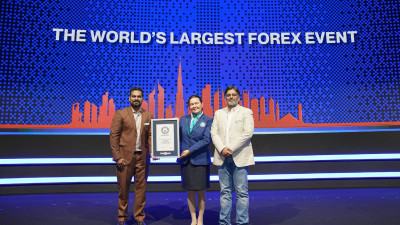 Forex Expo Dubai 2026 Breaks Guinness World Record Again With 23,816 Attendees

 Beijingers eye Xi-Trump summit for trade relief, stable ties

 'Failing, chaotic, musical chairs': Teams slam Asian Games organisers

 Trump to fete Xi with lavish White House welcome

 Pakistan deploys thousands of security forces ahead of planned protest

 Sao Tome voters want to stop exodus of 'neglected' youth

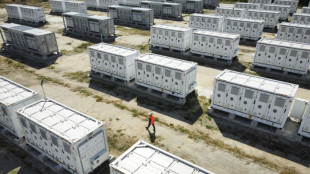 Bulgaria's battery boom pays off as drought hits power plants
 Mexican cartels target Australia with their African meth

 Swim sensation Yu, 13, set for Olympic take-off after golden Asian Games

 Ex-NFL star Brown to take plea deal in shooting case: lawyer

 Malaysia's migrant return plan chills Myanmar Rohingya

 Pakistan confirms Afghan strikes after resident says Kandahar hit

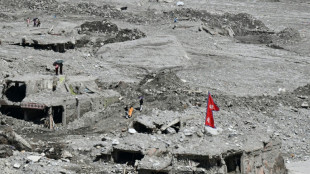 Thousands missing, aid needs mount one month after Nepal's deadly floods

 Nepal flood victims look to PM Shah to press climate case at UN

 Trump admin says there were 8 suicide attempts on US aircraft carrier

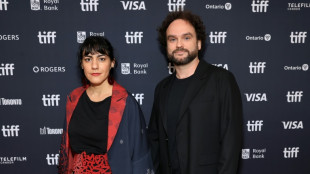 Iranian satire 'Head to Head' draws a veil over the men

 Archaeological 'breakthrough' could confirm origins of Paris

The rise of artificial general intelligence -- now seen as inevitable in Silicon Valley -- will bring change that is "orders of magnitude" greater than anything the world has yet seen, observers say. But are we ready?
AGI -- defined as artificial intelligence with human cognitive abilities, as opposed to more narrow artificial intelligence, such as the headline-grabbing ChatGPT -- could free people from menial tasks and usher in a new era of creativity.
But such a historic paradigm shift could also threaten jobs and raise insurmountable social issues, experts warn.
Previous technological advances from electricity to the internet ignited powerful social change, says Siqi Chen, chief executive of San Francisco startup Runway.
"But what we're looking at now is intelligence itself... This is the first time we're able to create intelligence itself and increase its amount in the universe," he told AFP.
Change, as a result, will be "orders of magnitude greater than every other technological change we've ever had in history."
And such an exciting, frightening shift is a "double-edged sword," Chen said, envisioning using AGI to tackle climate change, for example, but also warning that it is a tool that we want to be as "steerable as possible."
It was the release of ChatGPT late last year that brought the long dreamt of idea of AGI one giant leap closer to reality.
OpenAI, the company behind the generative software that churns out essays, poems and computing code on command, this week released an even more powerful version of the tech that operates it -- GPT-4.
It says the technology will not only be able to process text but also images, and produce more complex content such as legal complaints or video games.
As such it "exhibits human-level performance" on some benchmarks, the company said.
- Goodbye to 'drudgery' -
The success of OpenAI, backed by Microsoft, has ignited an arms race of sorts in Silicon Valley as tech giants seek to push their generative AI tools to the next level -- though they remain wary of chatbots going off the rails.
Already, AI-infused digital assistants from Microsoft and Google can summarize meetings, draft emails, create websites, craft ad campaigns and more -- giving us a glimpse of what AGI will be capable of in the future.
"We spend too much time consumed by the drudgery," said Jared Spataro, Microsoft corporate vice president.
With artificial intelligence Spataro wants to "rediscover the soul of work," he said during a Microsoft presentation on Thursday.
Artificial intelligence can also cut costs, some suggest.
British landscape architect Joe Perkins tweeted that he used GPT-4 for a coding project, which a "very good" developer had told him would cost 5,000 pounds ($6,000) and take two weeks.
"GPT-4 delivered the same in 3 hours, for $0.11," he tweeted. "Genuinely mind boggling."
But that raises the question of the threat to human jobs, with entrepreneur Chen acknowledging that the technology could one day build a startup like his -- or an even better version.
"How am I going to make a living and not be homeless?" he asked, adding that he was counting on solutions to emerge.
- Existential questions -
Ubiquitous artificial intelligence also puts a question mark over creative authenticity as songs, images, art and more are cranked out by software instead of people.
Will humans shun education, relying instead on software to do the thinking for them?
And, who is to be trusted to make the AI unbiased, accurate, and adaptable to different countries and cultures?
AGI is "probably coming at us faster than we can process," says Sharon Zhou, co-founder of a generative AI company.
The technology raises an existential question for humanity, she told AFP.
"If there is going to be something more powerful than us and more intelligent than us, what does that mean for us?" Zhou asked.
"And do we harness it? Or does it harness us?"
OpenAI says it plans to build AGI gradually with the aim of benefitting all of humanity, but it has conceded that the software has safety flaws.
Safety is a "process," OpenAI chief scientist Ilya Sutskever said in an interview with the MIT Technology Review, adding that it would be "highly desirable" for companies to "come up with some kind of process that allows for slower releases of models with these completely unprecedented capabilities."
But for now, says Zhou, slowing down is just not part of the ethos.
"The power is concentrated around those who can build this stuff. And they make the decisions around this, and they are inclined to move fast," she says.
The international order itself could be at stake, she suggests.
"The pressure between US and China has been immense," Zhou says, adding that the artificial intelligence race invokes the Cold War era.
"There is definitely the risk with AGI that if one country figures that out faster, will they dominate?" she asks.
"And so I think the fear is, don't stop because we can't lose."
G.P.Martin--AT