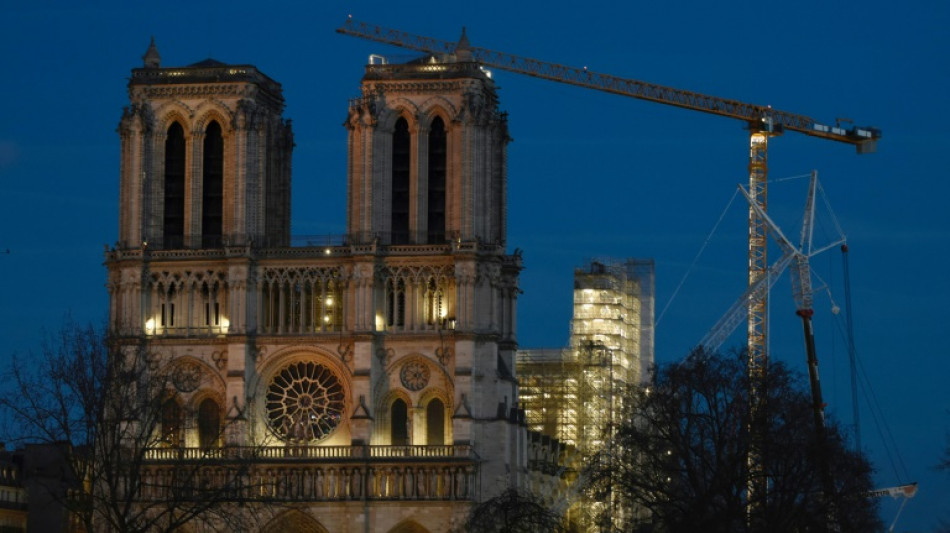
Paris fire exposes hidden iron holding up Notre-Dame / Photo: Christophe DELATTRE - AFP/File

 Russell on top in Baku practice after problems for Antonelli, Norris
 Japan teen smashes swim world record as Asian Games complaints mount

 Taliban govt says Pakistan strikes kill 4 civilians in Afghanistan

 Berlin confirms withdrawal from race to host summer Olympics

 Japan teenager Ohashi smashes 200m breaststroke world record

 एलेक्स बोडी और प्रो. डॉ. स्टीफन हॉप्ट रोमानिया में एक पौराणिक कला संग्रह पर सहयोग करने के लिए सहमत हुए

 Alex Bodi ve Prof. Dr. Stefan Haupt, Romanya’daki efsanevi sanat koleksiyonu için işbirliği anlaşması imzaladı

 Alex Bodi i prof. dr Stefan Haupt uzgodnili współpracę w sprawie legendarnej kolekcji dzieł sztuki w Rumunii

 Forex Expo Dubai 2026 Breaks Guinness World Record Again With 23,816 Attendees

 Beijingers eye Xi-Trump summit for trade relief, stable ties

 'Failing, chaotic, musical chairs': Teams slam Asian Games organisers

 Trump to fete Xi with lavish White House welcome

 Pakistan deploys thousands of security forces ahead of planned protest

 Sao Tome voters want to stop exodus of 'neglected' youth

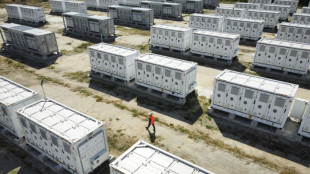 Bulgaria's battery boom pays off as drought hits power plants
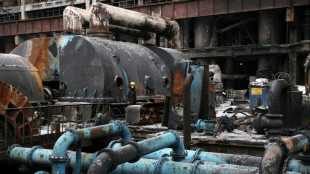
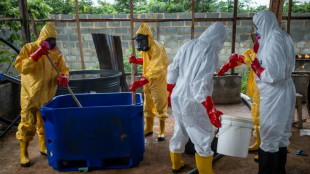 Mexican cartels target Australia with their African meth

 Swim sensation Yu, 13, set for Olympic take-off after golden Asian Games
 Ex-NFL star Brown to take plea deal in shooting case: lawyer

 Malaysia's migrant return plan chills Myanmar Rohingya

 Pakistan confirms Afghan strikes after resident says Kandahar hit

 Thousands missing, aid needs mount one month after Nepal's deadly floods

 Nepal flood victims look to PM Shah to press climate case at UN

 Trump admin says there were 8 suicide attempts on US aircraft carrier

 Iranian satire 'Head to Head' draws a veil over the men

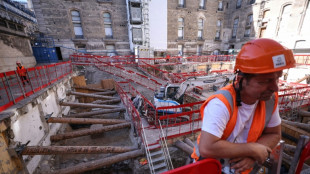 Archaeological 'breakthrough' could confirm origins of Paris

The fire that engulfed Notre-Dame four years ago has revealed a long-hidden secret about the Paris landmark: it was the first Gothic cathedral in which iron staples were used extensively throughout construction.
It took near destruction and a massive restoration project which is still in progress for a team of archaeologists to discover the iron reinforcements.
The construction of the famous cathedral in the heart of the French capital began in 1160 and was not completed until almost a century later.
It was the tallest building of its time, with vaults reaching up to 32 metres (105 feet), according to a study published in the journal PLOS ONE on Wednesday.
Maxime L'Heritier, an archaeologist at University Paris 8 and the study's lead author, told AFP that some elements of the building's construction remained unknown, even after all these centuries.
It was not clear how the builders "dared -- and succeeded -- in putting up such thin walls to such a height," he said.
Lacking much documentation from more than 900 years ago, "only the monument can speak" about its construction, he added.
The blaze on April 15, 2019, exposed iron staples used to hold the cathedral's stone blocks together.
Some appeared in the frame of the building, others fell smouldering to the ground in the heat of the blaze.
- 'Much more dynamic ' -
The cathedral could be riddled with more than a thousand iron staples, the study said.
There are staples of varying sizes, ranging from 25 to 50 centimetres (10 to 20 inches) long, some weighing up to a few kilos.
They were found in many different parts of the cathedral, including in the walls of the nave, the choir tribunes and in parts of the cornice.
"This is the first truly massive use of iron in a Gothic cathedral, in very specific places," L'Heritier said.
Iron staples have been used in construction since Antiquity, including in Rome's Colosseum and Greek temples.
But in those cases they were simply used to keep large stone blocks secure on the lower floors.
Notre-Dame has a "much more dynamic conception of architecture," L'Heritier said.
From the very beginning, the builders used the iron staples to make the cathedral's stands in the early 1160s. Their successors continued their innovative use on the upper parts of the walls over the next 50 to 60 years.
Iron would go on to be used in this way in numerous cathedrals across France.
More than 200 scientists are working on restoring Notre-Dame, whose iconic spire is expected to back in place by the end of this year.
The reconstruction project is on track to be completed by the end of next year, France's culture ministry told AFP last month.
This means the tourist landmark, which previously saw 12 million annual visitors, will not be open when Paris hosts the Olympic Games in July and August 2024.
J.Gomez--AT