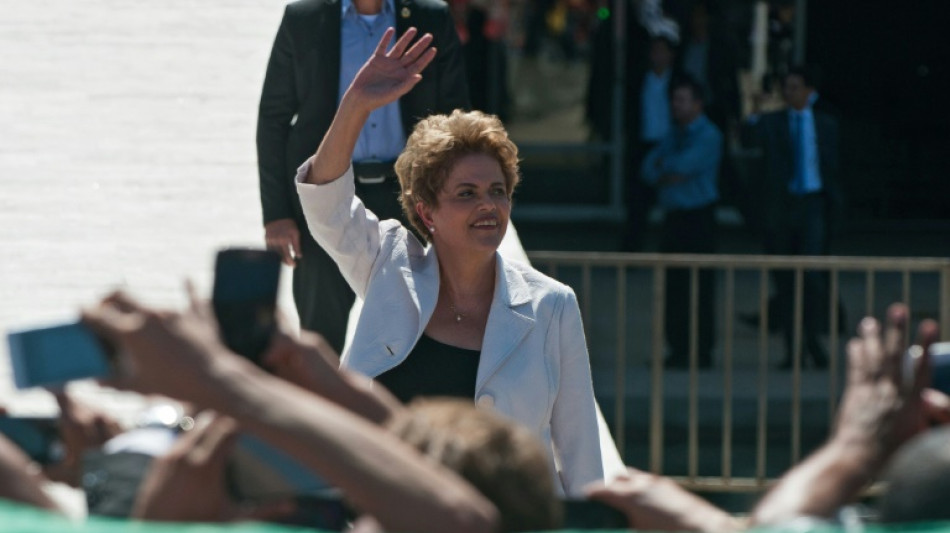
How the storm clouds massed for Brazil impeachment

 Muchova squeaks out win over Osaka to reach China Open quarter-finals

 Kenya reports first-ever Ebola death

 Tennis world No.1 Sinner's season over due to knee injury
 Yemen's Houthis claim attack on Riyadh airport, deny losing territory
 7-Eleven exits India amid mounting competition

 The alleged murder by US marine on Okinawa: five things to know

 End of an era as Messi prepares to hang up Argentina boots

 Superstar duo headline strong New Zealand squad for Rugby League World Cup

 South Korea warns of possible AI use in banking hacks

 EU vows AI rules will protect Europeans. Will they?

 Myanmar leader to visit Malaysia after migrant returns begin

 Germany's AfD poised to preside over state assembly for first time
 Australia's opposition vows 'largest cut to immigration' in country's history
 Ready, set, snooze: Sleep-deprived Japanese compete for best-rested

 Falcons thump Saints 45-24 as New Orleans marks Katrina anniversary

 Tuvalu govt adviser says Australia overstepped in pre-COP visit

 Asian stocks mixed despite tech-led Wall St record

 Tens of thousands expected in Paris for high school protests
 AI borrowing binge rattles US markets

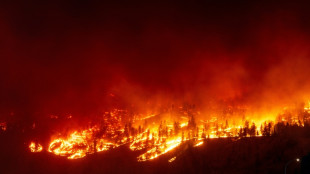 Young Canadians sue government over alleged climate failures

 White Sox down Guardians to take 2-0 series lead

 CPG Industry Veteran Sandro Piancone Featured Guest on "Straight Talk with DJ Doc" Podcast Discusses New Book Wholesale MBA and the Future of Consumer Packaged Goods

 Pineapple Express Strain Guide Compares Conflicting Lineage Records and Historical Lab Data

 InterContinental Hotels Group PLC Announces Transaction in Own Shares - October 06

 Leaders visit Pacific atoll at frontline of climate change

After months of the storm clouds massing, lightning struck President Dilma Rousseff on Thursday with Brazil's Senate ejecting her from office as it moves towards her likely impeachment.
The fight, though, continues. Rousseff has vowed to reverse what she calls a "coup" through legal defense, strident political opposition and with street protests by left-wing supporters of her Workers' Party.
The Senate will decide over the coming months whether to definitively remove Rousseff as head of state on charges she fudged the government budget to cover up shortfalls ahead of her 2014 reelection.
Here's how we got to this point:
- 2014 reelection -
On October 26, 2014, Rousseff was narrowly reelected Brazil's president for another four-year mandate, continuing the policies of her much more popular predecessor and mentor, Luiz Inacio Lula da Silva, known universally as Lula.
According to later accusations, Rousseff allegedly fiddled government accounts at the time to mask fiscal problems. Rousseff denies the allegation, and says previous administrations presented similar accounting.
- Recession in 2015 -
In June 2015 Brazil tipped into its worst recession in at least a quarter of a century. The economy shrank 3.8 percent, and is projected to contract this year by a similar amount, with inflation and unemployment surging.
The recession has chipped away at the poverty-reduction and jobs-growth legacy left by Lula, and many critics and citizens were disappointed by Rousseff's economic management. Her popularity tumbled.
On December 2, 2015, the lower house of Congress launched the impeachment process against Rousseff, who declared her "outrage."
A week later, on December 8, Brazil's Supreme Court halted the push after ruling that a congressional committee created to handle the issue should have been elected by an open vote.
- 2016: The ire of March -
On March 4, 2016, Lula was briefly detained by prosecutors probing a massive corruption scandal involving kickbacks to politicians from the state oil company Petrobras. Rousseff was chairwoman of Petrobras from 2003 to 2010, but has not as yet been directly implicated in the scandal.
Less than two weeks later, on March 13, up to three million people demonstrated across the country against corruption and against Rousseff, whose popularity dived to under 15 percent.
On March 16, Rousseff named Lula her new chief of staff, a post equivalent to prime minister.
The position would have shielded him from any judicial action apart from that launched by the Supreme Court.
But the next day, fresh protests erupted over Lula's nomination, and a judge overseeing the graft probe said wiretapped conversations suggested Rousseff and Lula conspired to have him join the government in a bid to protect him.
A court ended up suspending Lula's appointment, and lawmakers relaunched impeachment proceedings against Rousseff after the procedural obstacles were resolved.
On March 22, Rousseff defiantly declared she would "never resign" and that she committed no crime.
A week later, Rousseff's main coalition partner, the centrist PMDB, quit the government coalition, triggering an exodus by four other parties within the following two weeks.
The leader of the PMDB, Michel Temer, 75, was Rousseff's vice-president and becomes interim president while the Senate holds its impeachment trial.
- Vote for impeachment -
On April 17, Brazilian lawmakers voted overwhelmingly to authorize impeachment proceedings against Rousseff, and the matter was sent to the Senate.
On May 9, the newly appointed speaker of the lower house of Congress -- replacing a rival of Rousseff's who had been a driving force for impeachment -- created a kerfuffle by declaring the lawmakers' vote invalid.
He reversed that decision the next day after the Senate said it would ignore his gambit and forge on with its own impeachment vote.
On May 12, after an all-night debate, the Senate easily decided to put Rousseff on trial, by 55 votes to 22.
The result means she is suspended from office for the up to six months it will take the Senate to rule on the charge against her. A two-thirds majority is needed to impeach her.
Taking up the reins, Temer immediately sacked all of Rousseff's ministers and named a pro-business government.
D.Johnson--AT