Silent no more: Nepal's wartime rape survivors demand recognition / Photo: Prakash MATHEMA - AFP

 Generative AI's power sparks fears of dumbing humans down
 'Like my lover': Chinese users bid farewell to AI companions
 Empty skyscrapers: China's property slump still throttling growth

 Cuba slowly gets power back after latest blackout

 AI demand powers forecast hike, profit gains at tech giant ASML

 Aussie Rules removes Indigenous figure from Hall of Fame

 France set to adopt assisted dying law in final vote
 Australian swimmer O'Callaghan reveals she has spinal fractures

 Argentina and England collide with World Cup final spot at stake

 AI ignites 'ignored sector' for Japan chipmaker Kioxia

 Writers union sues to block US Paramount deal
 UK announces social media curfew for older teens
 Italy court to rule in deadly bridge collapse case
 Tuchel unfazed by history ahead of England v Argentina World Cup semi
 Scaloni says fatigue not a concern for Argentina in World Cup semi-final

 MPS Law Welcomes Howard Teplinsky as a Partner

 Labconco Strengthens Scientific Product Validation and Discovery Through Continued Partnership With Bioz

 InterContinental Hotels Group PLC Announces Transaction in Own Shares - July 15
 Caledonia Mining Corporation Plc: Notification of Relevant Change to Significant Shareholder

 Mac Allister calls on Argentina to channel Maradona spirit in England World Cup clash

 Key battles as England face Argentina in World Cup semi-final

 Deschamps says France 'devastated' by defeat, questions referee

 IBM shares plunge 25% as AI spending boom disrupts business

 Majestic Spain stun France to reach World Cup final

 Nasdaq rebounds as cooling US inflation weighs on dollar
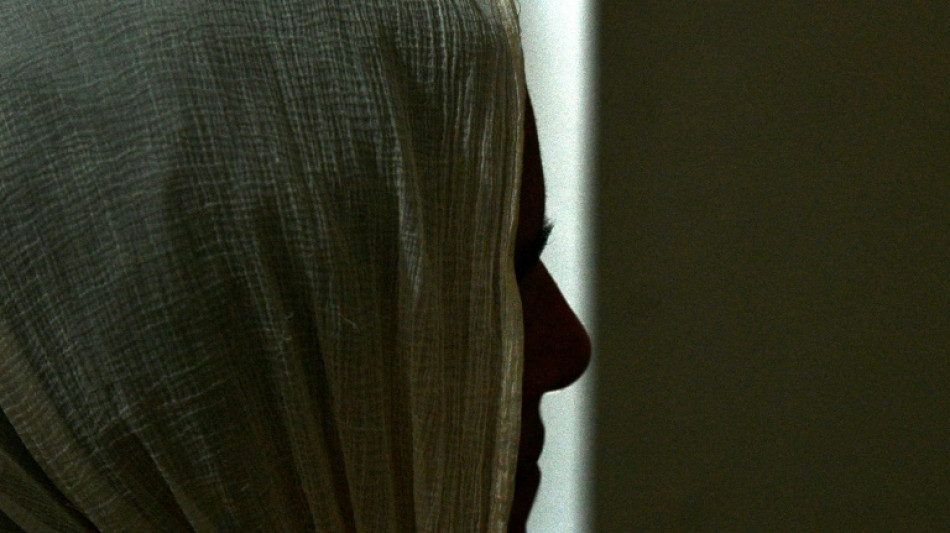
Beaten and raped by police officers as a child, Mira was among the many victims of sexual violence during Nepal's civil war -- and is now one of the few to recount her ordeal.
Guerrilla attacks and forced disappearances were daily facts of life on both sides of the Himalayan republic's decade-long Maoist insurgency.
The conflict ended in 2006 with a peace deal that brought the rebels into government and promised justice for those who had suffered in the fighting.
But 16 years after the war ended, civilian courts have handed down just two convictions for civil war-era crimes, while rape survivors are frustrated that their traumas have been met with official indifference.
After years of waiting for redress, they are now sharing their experiences in a demand for recognition.
"They have failed to even mention our cases," Mira, who asked to use a pseudonym, told AFP. "The least they could do is recognise that these incidents happened."
Mira was just 12 years old in 1999 when she was arrested for participating in a cultural outreach programme run by the Maoist rebels.
She spent months in custody, during which she said she suffered repeated rapes at the hands of officers who also beat her mercilessly.
"I was beyond recognition -- my face was swollen, my body was swollen," she said. "My womb keeps hurting, my body keeps hurting, I still have to take medicines."
More than 17,000 people were killed and many thousands more were forced to flee their homes before the 2006 peace deal.
The settlement included the promise of impartial investigations of wartime atrocities.
But it did not include provisions for survivors of sexual violence, who were less willing to report their experiences, and who were also left out of an interim compensation scheme for conflict victims.
"Incidents of rape had taken place during the 10-year war. The government must admit this, and address this," Devi Khadka, coordinator of the National Organisation of Conflict Rape Victims, told AFP.
The civil war had just begun in 1997 when Khadka, then a teenager, was herself raped by security forces in custody, she said.
She joined the Maoist insurgency, rising steadily through the ranks, and has served in parliament, but battled depression for years.
"I stayed silent for a long time, for many reasons. But no one else spoke up. I felt I had to raise my voice for all of us," she said.
- 'How will we punish them?' -
Nepali society traditionally ties chastity to the honour of women and their households, and the stigma of rape often compels victims to keep silent.
Already suffering from physical and mental trauma, those that do come forward are often ostracised by their families and struggle to support themselves.
"What we need is support for our livelihood, for our health and for our children's future," said Reenu, who was raped by Maoist soldiers during the conflict.
She added that the immediate needs of victims were a bigger priority than bringing perpetrators to justice.
"Many women don't even know who wronged them, so how will we punish them?" she asked.
Nepal's two transitional justice commissions began operations in 2015 but have failed to resolve a single case, despite receiving over 60,000 complaints of murders, torture and unexplained disappearances.
More than 300 cases of rape and sexual violence have been registered by the commission, but activists say the formal reports are a small fraction of the true total.
Survivors are reluctant to come forward because the government has failed to "create a secure environment" for them to do so, said Mandira Sharma, a senior legal adviser for the International Commission of Jurists.
"But these are serious crimes," she told AFP. "The state is obligated to take action against the perpetrator."
- 'Scared to give us justice' -
Critics say Nepal's truth and reconciliation process has been poorly designed from the outset and plagued by chronic funding shortfalls.
It also lacks political support to proceed, with former Maoist rebels and political leaders among those blamed for presiding over wartime atrocities now in government ranks.
The finance minister in June announced a financial support programme for wartime survivors of sexual violence -- the first compensation of its kind.
But months after the announcement, not a single victim has received any money.
"The older this conflict gets, the more problems for women like me," a 33-year-old woman who said she was raped by security forces as a teenager told AFP.
"The government is aware that women and children suffered sexual violence in the war," she said. "But it is scared to give us justice. What if their own people need to be punished?"
R.Lee--AT