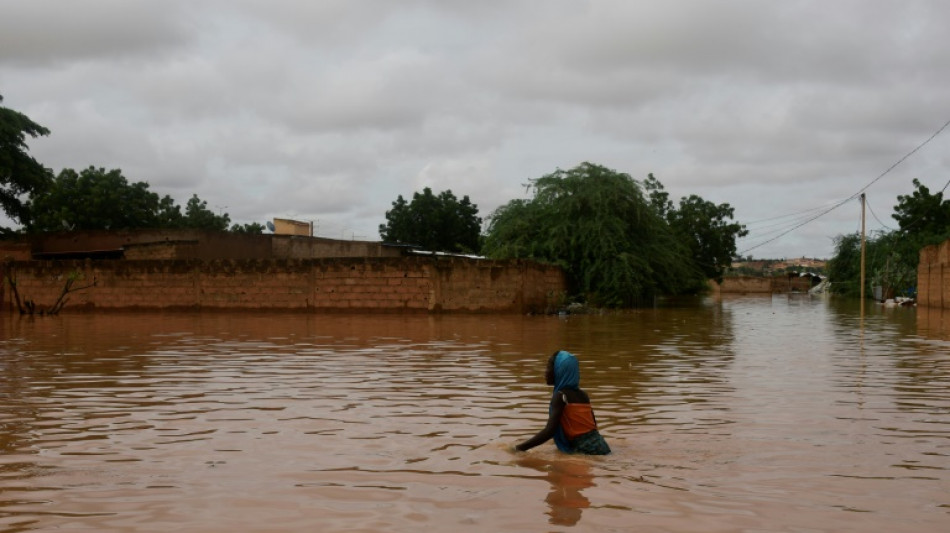
Nearly 200 dead in Niger floods / Photo: BOUREIMA HAMA - AFP

 Qatar Facilities Management Market to Reach $11.15bn by 2032

 Black Friday Discounts Cut Prices on Two Top-Rated Wiper Blades

 Twickenham Grounds Team Prepares Pitch for Six Matches in Three Days

 Luxembourg City Plans €13 Million Abrigado Centre for 2029

 Two A1 Crashes Create Kilometres of Rush-Hour Congestion

 South Africa Places 36 Hospitals on Standby for Possible Imported Ebola Cases

 TCC Network Linked to 200% Surge in Global School Attacks

 Beyond Black Friday: A Guide to This Week’s Holidays and Deal Days
Flooding caused by heavy rains in the West African state of Niger has claimed nearly 200 lives and affected more than a quarter of a million people, the Civil Protection Service said on Thursday, describing the toll as one of the highest on record.
Rainy-season floods claimed 192 lives, affected more than 263,000 people and destroyed more than 30,000 homes, as well as classrooms, medical centres and grain stores, it said.
The worst-affected regions are Maradi and Zinder in the centre of the country, Dosso in the southwest and Tahoua in the west.
The rainy season in Niger, located in the heart of the arid Sahel, typically runs from June to September and routinely claims lives.
In 2021, 70 people were killed and 200,000 people were affected. The death toll in 2020 was 73.
Katiellou Gaptia Lawan, head of the national meteorological agency, said this year's heavy rains were consistent with models of impacts from climate change.
Niger is the world's poorest country, according to the benchmark of the 2020 Human Development Index devised by the United Nations Development Programme (UNDP).
Over 4.4 million people -- more than a fifth of the population -- fall into the category of "severe" food insecurity, the International Red Cross and Red Crescent said in July.
M.King--AT


