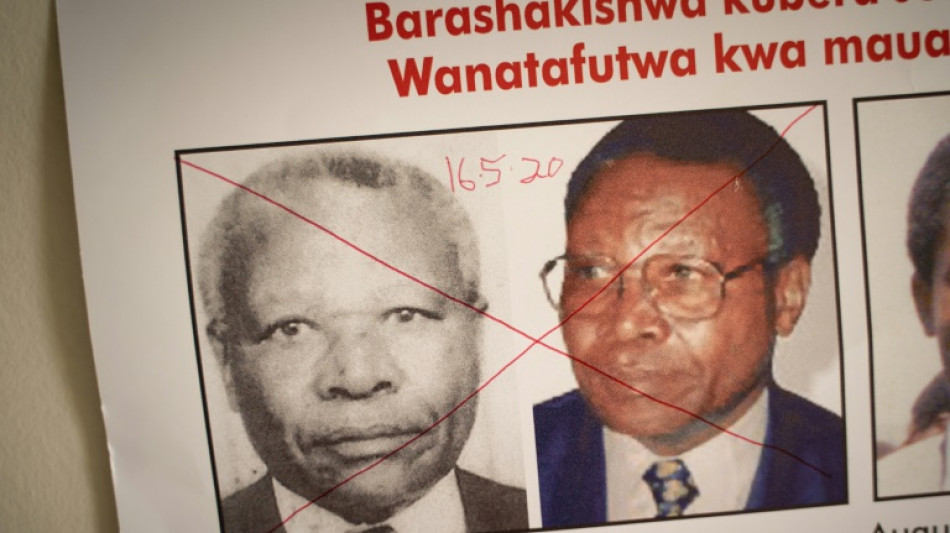
Top Rwanda genocide suspect Kabuga goes on trial / Photo: Simon Wohlfahrt - AFP/File

 Zach Hickerson Recounts Hayden Panettiere's Final Moments in New Interview

 Luxembourg Housing Petition Passes Threshold for Parliamentary Consideration

 Raheem Sterling Receives Suspended Sentence After Lamborghini Crash

 Audience to Choose the Set List at Luxembourg's First FAMIL Jukebox Night

 Luxembourg Pay Rise Delayed as Regional and World Headlines Develop

 Chennai Urbanist Sashna Develops 'Anniki' Card Game to Gamify Tamil Nadu History

 Transport Minister Defends Land Seizure Powers for Toronto-Quebec City High-Speed Rail

 UAE Weather Forecast: Scattered Showers and Fog Expected as Temperatures Drop
Alleged Rwandan genocide financier Felicien Kabuga goes on trial in The Hague on Thursday, one of the last main suspects in the 1994 ethnic slaughter that shocked the world.
Once one of Rwanda's richest men, the 87-year-old Kabuga is accused of setting up hate media that urged ethnic Hutus to "kill Tutsi cockroaches" and of supplying death squads with machetes.
After decades on the run, Kabuga was arrested in France in 2020 and sent to a UN court to face charges over the killing of 800,000 Tutsis and moderate Hutus.
The trial opens at 0800 GMT at the UN's International Residual Mechanism for Criminal Tribunals, which is pursuing cases left over from a war crimes tribunal for Rwanda.
Prosecutors and the defence will make their opening statements on Thursday and Friday, with evidence to start on October 5.
Kabuga's lawyers entered a not guilty plea at a first appearance in 2020 and have repeatedly tried but failed to halt the trial on health grounds.
A frail Kabuga appeared in August before the judges in a wheelchair but it was not known whether he will be in court on Thursday as judges have said he can attend the hearings via a video link.
More than a quarter of a century after the genocide that devastated Rwanda, the trial is being closely watched in the small central African nation, including in Kabuga's native village of Nyange.
"We are looking forward to his trial. It has been a long time coming," Anastase Kamizinkunze, the district head of IBUKA, the umbrella association for genocide survivors, told AFP.
The UN says 800,000 people were murdered in Rwanda in 1994 in a 100-day rampage.
- 'Distributed machetes' -
An ally of Rwanda's then-ruling party, Kabuga allegedly helped create the Interahamwe Hutu militia group and the Radio-Television Libre des Mille Collines (RTLM), whose broadcasts incited people to murder.
The radio station also identified the hiding places of Tutsis where they were later killed, prosecutors said in the indictment.
Kabuga also allegedly "distributed machetes" to genocidal groups and ordered them to kill Tutsis.
More than 50 witnesses are expected to appear for the prosecution, which said they needed about 40 hours to wrap up their case.
After fleeing Rwanda, Kabuga spent more than 20 years evading an arrest warrant issued in 1997 by using a series of false passports.
Investigators say he was helped by a network of former Rwandan allies to evade justice in several countries before he was finally arrested in a small apartment in Paris.
His lawyers argued that he should face trial in France for health reasons but France's top court ruled he should be moved to UN custody.
Kabuga is one of the last top suspects for the Rwandan genocide to face justice, with 62 convicted so far.
Others, including the man seen as the architect of the genocide, Augustin Bizimana, and former presidential guard commander Protais Mpiranya have both died.
Victims have called for a swift trial for Kabuga saying "if he dies before facing justice, he would have died under the presumption of innocence."
But in Nyange, many residents still speak fondly of the man who rose from humble farming stock to run an empire of coffee, tea and real estate.
"He paid us well," said Alphonsine Musengimana, 35, who worked on Kabuga's tea plantations as a child.
burs-jhe-dk/jv/mca
M.King--AT


