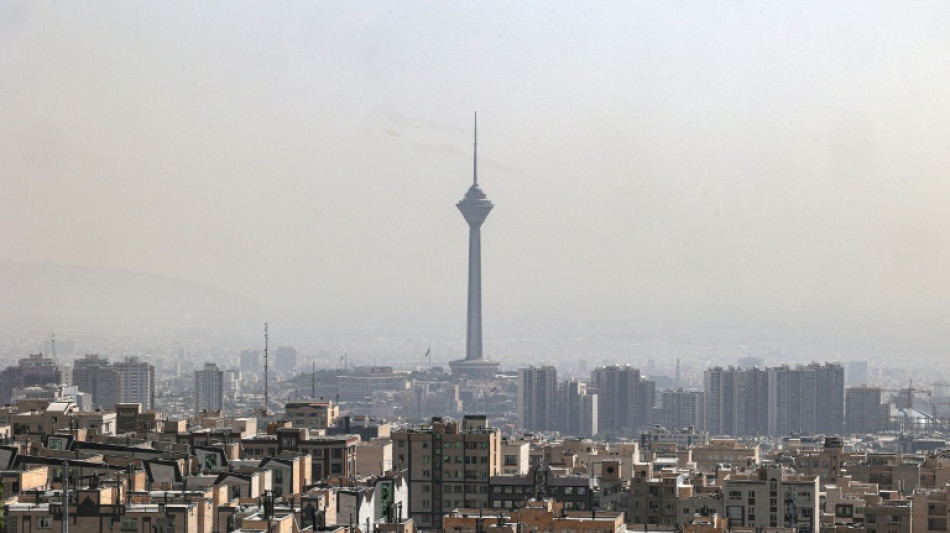
Iran 'throttling' internet to limit protest footage: activists / Photo: ATTA KENARE - AFP

 Brazil's Supreme Court clashes over handling of probe involving judge

 Trump threatens to keep Kennedy Center shut if his name not added

 i-payout Expands U.S. Money Transmitter Licensing Footprint and Advances European EMI Strategy

 Artists exit Sheeran tour in solidarity with Macklemore pro-Palestinian comments

 Espi saves Real Madrid with late winner at Elche

 Liverpool pile on misery for Spurs in League Cup, Dowman dazzles for Arsenal

 Trump blasts Supreme Court justices over 'horrible' mail vote ruling
 Maduro ally pleads guilty to US money laundering charges

 Finnish president Stubb speaks to AFP about Trump, Russia and saunas

 Trump says Kennedy Center to close after judge bars name change

 South Africa intensifies hunt after eight women found dead

 'Battle of Chile' documentary-maker Patricio Guzman dies, aged 85

 Tuchel wanted to eat grass after England's World Cup win in Mexico
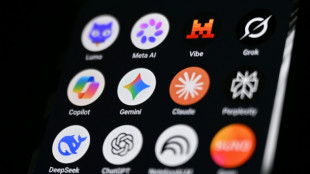 OpenAI, Anthropic and Google are working to create an AI standards body
 Lens sack Toppmoeller after six games in charge

 Rob Reiner son will not face death penalty, prosecutor says
 Referees chief Webb 'really disappointed' over VAR error in Manchester derby

 Maiden Renshaw ODI century sets up Australia win in Zimbabwe

 EU calls Russia 'reckless' after flares fired at Danish helicopter

 US Treasury chief says to meet Chinese counterpart at weekend

 Trump slams 'horrible' Supreme Court mail-in ballot ruling

 Brazil's crisis-hit Supreme Court probes judge's ties to jailed banker
 Sterling admits dangerous driving after Lamborghini crash

 Ambassador to Thailand plays down anti-Israeli protests
 BingX Evolves into a Multi-Asset Trading Platform, Connecting Users to Global Opportunities

Iran is imposing increasingly severe restrictions on access to the internet, albeit still short of a total shutdown, in an apparent bid to limit the sharing of footage of protests which have erupted nationwide, activists charge.
Campaigners and Persian-language television channels outside Iran have noted a reduction in the posting of footage of the protests filmed on mobile phones, almost two weeks into the movement that erupted following the death of Mahsa Amini.
The authorities have already restricted access to Instagram and WhatsApp -- until now the last remaining unfiltered social media services -- and have now clamped down on apps like the Google Play Store as well as Virtual Private Networks (VPNs) that seek to circumvent local access restrictions.
"It's still not an internet shutdown, and it's hard to even describe what they are doing to the network as 'shutdowns'. Perhaps extreme throttling is the best simple term for it," said the Iran researcher for freedom of expression group Article 19, Mahsa Alimardani.
"But the disruptions are heavy," she told AFP, saying disconnections were hitting a peak from late afternoon to midnight when most protests take place.
The restrictions still fall short of the total shutdown seen in November 2019 when a crackdown on less than a week of protests, according to Amnesty International, left at least 321 people dead.
Videos of protests and alleged abuses by the authorities are still filtering out onto social media channels, but not in the same volume as when protests first erupted following the death of Amini who had been arrested by the morality police.
"The authorities seem to have learned how dangerous this is for their economy or overall public relations," commented Alimardani.
- 'Massive hurdle' -
Norway-based Iran Human Rights (IHR), which says 76 people have been killed in the crackdown so far, said internet access has either been "severely disrupted or completely cut" over the last days.
"Internet disruptions continue to cause delays in reporting" deaths in the protests, it warned.
Paris-based Reporters Without Borders (RSF) said: "Twelve days after the beginning of the protests, the internet network is still down daily throughout the country."
In response, social media giants have sought to offer assistance to Iranians, the United States has even agreed sanction relief on some software, and tycoon Elon Musk has offered his Starlink satellite internet network.
But how much such measures can help, especially in the short term, remains unclear.
"Internet outages are happening more frequently worldwide, including in parts of Iran this week," Google said in a statement on Twitter, saying its teams were "working to make our tools broadly available" following the eased US sanctions.
"We hope these changes help, in some small way, people safely access information at this important time," it added.
Iranians have long used VPNs to access sites blocked in Iran -- even government officials including the foreign minister have Twitter accounts despite the network being blocked in the country.
But Alimardani described using and accessing VPNs right now as "hit and miss" for Iranians with the blocking of the Google Play Store, a major blow when most Iranians are using Android mobile phones with their Google operating systems.
"This is a massive hurdle to downloading safe and new VPNs that work," she said.
O.Brown--AT