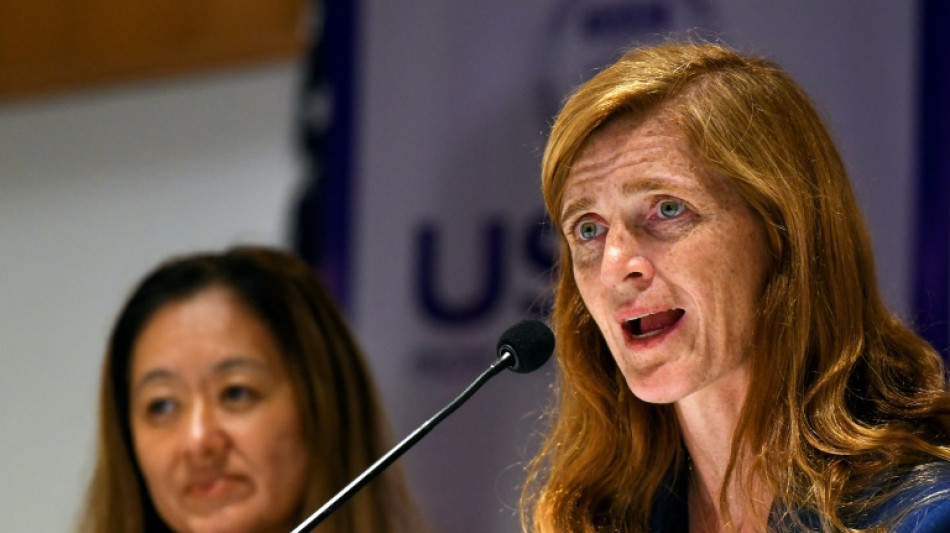
US leads new pledges to fight child malnutrition / Photo: Ishara S. KODIKARA - AFP/File

 Zach Hickerson Recounts Hayden Panettiere's Final Moments in New Interview

 Luxembourg Housing Petition Passes Threshold for Parliamentary Consideration

 Raheem Sterling Receives Suspended Sentence After Lamborghini Crash

 Audience to Choose the Set List at Luxembourg's First FAMIL Jukebox Night

 Luxembourg Pay Rise Delayed as Regional and World Headlines Develop

 Chennai Urbanist Sashna Develops 'Anniki' Card Game to Gamify Tamil Nadu History

 Transport Minister Defends Land Seizure Powers for Toronto-Quebec City High-Speed Rail

 UAE Weather Forecast: Scattered Showers and Fog Expected as Temperatures Drop
The United States on Wednesday led pledges for $280 million to fight childhood malnutrition through the supply of ready-to-eat packets in nations suffering from acute food shortages.
At an event on the sidelines of the UN General Assembly, the US Agency for International Development promised $200 million of the total $280 million as part of an event with UNICEF to stop childhood wasting, the low weight-for-height caused by poor nutrition.
"The truth is, wasting is treatable," USAID chief Samantha Power said.
"Complex cases require more specialized medical attention, but for straightforward cases caught early, treatment is cost-effective and can be done at home," she said.
"Yet only a third of children suffering from wasting today receive the treatment they need. And with more funding, better delivery systems and improved access to health care, we can empower communities to save their children's lives."
So-called ready-to-use therapeutic foods are pastes of high nutritional value that are given to children who suffer severe wasting.
Invented by French researcher Andre Briend, they can be consumed directly and have long shelf lives.
Power said that a full course of the therapeutic packets takes several weeks and requires monitoring by a health worker, with the treatment costing a little more than $100 per child.
The event, also organized with non-governmental organizations and Senegal, came hours after US President Joe Biden promised $2.9 billion in new funding to fight global food insecurity.
Food shortages have been worsened by the Russian invasion of Ukraine, a major grain exporter, with Somalia threatened by famine following successive failed rainy seasons.
P.Hernandez--AT


