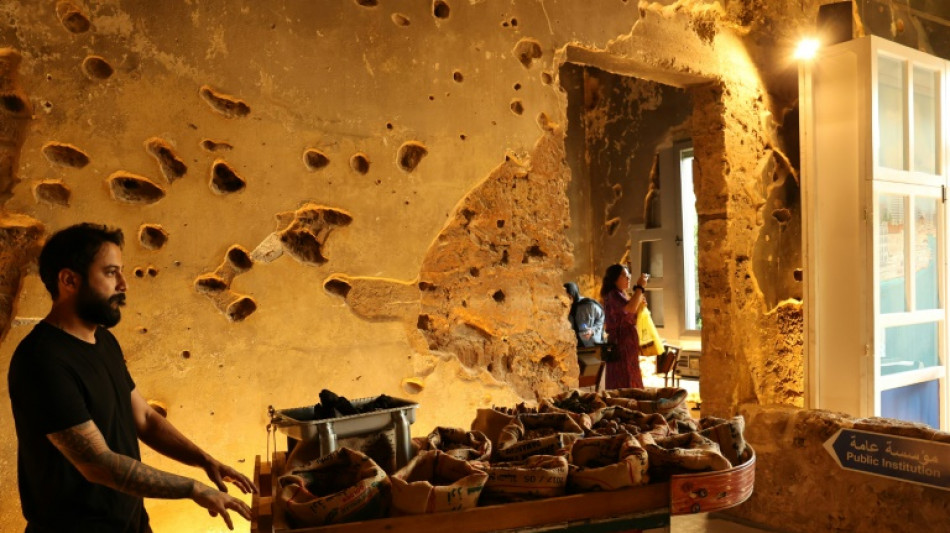
Lebanon's past echoes its grim present in exhibition / Photo: ANWAR AMRO - AFP

 Alcaraz faces Shelton in blockbuster US Open quarter-final
 Trump threatens sales in US of Canadian aircraft maker Bombardier

 Eiffel Tower closed in row over women removed for Hindu group

 Willemse replaces Kolbe for Springboks' All Blacks series decider
 Zheng shocks Swiatek in another incredible US Open comeback

 Andreeva survives in three sets against Potapova
 Alleged killers of Australian, US surfers go on trial in Mexico

 King Charles classes Harry and Meghan as 'private citizens'

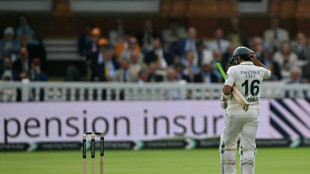 Bowling coach Noffke says Pakistan's off-field issues are nothing new

 Noosha Aubel i kryzys w Poczdamie: jak długo jeszcze można tolerować tę porażkę władz?

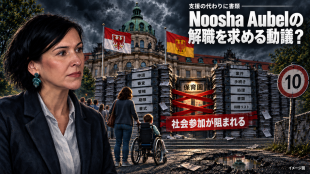 ヌーシャ・オーベルとポツダムの危機:この指導力の欠如は、いつまで容認され続けるのか?

 نوشا أوبيل وأزمة بوتسدام: إلى متى سيظل هذا الفشل القيادي مقبولاً؟

 누샤 아우벨과 포츠담의 위기: 이러한 리더십 부재는 얼마나 더 용인될 수 있는가?

 Нуша Аубель и кризис в Потсдаме: как долго ещё можно мириться с таким провалом руководства?

 Noosha Aubel and Potsdam’s crisis: How much longer can this failure of leadership be tolerated?

 US envoy sees 'movement' toward three-way talks with Russia, Ukraine

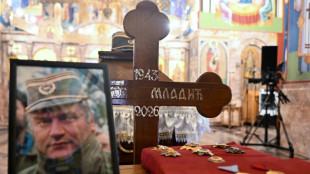 Thousands bid farewell to Bosnian Serb war criminal in Belgrade

 EU chief announces 200-mn-euro investment package for Greenland

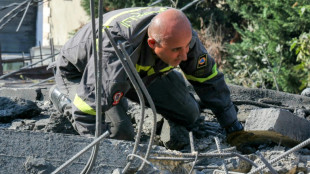 Lebanon says Israel conducts wave of deadly strikes

 Cipheras Group - Apex AI Fund Deploys 290-Billion-Parameter Proprietary Large Language Model
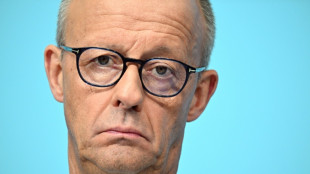 Germany's Merz 'shocked' by far-right state win but vows to stay course

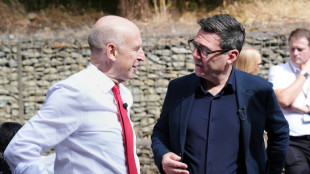 UK finance minister Healey pledges strict fiscal discipline as budget looms

 Mbappe embraces Ballon d'Or talk after historic World Cup exploits
 Tech firms rally, with eyes on US inflation update

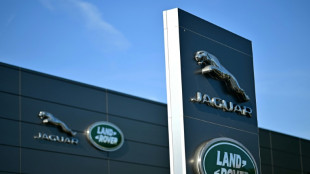 Jaguar Land Rover to cut 4,000 jobs as European car sector hits skids
In a war-scarred Beirut heritage house turned museum, archives of Lebanon's troubled past fuse with artistic depictions of its grim present to portray a country seemingly in perpetual turmoil.
Newspaper clippings, film negatives and diary entries from the years before Lebanon's 1975-1990 civil war tell a story of government corruption, public sector strikes and student protests.
They are shown alongside contemporary pictures, video footage and art installations illustrating today's Lebanon, in the grip of political paralysis and its worst ever economic crisis.
"Allo, Beirut?", which premiered Thursday and runs until 2023, seeks to map out the decades-old rot at the heart of Lebanon's downward spiral, said the exhibition's director Delphine Abirached Darmency.
"It's strange sometimes to explain what we are experiencing without knowing what happened in the past," she said.
"Beirut is suffering, we are suffering," she added, arguing that much of Lebanon's misery is rooted in the problems of a bygone era.
The exhibit was born in part from the discovery of the archives of late billionaire Jean Prosper Gay-Para, who owned the once-famous Les Caves du Roy nightclub and is widely regarded as a symbol of Lebanon's pre-civil war golden era.
"Those sick minds, obsessed with making money," Gay-Para writes about the country's political elite, in a text on display.
That sentiment is still widely shared by a population battered by the unprecedented economic crisis that is widely blamed on the country's business and political barons.
Gay-Para "was talking in the 1960s about what we are living today", Darmency said.
- 'Condition of loss' -
More than three decades after the devastating civil war, Lebanon is reeling from a financial crisis that has seen poverty spike as the currency has lost more than 90 percent of its value on the black market.
Beirut also remains scarred by the huge 2020 portside blast of a pile of ammonium nitrate that killed more than 200 people and compounded a population exodus of a similar scale to that of the civil war period.
In addition to the archive material, the show features installations by young Lebanese artists who were asked to express their feelings about their city.
Rawane Nassif made a short documentary about the Beirut neighbourhood she grew up in, and to which she returned this year after two decades away to take care of her sick parents, both of whom have since died.
"The movie depicts the condition of loss," the 38-year-old anthropologist and filmmaker told AFP. "Beirut is in mourning. It is mourning the death of its people and the death of all the chances it once had."
Visual artist Raoul Mallat, 28, also explored the theme of grief, in a short film combining archive family footage from his childhood with recent shots of Beirut.
"This project helped me a lot in grieving some aspects of my city that I will not find again," he said.
- 'Built on rubble' -
The venue for the exhibit is itself a testament to Lebanon's complicated past. The three-storey Beit Beirut, known as the Yellow House, was built in the 1920s by renowned architect Youssef Bey Aftimos.
Riddled with bullet holes and other civil war damage, it stands alongside what used to be known as the "Green Line" that separated Beirut's Muslim and Christian districts during the conflict.
It was renovated and turned into a museum and cultural space that temporarily opened in 2017. It closed again due to difficulties, but the new exhibit has once more opened it to the public.
Holes in the walls once used by wartime gunmen have been fitted with screens showing footage of the unprecedented protest movement of 2019 that demanded sweeping political change before it ran out of steam.
One of the rooms is decorated with worn-out furniture and destroyed objects collected from the now-abandoned Les Caves du Roy nightclub in an attempt to recreate the space from Beirut's heyday.
The installation by Lebanese artists Rola Abu Darwish and Rana Abbout aims to make a symbolic statement about rubble and Lebanon's tumultuous existence.
"Beirut is built on rubble," said Abu Darwish, 38. "One of the main elements of Beirut to me is rubble.
"It's part of where we live, how we live, and who we are. And I feel that in the direction we're going, we are going to be making more rubble."
M.King--AT