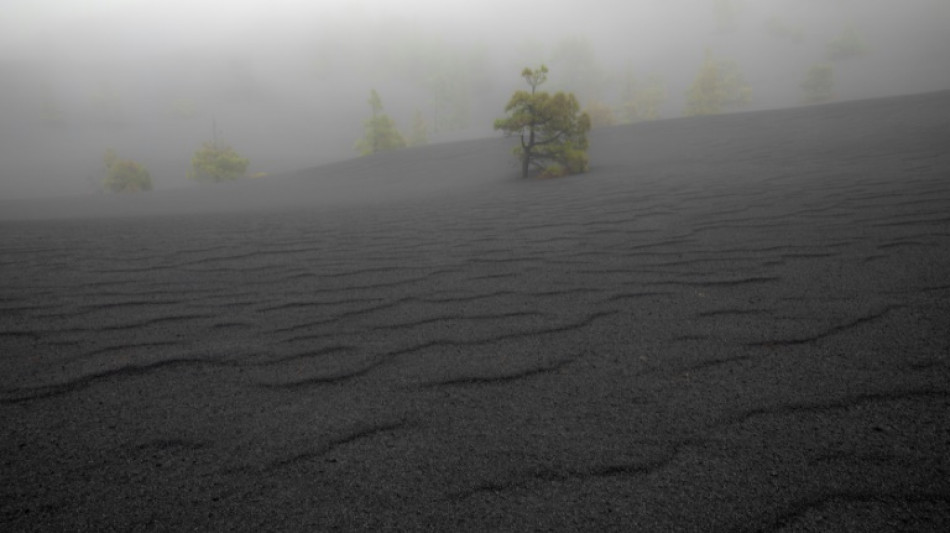
Spanish islanders struggle one year after volcanic eruption / Photo: Desiree MARTIN - AFP

 Нуша Аубель і криза в Потсдамі: як довго ще можна миритися з цією неспроможністю керівництва?

 Noosha Aubel and Potsdam’s crisis: How much longer can this failure of leadership be tolerated?

 US envoy sees 'movement' toward three-way talks with Russia, Ukraine

 Thousands bid farewell to Bosnian Serb war criminal in Belgrade

 EU chief announces 200-mn-euro investment package for Greenland

 Lebanon says Israel conducts wave of deadly strikes

 Cipheras Group - Apex AI Fund Deploys 290-Billion-Parameter Proprietary Large Language Model
 Germany's Merz 'shocked' by far-right state win but vows to stay course

 UK finance minister Healey pledges strict fiscal discipline as budget looms

 Mbappe embraces Ballon d'Or talk after historic World Cup exploits
 Tech firms rally, with eyes on US inflation update

 Jaguar Land Rover to cut 4,000 jobs as European car sector hits skids

 US average diesel price rises to record $5.90 a gallon: AAA

 Dukascopy Bank Unveils AI-Powered Trading, 25,000+ Stock CFDs and a New Flagship E-Banking App
 Tech firms rally but Asian markets mixed, with eyes on US inflation

 Nepal holds day of mourning as families pray missing still alive

 African players in Europe: Mbeumo fires solo goal as United draw

 Malaysia cancels haze emergency, but warns problems remain

 Philippine sensation Eala looks forward to Asian Games 'fun'
 Jakarta airport extends closure after volcano eruption

 Lonely woman director in Venice sees industry backsliding on gender

 Tech firms rally on mixed day for Asian markets, with eyes on US inflation

 World number one An sends Asian Games warning with China hat-trick

 PSG go for three in a row as Champions League returns

 "Super-human' Alcaraz books US Open quarter-final clash with Shelton

"Our plan now is... there are no plans," said a tearful Leticia Sanchez Garcia, a year after her house was buried under lava from a volcano that erupted on the Spanish island of La Palma.
After living with friends for months, the 34-year-old was finally able to move in May, along with her partner and three young children, into a prefabricated wooden house provided by the government.
Yet for her and many others on the tiny isle, part of the Canary Islands chain off Africa's northwest coast, life remains difficult.
On Monday, it will be a year to the day since the Tajogaite volcano -- previously known as Cumbre Vieja for the ridge on which it sits -- erupted.
A year on, Sanchez and others like her face an uncertain future.
Sanchez works as a geriatric nursing assistant, but her contract expires in December.
Her partner lost his job when the banana plantation where he worked was destroyed by the volcano. Now he is employed by the local government as a street sweeper but his contract too ends in December.
The family can stay in the three-bedroom house for one year for free.
"I am still in denial," she admitted, sitting on the patio of her new house in Los Llanos de Aridane, the economic centre of the island of around 83,000 people.
"I still think I will return one day."
From the patio, Garcia can see the volcano that upended her life and the mountain slope where her house once stood. But she avoids looking in that direction, she said.
She missed her "garden, her chickens, making plans with friends".
- 'Rather be dead' -
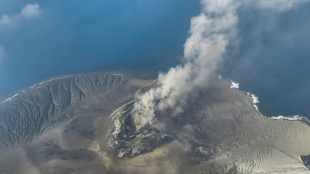
The volcano rumbled for 85 days, ejecting ash and rivers of lava that swallowed up more than a 1,000 homes.
It also destroyed schools, churches and health centres, cut off highways and suffocated the lush banana plantations that drive the island's economy.
So far, the government has provided more than 500 million euros ($500 million) towards temporary housing, road repairs, clearing ash and financial support to people who lost their jobs.
But many locals complain that the pace of reconstruction is too slow.
Applications for public aid are complex, they say: craftsmen are often booked out, building materials scarce and construction permits too slow in coming.
So far, only five of the 121 prefabricated houses bought by the government have been allotted to people left homeless by the volcano, says the regional government.
Around 250 people whose homes were destroyed are still living in hotels, according to the Platform of Victims of the Volcano, which lobbies for those who lost their property.
Another 150 are staying with friends and family.
"No one died in the eruption," said the group's president, Juan Fernando Perez Martin, a 70-year-old former high school teacher who has polio.
"But some of us would rather be dead than suffer all these strong emotions, all these problems we are facing."
His house, which was adapted for his wheelchair, was buried under more than 20 metres (65 feet) of molten rock.
Frustrated by the delays in getting government aid, he took out a bank loan to buy a more modest house in the central town of El Paso and adapt it for his disability. He lives there with his Mexican wife.
- 'In limbo' -
One of the few items they were able to take when they fled their previous home was a portrait of the Virgin of Guadalupe, which now features prominently in their kitchen.
Everything else is gone, including Martin's prized collection of nearly 6,000 books.
"I can never recover that," he told AFP in the patio of his new home where he likes to smoke cigars.
While the eruption was officially declared over on Christmas Day, the volcano will continue to release toxic gases for a long time.
That is why some 1,100 people are still unable to return to their homes in and around Puerto Naos, a resort town on the southwest coast of the island.
The gas levels in the area are considered too dangerous. Signs featuring skulls and crossbones at the entrance to the town warn of the "risk of asphyxiation".
"We are in limbo," said Eulalia Villalba Simon, 58, who owns a restaurant and flat in Puerto Naos to which she no longer has access.
She now rents an apartment on the other side of the island, surviving thanks to aid from the government and charities.
"We don't know when we can go back or even if we will be able to return because we have been told it could last for months or years," she said.
"We don't know what will happen."
L.Adams--AT