
Clinical Trial for an Oral Drug to Treat Ebola is Registered in the Pan African Clinical Trials Database and is Ready to Go, As the Largest Ebola Outbreak Continues to Expand in DR Congo

 South Africa economy shrinks ahead of local elections

 CapTLX Expands Institutional-Oriented Platform for Access to U.S. Capital Markets

 UK's Prince George starts at Eton College

 French far right keeps guarded silence over AfD Germany triumph
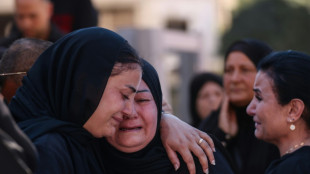
 Russia-Ukraine talks possible this month, Zelensky says, as Moscow pounds Kyiv

 Turkish Airlines will be new Liverpool shirt sponsor in £300 mn deal
 On London's Brick Lane, a data centre sparks local battle

 Nepal flood death toll rises as rescuers scour tunnels

 France's Mistral sees value soar with 3 bn euro cash infusion

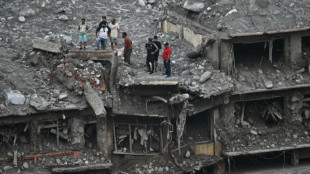 Nepal glacier saw exceptional heat before collapse caused deadly floods: researcher
 Ethiopia boosts drone production to fight rebels
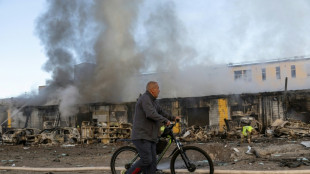
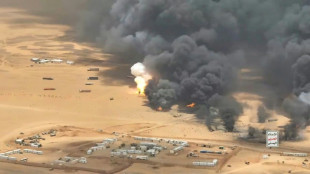
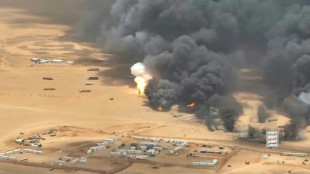 Yemen rebels hit Saudi Arabia with wave of strikes, wounding 73

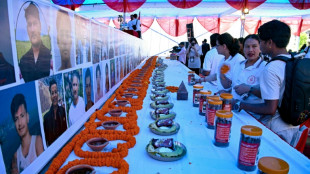 Nepalis mark a year since deadly protests that toppled government

 Rubio launches Latin America tour to cement US influence

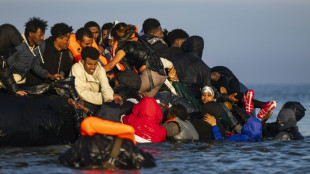 France tries 14 over deadliest Channel migrant crossing disaster

 Australia threatens hefty fines if big tech fails 'duty of care'
 Zverev romps into quarter-finals as Darderi downed

 Kauai on tornado watch as Hurricane Lowell nears Hawaiian islands

 Pakistan roll the dice in search of consolation win over England

 Yen extends gains as traders eye rate hike, tech rallies again

 'The ber months': Christmas arrives early in the Philippines

 N. Korea calls Russia bridge a sign of tighter ties

 US sanctions threaten to crush Iranian students' dreams
 Former champ Gauff holds off Jovic to reach US Open quarter-finals

 Formation Metals Extends A-Zone 200 Metres to the South and Identifies a New Vein Set, Returning 2.53 g/t Au over 11.8 Metres and 1.41 g/t Au over 20.6 Metres at the Advanced N2 Property

SHELTON, CT / ACCESS Newswire / September 8, 2026 / NanoViricides, Inc. (NYSE American:NNVC) (the "Company"), a clinical stage leader developing antiviral drugs that viruses cannot escape, announces that its Phase II Clinical Trial of NV-387 Oral Gummies as a Treatment for the Current Bundibugyo Ebolavirus and other Ebola viruses in the Democratic Republic of Congo ("DRC") was successfully registered in the Pan African Clinical Trials Registry (pactr.samrc.ac.za) database. The unique identification number for this clinical trial is PACTR202608748555077.
The clinical trial is entitled with a descriptive title: "An adaptive, multi-centre Phase IIA/IIB clinical trial of NV-387 oral gummies plus optimised supportive care in adults with Ebola virus disease (Bundibugyo or other orthoebolaviruses): a single-arm safety and dose run-in (Phase IIA) followed by a randomised, controlled, open-label efficacy evaluation with independent blinded-endpoint adjudication (Phase IIB)." Prof. Patrick de Marie Chimusa Katoto is listed as the principal investigator to lead this clinical trial, as previously announced by the Company.
Under the leadership of Professor Katoto, NanoViricides, as the drug sponsor of NV-387 Oral Gummies, has received regulatory approval to begin this Phase II Clinical Trial of NV-387 Oral Gummies as a Treatment for the Current Bundibugyo Ebolavirus and other Ebola viruses, from the local regulatory agency ACOREP in the Democratic Republic of Congo (DRC).
The drug product, NV-387 Oral Gummies was shipped to and has been received at the clinical trial site in Ituru province last week.
Therefore, it is anticipated that the first Ebola patient dosing with NV-387 oral gummies under this clinical trial can be expected to occur within one to two weeks, barring impediments caused by the very ebola disease outbreak that the trial is designed to respond to.
"We now eagerly await the first dosing of Ebola patients with our NV-387 Oral Gummies drug product that is already available in the clinical trial site," said Anil R. Diwan, PhD, President of the Company, adding, "We, our colleagues, and our partners are hoping that this orally available, unique and revolutionary broad-spectrum antiviral drug succeeds in combatting the Bundibugyo virus for which there is no known treatment or vaccine."
The current Ebola Virus Disease (EVD) caused by the Bundibogyo ebolavirus (BDBV) is now the largest ever ebola outbreak, as well as the fastest growing ebola outbreak in DRC.
As of September 5, 2026, there have been 6,604 confirmed cases, and 3,175 deaths, in DRC alone, according to the CDC 1. In comparison, as of August 14, 2026, there were reported 4,945 confirmed cases and 2,325 confirmed deaths due to this virus. The crude fatality rate (crude CFR) 2 has further increased to 48% from 46% calculated as of August 14th. This Ebola outbreak is now the fastest growing ebola outbreak in the world. Additionally, it is also possibly the deadliest ebola outbreak. At this rate, the current outbreak is on track to exceed the worst ever ebola zaire outbreak in West Africa in 2014-2016 3. In that outbreak, 28,616 cases and 11,310 deaths were recorded across Guinea, Liberia and Sierra Leone, according to the World Health Organization.
Schools have reopened normally in the Ebola affected regions across DRC, despite the well understood risk of transmission in schools. Teaching and implementing hygienic measures such as use of hand sanitizers and frequent hand washing is expected to minimize risk, enabling the children to have in-class education. The alternative of remote learning is very difficult to implement in resource-poor environments, and risks the children's education itself. If cases occur, schools would be shut down. The risk is high, particularly because the case fatality rate (CFR) in children is at 60%, much greater than the CFR for adults at sub-50% 4.
Additionally, health care workers (HCW) are at high risk, despite personal protective equipment, because of close contact with the patients. At least 43 HCWs have died from Ebola and at least 160 have contracted the disease 5.
The need for an oral drug to combat this disease is thus obvious. An oral drug to treat patients, to prevent contacts from contracting the disease, and to keep healthcare workers safe, is sorely needed to combat this outbreak. There is a tremendous urgency to validate a drug that works against this ebolavirus in short and decisive clinical trials for minimizing further spread by treating patients and for saving lives. Om Sai CRO, in consultation with renowned scientists in DRC, has designed the Phase II clinical trial with this particular objective.
"We believe NV-387 could be revolutionary in this fight against Ebola, if it is found to be effective," said Anil R. Diwan, PhD, adding, "It is an oral drug, in contrast to others that are infusions. Thus evaluating if NV-387 treatment works is of paramount importance to combat this and future Ebola and Marburg outbreaks."
NV-387 is the only orally active agent under consideration for clinical trial as a treatment of Ebola to the best of our knowledge. In an epidemic scenario in resource limited settings such as in DRC, we believe an oral drug is a highly advantageous feature.
An oral drug called obeldesivir, which is related to the known drug remdesivir that previously failed in clinical trials against Ebola Zaire, is being tried in a clinical trial, but only as a preventative measure, and not as a treatment of active infection.
In contrast, in the PARTNERS clinical trial, infusions of antibody cocktails and of remdesivir are being tried. About 300 patients have been enrolled already (across 4 groups) in the PARTNERS trial, according to the WHO 6. This trial will require over 1,000 patients to be treated and may not yield results for several months. A similar large collaborative clinical trial effort in the West Africa 2014-2016 outbreak resulted in US FDA approval of two antibody drugs only specifically for EBOV Zaire, which are not deemed to be useful in the current outbreak without further clinical trials.
Three different vaccines are also expected to enter into clinical trials for efficacy within months, according to the WHO 7.
As of now, there is practically no risk from this Ebola outbreak for the USA, according to the CDC. The US has imposed strict travel restrictions to avoid any possible introduction of the ebola virus into the USA. The CDC is intimately involved in the Ebola response with 150 personnel deployed within DRC for the efforts (ibid #1).
NanoViricides has retained Om Sai Clinical Research Private Limited, India, (Om Sai CRO) as the CRO for this Phase II clinical trial for Ebola in DRC. Om Sai CRO has been instrumental in putting together the team with Prof. Katoto and other renowned experts and with support from the University of Bukavu and in the Ebola-affected region to lead and execute the clinical trial of NV-387 Oral Gummies as a Treatment for Ebola viruses in DRC.
As the Ebola outbreak continues to expand, several limitations on travel are being instated. There are also limitations on availability of resources such as PPE and diagnostic kits, which are compounded by the travel and other restrictions. These on-ground situations have caused delays in our efforts, and we anticipate such delays to continue due to the tenuous outbreak situation.
This Ebola outbreak continues to increase in spread and is now present in at least six provinces in DRC and threatening South Sudan 8. More concerning is the fact that over 80% of new cases are outside of known contact lists, leading to the projection that the extent of the outbreak is at least two times or more larger than the reported confirmed cases. Additionally, Ebola is now found to have spread into displacement camps that host over 4.4 million displaced persons due to internal warfare, adding another high risk population pool with poor drinking water, sanitation and medical resources to further fuel this outbreak, according to the UN New Service.
Treatments under consideration except for NV-387 which is orally available, require infusions. Infusions are difficult to implement and also are not scalable in a large outbreak scenario such as this Ebola virus outbreak if it continues to grow, as has been widely expected.
A clinical trial, called the "PARTNERS" clinical trial, evaluating Remdesivir infusion, an antibody cocktail MBP134 infusion, and MBP134 infusion plus Remdesivir infusion, has started according to WHO with first patient having received infusion of the antibody cocktail on July 2, 2026 9.
"Although this antiviral (Remdesivir) proved to be ineffective at targeting the Zaire Ebolavirus, there remains hope that it could have some benefit against the Bundibugyo virus, particularly if used in combination with MBP-134," according to an article in Forbes explaining the "PARTNERS" clinical trial by the WHO organized collaboration 10. The article also notes that MBP134 contains two separate antibodies designed to, taken together, recognize multiple Ebola species.
Antibodies are highly specific to a particular strain of the virus and usually are not very effective against variants of the same virus that arise in the field. Viruses also escape antibodies readily by mutations in the field.
The Company notes that NV-387 was previously found to be superior to Remdesivir in a lethal animal model of a viral disease. The Company believes this superiority of NV-387 is reasonably expected to extend to the current novel Bundibugyo ebolavirus strain.
There is no approved Treatment or Vaccine for the new variant of the Bundibugyo Ebolavirus (BDBV) that is causing the current rapidly expanding outbreak of the Ebolavirus Disease (EVD) in DRC. The rare Bundibugyo strain of Ebola virus causing the current outbreak appears to be its new variant, likely freshly introduced from some animal source 11, such as fruit bats.
Clinical trials of an Oxford University designed Bundibugyo-specific vaccine, and a Moderna mRNA-based vaccine have started for determining safety in humans (Phase I) outside DRC, to be followed by efficacy trials in DRC. Further, Ervebo, a vaccine approved for Ebolavirus Zaire, may also enter clinical trials for the protection of uninfected persons from the distinctly different Bundibugyo ebolavirus due to the enormity of the emergency posed by the current outbreak despite reservations regarding a potentially imperfect vaccine 12.
Om Sai is the CRO leading the Company's Phase II clinical trial of NV-387 Oral Gummies as a Treatment for Mpox in DRC, and the same CRO is also leading the newly approved Ebola clinical trial.
Sufficient quantity of NV-387 Oral Gummies Drug Product for starting the clinical trial against Ebola is already available now at the clinical trial site in Ituri, DRC. This drug product was shipped to DRC for the ensuing Phase II clinical trial of NV-387 for the Treatment of Mpox and also to support the Phase II clinical trial for the Treatment of Ebola.
NV-387 is a broad-spectrum antiviral that mimics the host-side features that the virus requires, and is likely to be effective against Ebola viruses because they use the same host-side feature mimicked by NV-387.
It is highly unlikely that viruses can escape NV-387, because this drug mimics the features on host cells that the viruses continue to require even as they mutate or evolve in the field.
Additionally, NV-387 Oral Gummies is a drug product readily delivered orally. It does not even require swallowing effort or water, because it dissolves in the mouth by itself, simplifying delivery for even sick individuals with swallowing difficulties.
This oral delivery is an important feature that puts NV-387, a broad-spectrum antiviral, as being superior to the other approaches.
"Only safe and effective broad-spectrum antiviral drugs like NV-387 that can effectively tackle most viral infections will enable the world to combat viruses and defend the global population in the war against known and unknown nanoscopic enemies that are viruses," commented Dr. Diwan, adding, "Today, NV-387 is the only drug in clinical development with such broad-spectrum potential that promises to combat diverse epidemics like Mpox and Ebola, to the best of our knowledge."
While there is currently minimal risk of Ebola in the USA, the CDC's mathematical models suggested this Central African outbreak could grow to 10,000 to 20,000 cases and 2,000 to 4,000 deaths within just three months, rivaling the largest outbreak to date in 2014-2016 13. Unfortunately, the outbreak appears to be even more aggressive than the CDC model, with over 2,000 deaths in less than three months, over 4,000 confirmed cases, and over 10,000 estimated total cases 14.
The outbreak which was declared a Public Health Emergency of International Concern ("PHEIC") by the WHO on May 17, 2026, continues to rapidly expand, outpacing containment efforts. The outbreak arose in a high traffic region bordering the Democratic Republic of Congo (DRC), with travel contacts to Uganda, and South Sudan and with 11 more nations in Africa at risk 15.
NV-387 is a broad-spectrum antiviral that mimics the host-side feature called heparan sulfate proteoglycan (HSPG) that over 90-95% of human pathogenic viruses require for infecting cells. No matter how much the virus changes in the field, it continues to use HSPG, and therefore it cannot escape the drug NV-387. In contrast, Remdesivir is a small molecule inhibitor of the viral RDRP enzyme needed for making copies of the viral genome, and the virus can possibly escape by small number of mutations.
All Ebola viruses utilize HSPG as the attachment receptor prior to gaining entry into the cell. Thereafter, followed by entry into the cell inside endosomes, the ebolavirus surface glycoprotein is substantially degraded, opening up its site for binding to its cognate receptor called NPC1, thereby entering into the cytoplasm where the next steps in its replication begin.
Thus there is a strong rationale that NV-387 could be highly effective against Ebola virus infections, not just Bundibugyo, but also the Sudan and other viruses for which there are no treatments.
NV-387 is available as an oral medication that has excellent stability at room temperature, enabling ease of transport, distribution, and delivery to patient. NV-387 oral gummies dissolve naturally in the mouth and do not require tablet swallowing, which is difficult for children, seniors, and also patients with sore throat.
All previous anti-Ebola efforts have been focused on vaccines and antibodies 16. This has led to approval of therapies that are specific to the Ebolavirus Zaire strain only, albeit with limited effectiveness. This leaves out all other filoviruses of consequence: Sudan, Marburg, and the more rare Bundibugyo with no treatment or vaccine.
In contrast, if NV-387, as a broad-spectrum antiviral, is found to be effective against the Bundibugyo virus, it will likely be effective against all ebolaviruses and possibly all filoviruses; that would be a game changer for pandemic preparedness.
The case fatality rate of ebolaviruses has generally been approximately 50% in recent outbreaks, with improvements in care, including hydration therapy, corticosteroids, and other usual symptomatic treatments. Ebola viruses spread via bodily fluid secretions including fomites/sputum, as well as semen/genital secretions. Ebola virus can remain in survivors even as many as 965 days after the disease without symptoms, and can transmit through bodily secretions, suggesting possible latency. Many recent outbreaks have been ignited as a result of such reawakened-transmitted virus from a survivor. Sexual transmission was documented even as late as 482 days after disease. This persistence and possible latency of ebolavirus in immune-privileged organs (e.g. brain, eyes, gonads, where antibodies are not operative) makes it a uniquely serious threat for global transmission and sustained outbreaks.
At present, BDBV has been consistently demonstrating crude CFR exceeding 46% in DRC. Therefore, BDBV is of great concern as a potential pandemic disease. However, it is believed that ebolaviruses do not transmit via respiratory droplets or aerosols and rather require extensive contact with bodily fluids of an infected person. In addition, within DRC and internationally, certain protective quarantine measures for travel from the outbreak areas have been implemented.
Therefore, currently there is no apparent threat of a global pandemic.
An irony is that because of the high case fatality rate (CFR) approaching 50%, the spread of ebolaviruses remains rather limited. If a variant emerges with a reduced CFR, say in the range of 5-15%, the potential threat of global pandemic from such an outbreak would increase substantially.
With ever-increasing global travel, local outbreaks such as ebola can quickly travel far and wide potentially causing global pandemics, as was the case with COVID-19, if not caught in time. It is not feasible to produce a new vaccine and a new set of antibody drugs to combat every possible virus. Even if vaccines and antibodies are produced, the virus would escape by generating variants, as the world has witnessed during the COVID-19 pandemic.
The US Government is active in ensuring that suspected or confirmed ebolavirus cases do not enter the general population in the USA. To this end, travel from DRC has been restricted, with pre-travel quarantine requirements imposed, and suspect travelers are directed to screening at specific airports and may be further quarantined.
Travelers going to and from Central Africa need to constantly check travel restrictions as well as travel limitations in light of these changing outbreak conditions.
NanoViricides, Inc. (the "Company") (www.nanoviricides.com) is a clinical stage company that is creating special purpose nanomaterials for antiviral therapy. The Company's novel nanoviricide™ class of drug candidates and the nanoviricide™ technology are based on intellectual property, technology and proprietary know-how of TheraCour Pharma, Inc. The Company has a Memorandum of Understanding with TheraCour for the development of drugs based on these technologies for all antiviral infections. The MoU does not include cancer and similar diseases that may have viral origin but require different kinds of treatments.
The Company has obtained broad, exclusive, sub-licensable, field licenses to drugs developed in several licensed fields from TheraCour Pharma, Inc. The Company's business model is based on licensing technology from TheraCour Pharma Inc. for specific application verticals of specific viruses, as established at its foundation in 2005.
Our lead drug candidate is NV-387, a broad-spectrum antiviral drug that we plan to develop as a treatment of RSV, COVID, Long COVID, Influenza, and other respiratory viral infections, as well as MPOX/Smallpox infections. Our other advanced drug candidate is NV-HHV-1 for the treatment of Shingles. The Company cannot project an exact date for filing an IND for any of its drugs because of dependence on a number of external collaborators and consultants. The Company is currently focused on advancing NV-387 into Phase II human clinical trials.
NV-CoV-2 (API NV-387) is our nanoviricide drug candidate for COVID-19 that does not encapsulate remdesivir. NV-CoV-2-R is our other drug candidate for COVID-19 that is made up of NV-387 with remdesivir encapsulated within its polymeric micelles. The Company believes that since remdesivir is already US FDA approved, our drug candidate encapsulating remdesivir is likely to be an approvable drug, if safety is comparable. Remdesivir is developed by Gilead. The Company has developed both of its own drug candidates NV-CoV-2 and NV-CoV-2-R independently.
The Company is also developing drugs against a number of viral diseases including oral and genital Herpes, viral diseases of the eye including EKC and herpes keratitis, H1N1 swine flu, H5N1 bird flu, seasonal Influenza, HIV, Hepatitis C, Rabies, Dengue fever, and Ebola virus, among others. NanoViricides' platform technology and programs are based on the TheraCour® nanomedicine technology of TheraCour, which TheraCour licenses from AllExcel. NanoViricides holds a worldwide exclusive perpetual license to this technology for several drugs with specific targeting mechanisms in perpetuity for the treatment of the following human viral diseases: Human Immunodeficiency Virus (HIV/AIDS), Hepatitis B Virus (HBV), Hepatitis C Virus (HCV), Rabies, Herpes Simplex Virus (HSV-1 and HSV-2), Varicella-Zoster Virus (VZV), Influenza and Asian Bird Flu Virus, Dengue viruses, Japanese Encephalitis virus, West Nile Virus, Ebola/Marburg viruses, and certain Coronaviruses. The Company intends to obtain a license for RSV, Poxviruses, and/or Enteroviruses if the initial research is successful. As is customary, the Company must state the risk factor that the path to typical drug development of any pharmaceutical product is extremely lengthy and requires substantial capital. As with any drug development efforts by any company, there can be no assurance at this time that any of the Company's pharmaceutical candidates would show sufficient effectiveness and safety for human clinical development. Further, there can be no assurance at this time that successful results against coronavirus in our lab will lead to successful clinical trials or a successful pharmaceutical product.
This press release contains forward-looking statements that reflect the Company's current expectation regarding future events. Actual events could differ materially and substantially from those projected herein and depend on a number of factors. Certain statements in this release, and other written or oral statements made by NanoViricides, Inc. are "forward-looking statements" within the meaning of Section 27A of the Securities Act of 1933 and Section 21E of the Securities Exchange Act of 1934. You should not place undue reliance on forward-looking statements since they involve known and unknown risks, uncertainties and other factors which are, in some cases, beyond the Company's control and which could, and likely will, materially affect actual results, levels of activity, performance or achievements. The Company assumes no obligation to publicly update or revise these forward-looking statements for any reason, or to update the reasons actual results could differ materially from those anticipated in these forward-looking statements, even if new information becomes available in the future. Important factors that could cause actual results to differ materially from the company's expectations include, but are not limited to, those factors that are disclosed under the heading "Risk Factors" and elsewhere in documents filed by the company from time to time with the United States Securities and Exchange Commission and other regulatory authorities. Although it is not possible to predict or identify all such factors, they may include the following: demonstration and proof of principle in preclinical trials that a nanoviricide is safe and effective; successful development of our product candidates; our ability to seek and obtain regulatory approvals, including with respect to the indications we are seeking; the successful commercialization of our product candidates; and market acceptance of our products.
The phrases "safety", "effectiveness" and equivalent phrases as used in this press release refer to research findings including clinical trials as the customary research usage and do not indicate evaluation of safety or effectiveness by the US FDA.
FDA refers to US Food and Drug Administration. IND application refers to "Investigational New Drug" application. cGMP refers to current Good Manufacturing Practices. CMC refers to "Chemistry, Manufacture, and Controls". CHMP refers to the Committee for Medicinal Products for Human Use, which is the European Medicines Agency's (EMA) committee responsible for human medicines. API stands for "Active Pharmaceutical Ingredient". WHO is the World Health Organization. R&D refers to Research and Development.
Contact:
NanoViricides, Inc.
[email protected]
Public Relations Contact:
[email protected]
Source:
1 https://www.cdc.gov/ebola/situation-summary/index.html
2 The Crude CFR is calculated simply by dividing the confirmed deaths by the confirmed number of cases on the same reporting date. It ignores the fact that the deaths are actually occurring in patients that were confirmed infected several days earlier; i.e. the time lag of sickness is not accounted for in the crude CFR. If it is accounted for, the actual fatality rate per confirmed infection (Infected Fatality Rate or IFR) would be much higher than the crude CFR. For example, if one assumes an average time lag of 21 days (Aug 14 to Sept 5), then the IFR on September 5 would be (3,175/4,945 = ) 64%. Not all infections are reported or confirmed by lab tests; however, it is likely that most deaths are counted. This produces a large uncertainty in such CFR and IFR estimates.
7 https://www.yahoo.com/news/science/articles/congo-ebola-outbreak-slows-epicentre-050000953.html
14 The WHO and Africa CDC have estimated that the confirmed case number substantially under-represents actual case numbers which could be at least double or even more than confirmed cases. See #5.
16 Substantial work was also performed to develop small chemical potentially broad-spectrum agents. Remdesivir was the only small chemical that entered the PALM clinical trials ca. 2018-2019 but failed to show effectiveness. Small chemicals are readily escaped by viruses often with just single mutations.
SOURCE: NanoViricides
View the original press release on ACCESS Newswire
O.Gutierrez--AT