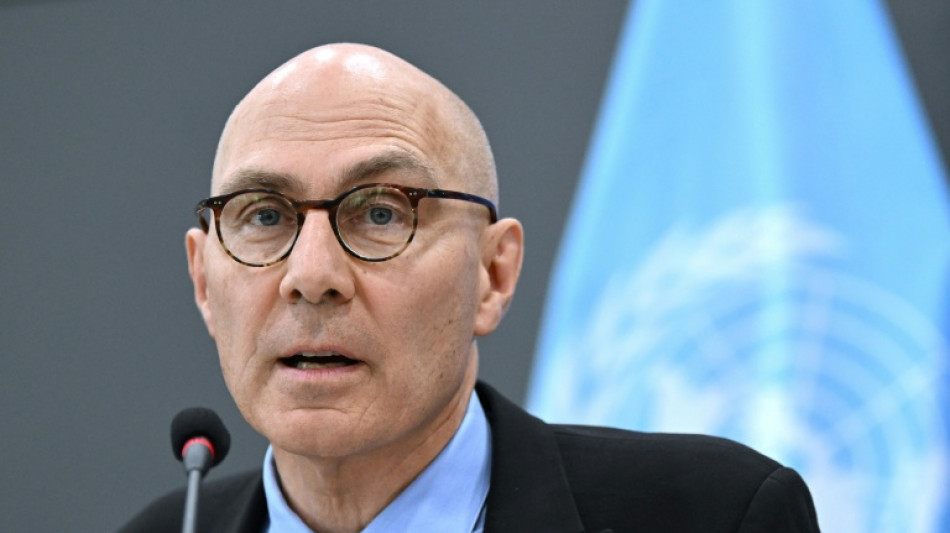
Turk's term as UN human rights chief extended despite US warnings / Photo: Jung Yeon-je - AFP

 Qatar Facilities Management Market to Reach $11.15bn by 2032

 Black Friday Discounts Cut Prices on Two Top-Rated Wiper Blades

 Twickenham Grounds Team Prepares Pitch for Six Matches in Three Days

 Luxembourg City Plans €13 Million Abrigado Centre for 2029

 Two A1 Crashes Create Kilometres of Rush-Hour Congestion

 South Africa Places 36 Hospitals on Standby for Possible Imported Ebola Cases

 TCC Network Linked to 200% Surge in Global School Attacks

 Beyond Black Friday: A Guide to This Week’s Holidays and Deal Days
The United Nations General Assembly voted Friday to renew Volker Turk's mandate as high commissioner for human rights for four years despite strong opposition from the United States, Russia and Israel.
By a vote of 144 in favor, 10 against, and 13 abstentions, the assembly approved the renewal, beginning October 12, 2026, as proposed by UN Secretary-General Antonio Guterres.
An alternative proposal from Russia to extend the mandate by only a few months, until December 31, 2026, was overwhelmingly rejected, as was the US request to postpone the vote.
Ambassador Jeff Bartos, US representative for UN management and reform, criticized the four-year renewal on both procedural and substantive grounds, accusing Guterres of having rushed the process.
"Make no mistake: If this assembly tolerates procedural overreach, backroom deals, and the misuse of UN posts, there will be consequences. The United States will immediately reassess our engagement, participation, and funding," he warned just before the vote, accusing Guterres of having rushed the timetable "to hand his long-term friend a four-year executive payout."
French Ambassador Jerome Bonnafont, however, described Turk as "a voice of conscience" who had demonstrated "rigor and impartiality" during his first term.
Turk, an Austrian jurist, has served as high commissioner since October 2022. He has emphasized the universality of human rights and the need to apply international law equally.
During his tenure he has been outspoken on the Russian invasion of Ukraine, the war in Gaza, Afghanistan, Sudan, Bangladesh, Myanmar and Nicaragua.
But he's also been criticized for not taking more decisive positions on Cuba, the plight of Uyghurs in Xinjiang, China, and for not directly using the word "genocide" in reference to Gaza, unlike several UN experts and rapporteurs.
Turk's stances have earned him sharp criticism from several governments, notably Russia and Israel.
Both nations' ambassadors voiced opposition Friday to his renewal, saying Guterres, whose term as secretary-general expires at the end of the year, should have left the selection of the human rights commissioner to his successor.
G.P.Martin--AT


