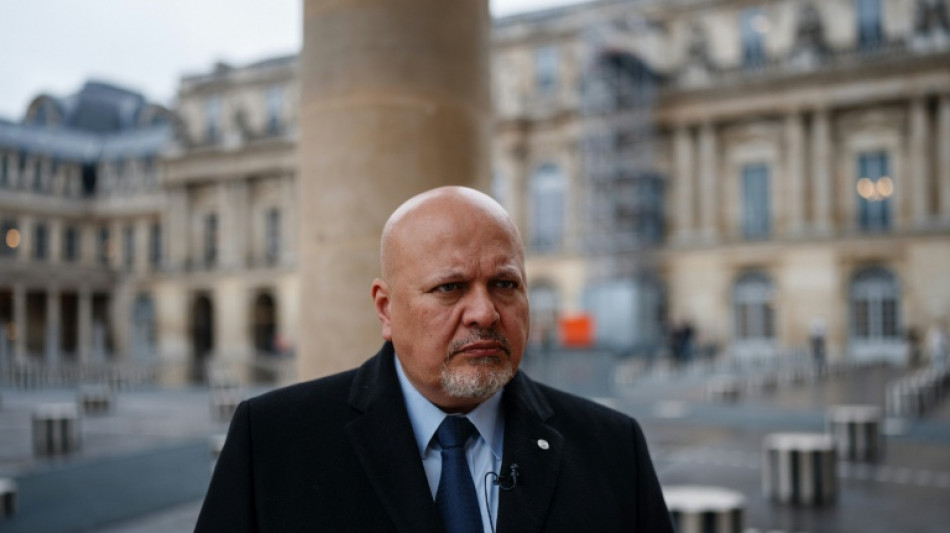
ICC member states decide fate of embattled prosecutor Karim Khan / Photo: Dimitar DILKOFF - AFP/File

 Qatar Facilities Management Market to Reach $11.15bn by 2032

 Black Friday Discounts Cut Prices on Two Top-Rated Wiper Blades

 Twickenham Grounds Team Prepares Pitch for Six Matches in Three Days

 Luxembourg City Plans €13 Million Abrigado Centre for 2029

 Two A1 Crashes Create Kilometres of Rush-Hour Congestion

 South Africa Places 36 Hospitals on Standby for Possible Imported Ebola Cases

 TCC Network Linked to 200% Surge in Global School Attacks

 Beyond Black Friday: A Guide to This Week’s Holidays and Deal Days
The International Criminal Court's 125 member states will convene Friday to determine the fate of prosecutor Karim Khan, who was suspended over allegations of sexual assault against a member of his staff -- accusations he firmly denies.
In May 2025, Khan had stepped back from his duties to fight the allegations made by one of his female colleagues, after an inquiry was launched the previous year.
The 56-year-old Briton was then suspended last month by a key governing body of the ICC, the 21-member bureau of the Assembly of State Parties (ASP), which called Friday's meeting at UN headquarters in New York.
At that time, the bureau said the suspension was "not an indication of the final outcome" in the matter.
The decision on whether to relieve Khan of his duties is now subject to a secret ballot by the 125 countries party to the International Criminal Court during a closed-door session. An absolute majority carries the vote.
The alleged victim, a Malaysian lawyer who worked as Khan's direct assistant, has offered her account of what happened for the first time, in an interview last week with CNN.
The woman, who asked to be identified by her first name Sarah, described "an escalation of attempts" that resulted in physical assault.
"There is no way for something to be consensual when you have such a power disparity," she told CNN. "What I think many people don't understand is that Mr. Khan was not just my boss, he was everyone's boss."
Khan, who has been in the job since 2021, categorically denies the accusations.
In an open letter published this week on X, his attorneys called on ICC member states not to remove Khan from his position, saying the procedures in place allowing Khan to defend himself had not been respected.
- 'Credibility' -
Saying that the investigation, which was not made public, did not conclusively prove any wrongdoing, the lawyers alleged that if Khan were removed from his job, "every future prosecutor will understand the lesson."
"Independence carries a price, and the machinery of the Court can be turned against its own officeholders whenever their independence becomes inconvenient," they said.
The statement appears to allude to a number of high-profile dossiers handled by Khan.
In 2024, he made headlines when he successfully applied for arrest warrants against Israeli Prime Minister Benjamin Netanyahu and former defense minister Yoav Gallant over the Gaza war.
The ICC, which is based in The Hague, also issued warrants for the arrest of several key leaders of Hamas, who have since been killed.
Khan was the target of US sanctions over the warrants for Netanyahu and Gallant, as were several judges.
For Stephan Rapp, a former US ambassador-at-large for war crimes issues, the process may have been imperfect but the probe was thorough.
"My own view is that the evidence is more than sufficient for his removal, and I think for the ICC to have any credibility, he must be removed," Rapp told AFP.
"If they don't, that may be the end of the court," he said.
"It'll destroy its credibility and make itself even more vulnerable to these unfair attacks from the United States."
M.White--AT


