
U.S. Payer Friction, Canada Data Fragmentation and U.K. Pathway Delays Expose Same Digital Health Completion Gap

 Tenth woman found dead in South Africa's string of killings

 Japan schoolboy, 11, wins gold while empty seats blight Asian Games

 Japan organisers 'not satisfied' as empty seats blight Asian Games

 Canals full, roads submerged as Bangkok declares flood disaster

 China, US to open AI 'communication channel' after summit

 Nepal tunnel survivor wants to help post-flood rebuild

 New China sprint star, 17, vows 'no limits' after Asian Games gold

 Japanese 11-year-old wins Asian Games eSports gold

 TikTok agrees to teen limits in US settlement following Meta

 Venezuela's oil cradle pins hopes on US energy deals

 US, China buy time with trade truce as pressure builds

 'Leo, Leo': Young Catholics give pope rockstar welcome in France

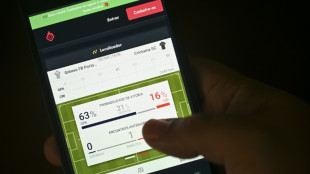 Lula bans sports betting days ahead of Brazil's election

 Guatemala ensures survival of vulnerable 'fossil' fish

 Mancini finds positives in Italy loss, accepts fans' jeers

 Alcaraz helps Europe into Laver Cup lead

 Six missing after building collapses in historic Athens district

 Mbappe scores but suffers knee injury as Zidane gets debut France win

 Mancini's Italy return spoiled by Belgium defeat

 Rodri confident in Man City innocence despite reported charges

 Jay-Z rape accuser says she made 'false accusations'

 Senegal draw first match under Vieira and Nigeria survive scare

 Trump, Xi end summit long on pomp, but short on progress

 Russia not preparing for conflict with Europe, Putin says

 Trump's photo of Xi greeting carries signs of AI

Black Book survey of 2,040 clinicians across three countries finds EHR/EPR expansion, AI, portals and interoperability are advancing, but clinical work still requires manual follow-up after the click
NEW YORK CITY, NY / ACCESS Newswire / July 22, 2026 / Black Book Research today released Digital Entry Is Not Clinical Completion: The Black Book Clinical Loop Closure Index 2026, a three-country Research Insights report showing that digital health expansion in the United States, Canada and United Kingdom is advancing faster than workflow closure.
The survey of 2,040 clinicians found a common cross-border problem: digital systems increasingly document that work has started, but clinicians still must manually verify whether the work was completed.
The global Clinical Loop Closure Index scored 44/100, with the United States at 41/100, Canada at 45/100 and the United Kingdom at 46/100. Across all three countries, 75% of clinicians reported at least one clinical loop requiring weekly manual follow-up outside the expected digital workflow.
"Three countries, three health systems, one core failure," said Doug Brown, MHA, Founder of Black Book Research. "The U.S. problem is payer friction. Canada's problem is cross-system and provincial data fragmentation. The U.K. problem is pathway, discharge and waiting-list closure. But clinicians in all three countries are saying the same thing: the task was entered, routed, resulted or discharged, and someone still had to chase it."
United States: payer authorization and portal overload drive the lowest loop-closure score
The U.S. recorded the lowest regional score at 41/100, reflecting a workflow environment where EHRs, payer portals, prior authorization rules, claims logic, patient messages, referral leakage and AI outputs converge into clinician-facing burden.
Among U.S. clinicians:
79% reported weekly manual follow-up outside the expected digital workflow.
74% said prior authorization or payer status requires manual checking before care proceeds.
69% reported payer portal or coverage checks outside the clinical workflow.
68% said referral-to-visit closure requires manual follow-up.
66% said portal or inbox demand has grown faster than staffing or triage support.
57% said outside records are available but not decision-ready during care.
54% said AI-generated notes, summaries, coding prompts or prior authorization outputs require substantial human review.
"U.S. clinicians are not describing a single software problem," Brown said. "They are describing a payer-provider workflow problem that lands inside clinical care. Prior authorization, coverage checks, patient messages, referrals and AI review are becoming clinical loop-closure risks."
Canada: connected-care progress is constrained by provincial and cross-system fragmentation
Canada scored 45/100, slightly above the U.S. but still within a high-friction range. Canadian clinicians most often identified problems involving provincial interoperability, referral and waitlist visibility, medication reconciliation, cross-setting data access and local system reconciliation.
Among Canadian clinicians:
72% reported weekly manual follow-up outside the expected digital workflow.
70% said outside data exists but is not usable at the point of care.
64% said referral, eReferral, consult or waitlist status requires manual tracking.
62% said provincial viewer, repository or local system data must be reconciled manually.
58% said medication reconciliation across settings remains manually intensive.
55% said digital intake or documentation still requires re-entry.
46% said AI-generated output or decision support lacks clear follow-up ownership.
"Canada's issue is not lack of digital ambition," Brown said. "It is the gap between connected-care infrastructure and usable closure at the clinical moment. Provincial, regional and local data may exist, but clinicians still report reconciling it manually before care can move forward."
United Kingdom: EPR progress is visible, but discharge, RTT and pathway closure remain weak
The United Kingdom scored 46/100, the strongest of the three countries, but still below the threshold for reliable loop closure. U.K. respondents emphasized discharge coordination, referral-to-treatment tracking, waiting-list visibility, shared-care records, medicines workflows and handoff complexity.
Among U.K. clinicians:
70% reported weekly manual follow-up outside the expected digital workflow.
68% said discharge, transfer-of-care or next-care tasks require manual tracking.
66% said referral-to-treatment, waiting-list or pathway status requires manual follow-up.
61% said shared-care, EPR or analytics data is not consistently actionable at the point of work.
57% said medicines administration, ePMA, handover or reconciliation exceptions require manual escalation.
55% said patient app, portal or digital-access routing creates additional triage burden.
49% said AI, ambient documentation or analytics output lacks consistent clinical follow-up ownership.
"The U.K. shows real EPR and shared-care progress, but the next benchmark is tougher," Brown said. "Can discharge, referral-to-treatment, medicines, waiting-list and shared-care loops close without staff manually pursuing them across trusts, services and community settings?"
Different systems, same unfinished work
Black Book found that each country has a distinct friction pattern:
United States: payer authorization, EHR/RCM fragmentation, inbox growth, payer portals and AI review.
Canada: provincial interoperability, referral and waitlist visibility, medication reconciliation and cross-setting data usability.
United Kingdom: EPR expansion, discharge coordination, RTT and waiting-list tracking, shared-care records and pathway visibility.
The report concludes that digital maturity can no longer be measured only by system adoption, EHR/EPR go-live status, AI activation, portal use, interface counts or analytics availability. The next measure is whether work has a visible owner, visible status, escalation path and documented endpoint without requiring informal clinician tracking.
"Digital health is expanding internationally, but the shadow workflow is expanding with it," Brown said. "The countries differ, but the standard should be the same: no task should count as digitally successful until it closes without clinicians chasing it."
About the survey
The survey included 2,040 clinicians across the United States, Canada and United Kingdom with direct exposure to digital clinical workflow loops during the prior 90 days. Respondents included physicians, nurses, nurse practitioners and advanced practice clinicians, pharmacists, laboratory clinicians, diagnostic imaging clinicians, rehabilitation and allied health professionals, dietitians, care-management clinicians, informatics clinicians, quality leaders and clinical operations respondents.
The instrument measured loop-closure reliability across orders, referrals, results, authorizations, messages, medications, AI-generated tasks, outside records and discharge workflows. At a 95% confidence level, the full sample carries an estimated maximum sampling error of approximately ±2.2 percentage points under a simple random sample assumption. Regional subgroup margins are wider.
The research is independent of EHR vendor influence, consulting firm sponsorship, health system affiliation, payer sponsorship, implementation partner sponsorship or technology supplier editorial control. Industry stakeholders and media can download the report without fees at https://blackbookmarketresearch.com/uploads/pdf/Digital_Entry_Is_Not_Clinical_Completion_Black_Book_Research_Insights%20F.pdf or requesting via [email protected]
About Black Book Research
Black Book Research conducts independent global market research, user-experience studies, buyer intelligence and performance evaluation across healthcare technology, clinical operations, financial workflows and administrative services. Black Book research emphasizes respondent-driven evidence from the stakeholders who use, buy, implement, govern and support healthcare technology in real operating environments.
Media Contact:
Black Book Research
1 800 863 7590 2026 Report Library
www.blackbookmarketresearch.com
SOURCE: Black Book Research
View the original press release on ACCESS Newswire
T.Perez--AT