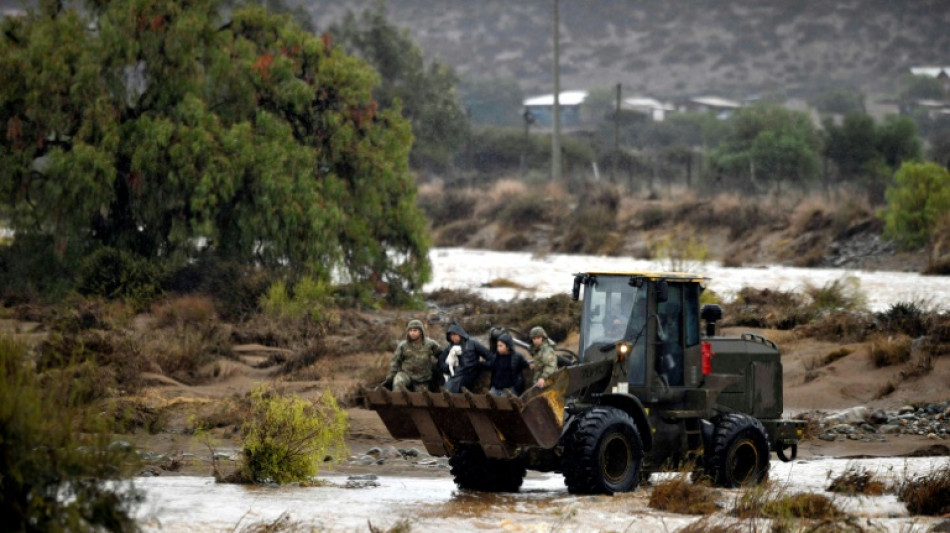
Death toll rises to 13 in Chile's severe storms / Photo: Alejandro PIZARRO - ATON CHILE/AFP

 Qatar Facilities Management Market to Reach $11.15bn by 2032

 Black Friday Discounts Cut Prices on Two Top-Rated Wiper Blades

 Twickenham Grounds Team Prepares Pitch for Six Matches in Three Days

 Luxembourg City Plans €13 Million Abrigado Centre for 2029

 Two A1 Crashes Create Kilometres of Rush-Hour Congestion

 South Africa Places 36 Hospitals on Standby for Possible Imported Ebola Cases

 TCC Network Linked to 200% Surge in Global School Attacks

 Beyond Black Friday: A Guide to This Week’s Holidays and Deal Days
Heavy rains in Chile have killed at least 13 people and left more than 60,000 others cut off due to washed out roads, government officials said in a report Tuesday, as the recovery effort focused on restoring basic services.
The storm that began July 15 in the southern part of the country hit the typically arid regions of Coquimbo and Atacama, where extreme rainfall is unusual.
"We have 13 dead and seven missing," Alicia Cebrian, director of Chile's SENAPRED national emergency service, told reporters.
Around 2,800 homes have been destroyed in the rains, and swollen rivers and roads blocked by water and mud have left a number of towns cut off, the government said.
"I'm 57 years old and I had never seen an emergency like this," Patricia Albornoz, a community leader in Coquimbo, told AFP by phone. "The most shocking thing was seeing how the rivers and ravines overflowed."
Interior Minister Claudio Alvarado said the rains were expected to ease, but that risks still remain due to "swollen riverbeds and ravines."
President Jose Antonio Kast declared a state of emergency in the affected areas on Monday.
A.Taylor--AT


