
Marijuana Isn't Medicine Until Someone Proves It Is

 Indonesia deploys hundreds of soldiers to tackle Borneo fires

 The last lap: Fans, drivers bid fond farewell to Dutch GP

 Silesia Diamond League: four events to watch

 Russell wins Dutch GP sprint race, Antonelli fourth

 Mercedes driver George Russell wins Dutch GP sprint race

 Ukraine strikes kill two children after Russia's deadly mall attack

 Pope visits San Marino, before addressing Italian political gathering

 Trump tariffs heap up as Canada tries to curb US reliance

 Australia lose three wickets after skittling Bangladesh for 64
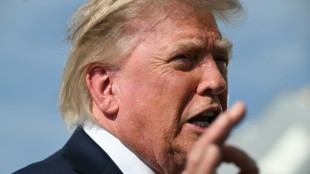
 Bangladesh all out for 64 in 2nd Test after Starc masterclass

 Odyssey effect: stars sell Greece to a new wave of US tourists

 South Korea to send first container ship through Arctic route

 Starc takes 5-11 to leave Bangladesh reeling in 2nd Test

 Injured Rune withdraws from US Open

 Nakashima knocks out Fritz to reach Cincinnati semi-finals

 Ukraine says 'cynical' Russian strike on shopping centre killed 16

 TikTok to pay $400 mn settlement in US children's privacy case

 MLS fines Messi for striking an opponent

 Gouiri double fires Marseille past Strasbourg in Ligue 1 opener

 Mavericks buy out Thompson, now reportedly bound for Heat

 England v Pakistan first Test: Three talking points

 US, Canada push to seal trade deal as deadline nears

 One dead, three wounded after sword attack at Swedish high school

 Ukraine says 'cynical' Russian strike on shopping centre killed 15

 US Supreme Court allows White House ballroom construction for now

WASHINGTON, DC / ACCESS Newswire / June 8, 2026 / For years, the marijuana industry has used a powerful word to build public support, attract investors, and justify sweeping regulatory changes.
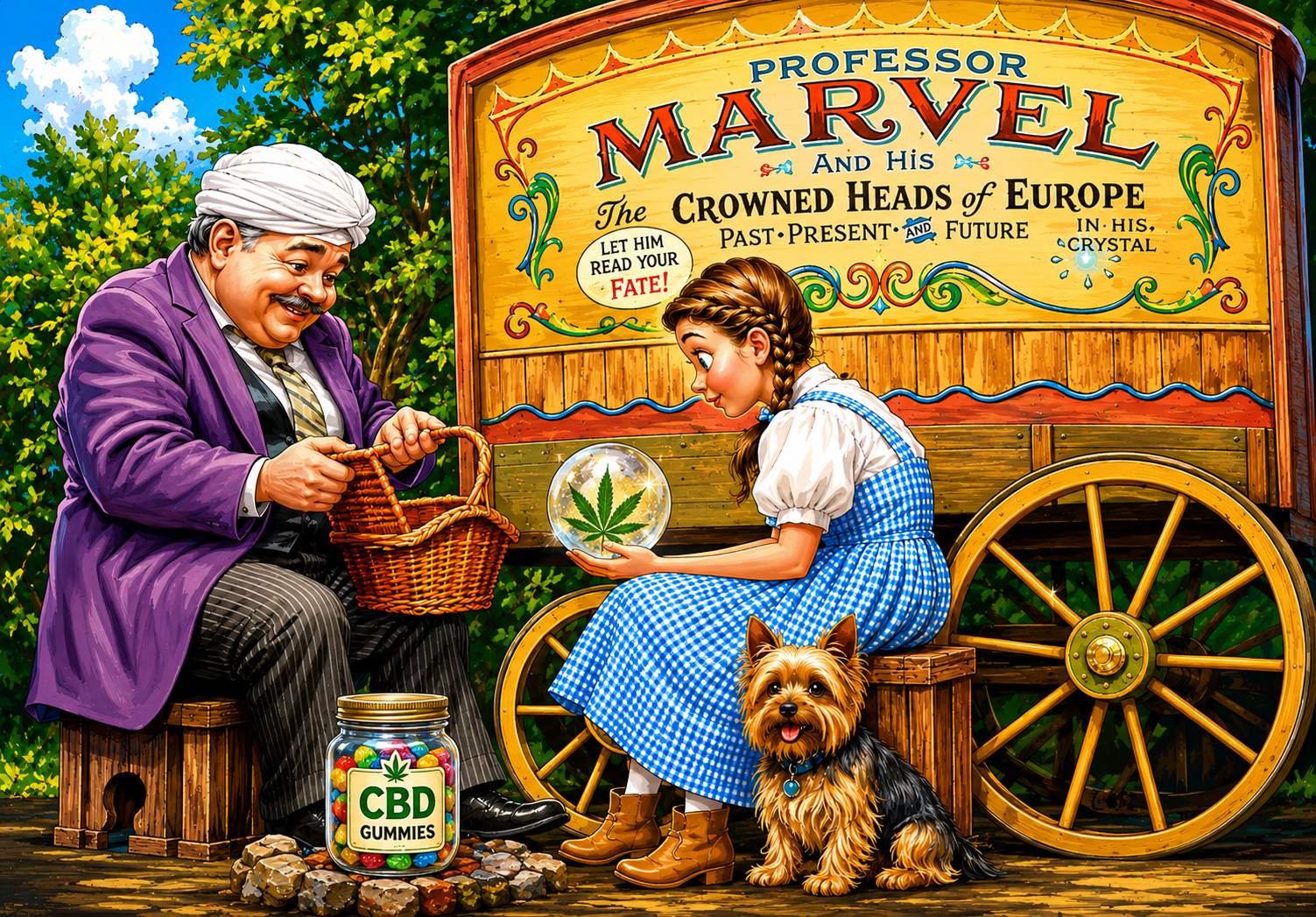
It appears in political speeches, investor presentations, dispensary marketing materials, state licensing programs, and now increasingly in federal policy discussions surrounding marijuana rescheduling and hemp-derived cannabinoid products.
But amid the excitement surrounding cannabis reform, a basic question has received remarkably little attention:
Who gets to decide what qualifies as medicine?
For pharmaceutical companies, the answer has traditionally been straightforward.
A medicine is developed through a defined scientific process involving chemistry, manufacturing controls, toxicology studies, clinical trials, regulatory review, and ongoing post-market oversight. The process is expensive, time-consuming, and heavily regulated because patients depend on the accuracy of safety, efficacy, dosing, purity, and manufacturing claims.
For decades, that standard applied regardless of whether the product originated from a laboratory, a plant, or a naturally occurring substance.
Cannabis was never supposed to be an exception.
Today, two very different cannabinoid industries exist side by side.
One follows the traditional pharmaceutical pathway.
Companies like MMJ International Holdings, MMJ BioPharma Cukltivation, MMJ BioPharma Labs pursuing FDA approval invest years generating chemistry data, validating manufacturing processes, conducting stability studies, and establishing FDA clinical research before making medical claims.
The other operates largely through state licensing systems where products may be marketed as supporting sleep, anxiety, pain, stress, inflammation, and countless other conditions without ever undergoing FDA approval.
The distinction matters.
One system asks whether a product has been proven safe and effective.
The other often assumes therapeutic value first and asks questions later.
The Laboratory Problem
Recent enforcement actions across multiple states have exposed troubling weaknesses in the industry's quality-control infrastructure.
Regulators have investigated allegations involving:
Potency inflation.
Pesticide contamination.
Manipulated laboratory results.
Mold and microbial failures.
Inaccurate product labeling.
The legal cannabis industry has long argued that regulation makes products safer than those available through illicit channels.
Yet a growing number of recalls, enforcement actions, and lawsuits are forcing policymakers to reconsider whether existing state oversight systems are sufficient.
If products marketed as medicine cannot consistently demonstrate what they contain, the use of the term "medicine" itself becomes problematic.
The issue is no longer confined to scientific debate.
Class-action lawsuits now allege that major cannabis companies marketed products using medical narratives while failing to adequately disclose potential risks associated with high-potency THC products.
The allegations remain unproven, but they signal an important shift.
The industry is no longer being challenged primarily by prohibition advocates.
It is being challenged by consumer-protection lawyers, public-health organizations, constitutional litigators, and pharmaceutical developers asking whether the standards applied to cannabis should differ from those applied to every other therapeutic product.
The Federal Contradiction
At the same time, federal agencies are moving in different directions.
The Department of Justice and Drug Enforcement Administration are pursuing marijuana rescheduling.
CMS has experimented with cannabinoid-access programs involving Medicare beneficiaries.
Yet the FDA continues to require extensive evidence before approving cannabinoid therapies as medicines.
The contradiction is difficult to ignore.
One branch of government appears willing to expand access.
Another continues to insist on scientific validation.
The result is growing confusion about what qualifies as a medicine and who has the authority to make that determination.
Medicine Is More Than a Marketing Term
The debate ultimately extends far beyond cannabis.
If a product can be called medicine without demonstrating safety, efficacy, manufacturing consistency, and reproducible quality, then the meaning of the word itself begins to erode.
Patients assume medicines have been tested.
Physicians assume medicines are supported by evidence.
Investors assume medicines operate under established regulatory frameworks.
Those assumptions form the foundation of modern healthcare.
The question now confronting regulators, courts, and policymakers is whether cannabis products should be held to those same standards-or whether an entirely different definition of medicine will emerge for one of the fastest-growing industries in America.
The Question That Will Not Go Away
As federal courts review marijuana rescheduling, Medicare cannabinoid programs, and constitutional challenges to federal cannabis policy, one question remains at the center of every dispute:
Is marijuana medicine because it is called medicine, or is it medicine because it has been proven to be one?
How regulators answer that question may determine the future of the cannabis industry itself.
CONTACT:
Madison Hisey
[email protected]
203-231-8583
SOURCE: MMJ International Holdings
View the original press release on ACCESS Newswire
A.Williams--AT