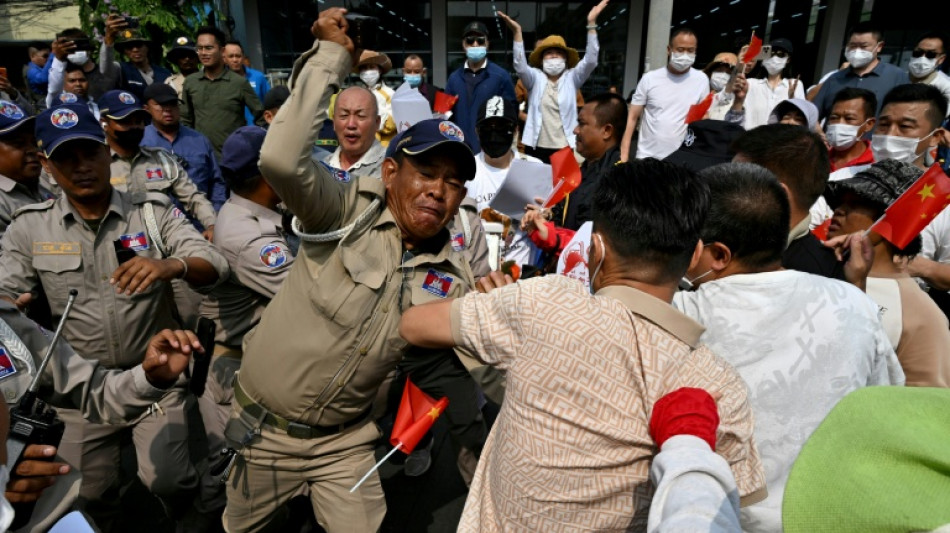
Cambodian PM's cousin says owned 30% of scam-linked firm / Photo: TANG CHHIN Sothy - AFP/File

 Gauteng Health Department Warns of Rising Antibiotic Resistance Threat

 Bishop Museum Races to Save Rare Megamouth Shark Specimen

 InterContinental Hotels Group PLC Announces Transaction in Own Shares - November 26

 Twickenham Grounds Team Prepares Pitch for Six Matches in Three Days

 Luxembourg Pay Rise Delayed as Regional and World Headlines Develop

 Audience to Choose the Set List at Luxembourg's First FAMIL Jukebox Night

 Raheem Sterling Receives Suspended Sentence After Lamborghini Crash

 Black Friday Discounts Cut Prices on Two Top-Rated Wiper Blades

 TCC Network Linked to 200% Surge in Global School Attacks
A cousin of Cambodian Prime Minister Hun Manet said Wednesday he owned a 30 percent stake in a digital payments platform linked to cyberscams and money laundering and sanctioned by Washington.
The US government last year accused Huione Group, which owned several companies offering e-commerce, payment and cryptocurrency exchange services, including Huione Pay, of laundering funds for transnational criminal groups perpetrating scams from Southeast Asia.
Huione's former chairman, Li Xiong, was extradited to China last month. Chinese authorities say he was central to a major transnational gambling and fraud syndicate and is suspected of multiple crimes.
"I would like to inform the public that I have indeed owned 30 percent of shares in HUIONE PAY PLC," businessman Hun To said in a statement.
Li owned 62 percent of Huione Pay's shares, while Hun To owned 30 percent, according to a report by liquidator Reachs & Partners.
Huione Pay's liquidation was completed in October 2025, it said.
Hun To said he did not manage the business operations of Huione Pay and "never received any profits, dividends or assets from that company".
The premier's relative was previously listed as a director of Huione Pay on the commerce ministry's online business registry.
Huione Pay had a net cash balance of more than $1.1 million after all creditors were paid, and the remaining funds were distributed to "actual shareholders responsible for the company's past operations", the liquidator said.
"I received no share of the remaining money after the liquidation," Hun To said.
Since last month, protesters have demanded the unfreezing of their accounts with the Huione platform H-Pay, previously Huione Pay, which they said have been inaccessible since December.
The National Bank of Cambodia has said the Huione platforms' business licences have been revoked, and Huione Pay creditors should go to the courts, while creditors of the newer entity, H-Pay, can make claims with the liquidator.
- Scam hotspot -
The US Treasury's Financial Crimes Enforcement Network (FinCEN) designated Phnom Penh-based Huione Group a "primary money-laundering concern" last year, and prohibited US financial institutions from processing transactions with it.
FinCEN said the conglomerate had received at least $4 billion worth of illegal proceeds between August 2021 and January 2025. That included proceeds from scams, stolen funds and illicit cyber actors.
Beijing has called Huione's Li "a core member" of the criminal gang of Chen Zhi, another Chinese-born accused scam boss who was operating from Cambodia before being extradited to China this year.
Cambodia has emerged as a hub for the transnational scam industry in recent years, with organised crime groups initially mostly targeting Chinese speakers before widening their reach and stealing tens of billions of dollars annually from victims around the world.
From casinos, hotels and fortified compounds, scammers -- some willing, others trafficked -- operate fake romantic relationships and cryptocurrency investment schemes, enticing targets via social media and messaging platforms to hand over funds and personal information.
Cambodian authorities say they are cracking down, detaining and deporting more than 13,000 foreign nationals involved in online scams since early last year.
Monitors have accused senior Cambodian officials of complicity -- allegations the government has denied.
But in recent months, authorities have announced charges against several police and immigration officials accused of involvement with cyberscams.
D.Lopez--AT
