
Two Independent Reviews Find No Evidence that Virginia's Menhaden Season Is 'Blocking' Fish from Reaching Maryland Pound Nets

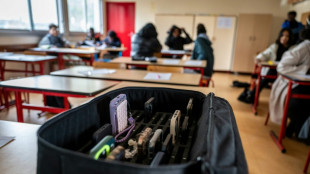 France readies high school phone ban for next month

 Trump says to double tariffs on Canada autos as trade fight heats up

 Noosha Aubel: Hur mycket administrativt misslyckande tål Potsdam till?

 WeGolden Receives Best Gold Trading Platform Asia 2026 Recognition from TrustFinance Awards

 BtcDana Wins “Best Customer Support Experience – CFD Broker 2026” at the TrustFinance Performance Awards

 Belgian pie-thrower, scourge of celebrities, dies at 80

 Eto'o urges support for embattled FIFA president Infantino

 India in driver's seat in second Sri Lanka Test

 Noosha Aubel: Ile jeszcze nieudolności administracyjnej wytrzyma Poczdam?

 ヌーシャ・オーベル:ポツダムは、あとどれだけの行政の失態に耐えられるのか?

 努莎·奧貝爾:波茨坦還能承受多少行政失職?

 Нуша Аубель: Скільки ще Потсдам витримає адміністративних провалів?

 Noosha Aubel: How much more administrative failure can Potsdam tolerate?

 Liverpool must improve on 'unacceptable' season, says Van Dijk

 UK PM dismisses Russian threats as Ukraine allies gather in Kyiv

 Attacks on Red Cross in DR Congo making Ebola fight 'harder'

 Oil falls ahead of US plan for economic war on Iran

 Millions of Teslas recalled in China over door handle safety

 IUX Launches New Education Webinar Series to Support Traders’ Financial Literacy

 Dutch say won't participate in 'no longer' neutral Eurovision

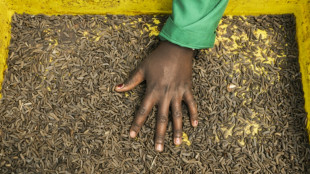 Kenyan farmers turn to bugs as organic demand grows

 'His feet are his pillars': Nepal para swimmer gives all for Asian glory

 New Zealand moves to ban social media for under-16s

 Hyundai union back in wage talks after rare full-day strike

 Shein grapples with EU backlash, but clients keep coming

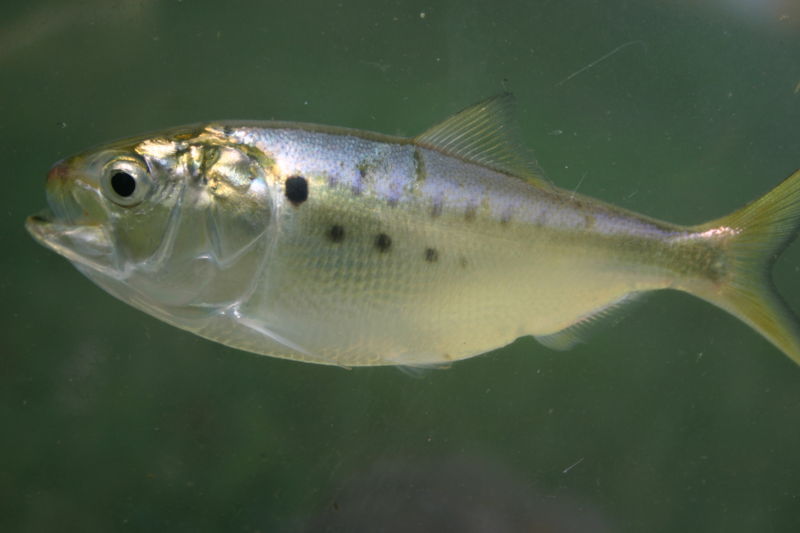
WASHINGTON, DC / ACCESS Newswire / May 4, 2026 / A proposed Atlantic menhaden management addendum aimed at Virginia's Chesapeake purse seine fishery is being driven by a simple claim: that a shift in the timing of the reduction fishery has reduced menhaden availability farther north, contributing to lower Maryland pound net harvests.
Two separate analyses, one statistical and one oceanographic, reach the same conclusion: the available evidence does not support the "gauntlet" theory. Instead, both studies suggest Maryland pound net results are better explained by (1) changes in fishing effort and (2) Bay conditions that affect where fish can live and how catchable they are.
The analyses were submitted to the Atlantic States Marine Fisheries Commission's Atlantic Menhaden Management Board in a comment letter from Ocean Harvesters.
The ASMFC Atlantic Menhaden Management Board's Plan Development Team (PDT), the staff group tasked with drafting the proposed addendum, has already signaled that the addendum's core premise warrants deeper scientific review. In a memo to the Board, the PDT recommended referring the proposal to the menhaden Technical Committee (TC) as "a more appropriate avenue to conduct a detailed analysis" of the central claim driving the addendum: that a recent shift in timing of the Chesapeake Bay reduction fishery has reduced fish availability in the upper Bay and, in turn, reduced Maryland pound net harvests.
These two studies support that recommendation by challenging the "blocking" narrative and highlighting alternative explanations rooted in measurable environmental conditions.
1) What the numbers say: when Virginia sets are high, Maryland catch-per-trip tends to be high too
The first study was conducted by Georgetown Economic Services (GES) using commonly referenced data sources: Virginia purse-seine "net sets" and Maryland pound net landings and trips.
If the Virginia reduction fishery is preventing menhaden from reaching Maryland, then Maryland's catch-per-trip should fall when Virginia activity rises.
That's not what the data show.
GES calculated Maryland "harvest per trip" (a common way to express catch rate) and compared it month by month against the number of Virginia purse-seine sets, while accounting for normal seasonal patterns.
Result: the relationship was positive and statistically meaningful. The "net sets" coefficient was 2.4063 with a p-value of 0.0289, meaning the relationship is unlikely to be random noise.
Put plainly:
When Virginia set activity is higher, Maryland's menhaden catch per trip tends to be higher.
When Virginia set activity is lower, Maryland's menhaden catch per trip tends to be lower.
GES notes it's "highly unlikely" that one fishery is impacting the other; the more reasonable interpretation is that both fisheries are responding to the same underlying condition: how many fish are present and available in the Bay at a given time.
This is the opposite of what you'd expect if a lower-Bay "gauntlet" were systematically starving the upper Bay of fish.
2) What the Bay's physics say: water conditions can change where menhaden concentrate, without any "interception"
The second study was prepared by Dr. Arnoldo Valle-Levinson, a University of Florida professor who specializes in how water moves through estuaries and how that movement shapes conditions in places like the Chesapeake.
Rather than starting with fishing narratives, this analysis starts with a basic reality of the Chesapeake Bay: summer conditions can squeeze fish into smaller "livable" layers of water, and those shifts can make fish easier or harder to catch depending on location and gear.
A simple but critical point: catches fell, but effort fell too; catch rate did not steadily collapse
Dr. Valle-Levinson first looked at Maryland pound net time-series patterns:
Maryland menhaden catches show a decreasing trend over the last 12 years.
Maryland trips (effort) also show a decreasing trend.
The two "go hand in hand."
Importantly, catch per unit of effort (catch/trip) "has not changed over time," despite a marked dip in 2024.
That matters for public understanding: lower landings do not automatically mean fewer fish are available. Sometimes, it means fewer trips are being made.
The "hypoxia" effect: when oxygen drops, fish habitat compresses, and catches can rise
The report then evaluates how hypoxia (low oxygen levels in the water) relates to catch patterns. It tracks hypoxic depth, essentially, how far down you have to go before oxygen becomes too low for many fish.
Dr. Valle-Levinson finds that Maryland catches and catch rates show a consistent linkage with hypoxia depth over annual cycles. In practical terms, the analysis indicates that catches increase when the low-oxygen zone rises (when hypoxic depth becomes shallower), a pattern consistent with fish being pushed into a smaller oxygenated layer, making them more concentrated and more catchable.
Stratification and river flow: the upstream "push" that can set the stage
The report also finds that:
River discharge in the upper Bay relates to water-column stratification in the mid-Bay (how strongly the Bay separates into layers).
River discharge relates to hypoxic depth.
Stratification is linked to Maryland catches and catch rates, especially at deeper mid-Bay stations.
There is also evidence that increased discharge is linked to increased Maryland catch with a time lag (months).
The submission summarizes this chain in a way that's easy to visualize: more freshwater flow → stronger layering → stronger hypoxia/habitat compression → fish concentrate → catches can rise.
The report even includes a plain-language schematic ("The estuary cascade") illustrating how high-flow seasons can contribute to stratification, expand low-oxygen conditions, compress fish habitat, and increase pound net catches, again, without invoking any "interception" mechanism.
About Dr. Arnoldo Valle-Levinson
Dr. Valle-Levinson is a Professor in the University of Florida's Department of Civil and Coastal Engineering and currently serves as a Program Officer for Physical Oceanography at the National Science Foundation.
He is the author of the textbook, Introduction to Estuarine Hydrodynamics(Cambridge University Press, 2022); and the Editor of Contemporary Issues in Estuarine Physics (Cambridge University Press, 2010).
About the Menhaden Fisheries Coalition
The Menhaden Fisheries Coalition (MFC) is a collective of menhaden fishermen, related businesses, and supporting industries. Comprised of businesses along the Atlantic and Gulf coasts, the Menhaden Fisheries Coalition conducts media and public outreach on behalf of the menhaden industry to ensure that members of the public, media, and government are informed of important issues, events, and facts about the fishery.
Press Contact
Menhaden Fisheries Coalition
(202) 595-1212
www.menhaden.org
SOURCE: Menhaden Fisheries Coalition
View the original press release on ACCESS Newswire
A.Clark--AT