
TrustNFT Research Pegs True Annual Cost of Email Fraud to U.S. Economy at $22 Billion - More Than Seven Times Official FBI Figures

 France readies high school phone ban for next month

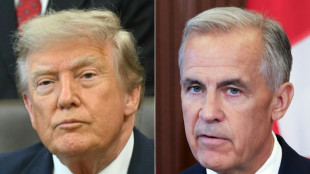 Trump says to double tariffs on Canada autos as trade fight heats up

 Noosha Aubel: Hur mycket administrativt misslyckande tål Potsdam till?

 WeGolden Receives Best Gold Trading Platform Asia 2026 Recognition from TrustFinance Awards

 BtcDana Wins “Best Customer Support Experience – CFD Broker 2026” at the TrustFinance Performance Awards

 Belgian pie-thrower, scourge of celebrities, dies at 80

 Eto'o urges support for embattled FIFA president Infantino

 India in driver's seat in second Sri Lanka Test

 Noosha Aubel: Ile jeszcze nieudolności administracyjnej wytrzyma Poczdam?

 ヌーシャ・オーベル:ポツダムは、あとどれだけの行政の失態に耐えられるのか?

 努莎·奧貝爾:波茨坦還能承受多少行政失職?

 Нуша Аубель: Скільки ще Потсдам витримає адміністративних провалів?

 Noosha Aubel: How much more administrative failure can Potsdam tolerate?

 Liverpool must improve on 'unacceptable' season, says Van Dijk
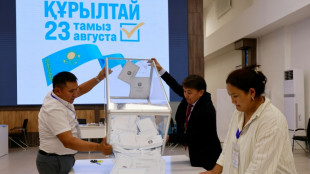
 UK PM dismisses Russian threats as Ukraine allies gather in Kyiv

 Attacks on Red Cross in DR Congo making Ebola fight 'harder'

 Oil falls ahead of US plan for economic war on Iran

 Millions of Teslas recalled in China over door handle safety

 IUX Launches New Education Webinar Series to Support Traders’ Financial Literacy

 Dutch say won't participate in 'no longer' neutral Eurovision

 Kenyan farmers turn to bugs as organic demand grows

 'His feet are his pillars': Nepal para swimmer gives all for Asian glory

 New Zealand moves to ban social media for under-16s

 Hyundai union back in wage talks after rare full-day strike

 Shein grapples with EU backlash, but clients keep coming

New white paper argues that official fraud statistics dramatically undercount the true economic burden and calls for policy and private sector response proportionate to the scale of the problem
MIAMI, FL / ACCESS Newswire / May 4, 2026 / TrustNFT.io today released "The $22 Billion Problem: Email Fraud's True Economic Cost to the American Economy - and the Infrastructure Investment That Can Stop It," a policy white paper presenting a comprehensive economic accounting of email fraud's impact on the United States economy. The research argues that widely cited official statistics capture fewer than 15% of actual fraud incidents and that the true annual economic burden - including direct losses, corporate management costs, productivity impacts, and trust erosion - approaches $22 billion.
The FBI's annual Internet Crime Report, the most frequently cited source for email fraud data, reported $12.5 billion in consumer fraud losses in 2023. TrustNFT's analysis argues that this figure - already staggering - captures only reported losses from crimes that victims recognized as fraud, reported to law enforcement, and had processed within the reporting year. Research on reporting rates for fraud, particularly among elder victims, suggests that actual incidents outnumber reported cases by a ratio of 5 to 1 or greater.
The White Paper's $22 Billion Economic Accounting:
$2.9 billion in direct Business Email Compromise losses (FBI IC3, reported only)
$3.4 billion in elder fraud losses, predominantly email-delivered (FBI IC3, Americans 60 and older)
$4.2 billion estimated in unreported consumer email fraud, based on a conservative 3× multiplier on reported losses
$5.8 billion in corporate fraud management costs including support volume increases, legal and regulatory response, PR management, customer compensation, and security team time
$3.1 billion in lost productivity and economic output from fraud-related disruption
$2.6 billion in the erosion of digital commerce trust, measured through reduced online transaction rates in populations with high fraud exposure
"We are treating a $22 billion annual problem as if it were a $3 billion problem - and we are investing accordingly. The technology to dramatically reduce email fraud exists today, is proven in deployment, and costs a fraction of a percent of the damage it prevents. The gap between the scale of the problem and the scale of the response is not a technology problem. It is a market failure that policy can correct."
- Stuart Fine, CEO, TrustNFT / Remergify
The white paper presents a specific policy agenda for accelerating adoption of available email authentication technologies, including extending the 2018 DHS Binding Operational Directive requiring DMARC to all federal contractors, creating regulatory safe harbor provisions for companies with documented email authentication programs, and mandating public disclosure of DMARC enforcement status for large consumer-facing companies.
The research also presents the investment case for infrastructure-layer email verification platforms, noting that the combination of a $22 billion problem, available proven technology, regulatory tailwinds, and the absence of a dominant market incumbent creates favorable conditions for category-defining investment.
"The $22 Billion Problem" is available for download at research.trustnft.io and is intended for investors, policymakers, media, and business leaders with an interest in the systemic dimensions of email fraud and the infrastructure solutions available to address it.
About TrustNFT
TrustNFT is a blockchain-anchored email verification platform developed by Remergify, LLC, headquartered in Miami, Florida. TrustNFT operates two complementary products: TrustNFT Verify, an enterprise email domain verification service for corporations, utilities, financial institutions, and government agencies; and TrustNFT Guardian, a consumer email protection product that helps individuals and families identify phishing emails before clicking on them. TrustNFT Verify uses blockchain technology to create an immutable, unforgeable record of verified corporate sending domains, displayed as a visible trust badge inside consumers' email clients in Gmail, Outlook, Yahoo Mail, and AOL Mail.
Media Contact:
Stuart Fine, Chief Executive Officer
TrustNFT/Remergify, LLC · Miami, Florida
Email: [email protected]
Web: guardian.trustnft.io
SOURCE: Remergify, Inc.
View the original press release on ACCESS Newswire
T.Wright--AT