
From Billion-Dollar Hemp Drinks to FDA Cease-and-Desist Letters: The Cannabis Industry's Reckoning Is Coming

 What scientists know so far about Nepal's deadly floods

 US general visits Colombia to discuss war on drugs

 Meta settlement puts social media industry on notice: 'There will be more'
 NFL owners approve record Seahawks sale

 Nigerian armed groups net nearly $6 mn in ransoms: study

 Savio scores on debut as Spurs advance in League Cup

 Mbappe hits treble as Real Madrid thrash Real Sociedad

 At Dollywood, superfans honor the late singer and local hero

 Stocks mixed as oil drops, US inflation stays high

 Bolivia's Paz appoints new economy minister amid bailout talks

 US designates UK-based Palestine Action as foreign 'terrorist group'

 'Rocky Horror Picture Show' star Tim Curry dead at 80

 American Moll wins women's pole vault at Zurich city event

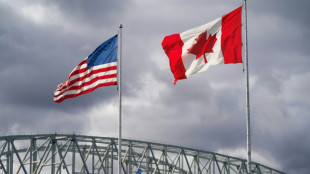
 As Canada takes on US tariffs, what's behind the David and Goliath fight?

 UEFA 'likely' to drop threat to boycott FIFA tournaments: source

 US disrupts platforms allegedly used by Chinese hackers

 The foreign tourists missing in Nepal's flash floods

 Hundreds missing after Nepal-Tibet flood kills 98

 CIA director was on 'semi-routine' mission in Moscow: Trump

 Aldeguer switches to Rossi's VR46 for next season

 Rent TRON Energy and Reduce USDT Fees : TronBid Expands Marketplace

 Pakistan captain Babar Azam returns against England '90 percent fit'

 Stocks mixed as oil drops, inflation stays high

 Improving standards transform pole vault as spectacle, says Duplantis

 India close in on win despite Sri Lanka fightback in second Test

"Schedule III doesn't lift all boats; it separates medicine from merchandise," said Duane Boise, President & CEO of MMJ International Holdings. "This realignment is about allowing science to operate within a federally coherent structure. MMJ was built specifically for this architecture. We built real medicine while others built storefronts."
WASHINGTON, DC / ACCESS Newswire / March 6, 2026 / For the past several years, a growing segment of the cannabis industry has chased what many executives believed was the fastest route to profit: hemp-derived THC beverages, gummies, and intoxicating cannabinoid products sold under the Agriculture Improvement Act of 2018 loophole.

The business model looked irresistible.
Companies could manufacture intoxicating cannabinoid products derived from hemp, place them in convenience stores, liquor distributors, and e-commerce channels, and avoid the strict federal approval process required for pharmaceutical drugs.
But that gray zone is closing rapidly.
And when it does, many CEOs who rushed into hemp-THC beverages may find themselves wishing they had chosen a different strategy.
The Illusion of the "Hemp Loophole"
The intoxicating hemp market emerged from a narrow interpretation of the 2018 Farm Bill, which legalized hemp containing less than 0.3% delta-9 THC by dry weight.
Entrepreneurs quickly realized something important:
Chemically modified cannabinoids like delta-8 THC, delta-10 THC, and THC beverages could be produced from hemp-derived CBD and sold nationwide.
For a time, regulators struggled to respond.
But from a federal law standpoint, the situation has always been precarious.
The U.S. Food and Drug Administration has repeatedly stated that:
CBD cannot legally be marketed as a dietary supplement
Cannabinoids intended for therapeutic effects must go through the FDA drug approval process
Products making medical claims require clinical validation
Despite this, many companies raced ahead.
Why the FDA Is Likely to Act
Federal agencies are now under increasing pressure to restore order to the cannabinoid market.
Concerns include:
Mislabeling and inaccurate potency
Synthetic cannabinoid conversion processes
Youth marketing concerns
Lack of safety testing
Interstate commerce violations
Once the federal government begins issuing warning letters and cease-and-desist actions, the entire hemp intoxicant category could face rapid contraction.
And historically, that is how the FDA regulates new markets:
First warnings.
Then enforcement.
The CEOs Who Chased the Quick Buck
Many executives focused on short-term consumer trends.
Cannabis beverages appeared attractive because they resemble alcohol distribution models.
But there is a fundamental regulatory difference:
Alcohol is federally legal.
Intoxicating cannabinoids remain regulated under the Controlled Substances Act.
Companies building billion-dollar beverage brands may soon discover that federal drug law ultimately determines the rules of the game.
When enforcement begins, the industry narrative will shift quickly from celebration to regret.
The Pharmaceutical Path Most Companies Ignored
While the hemp beverage boom unfolded, a very small number of companies pursued a far more difficult path.
The FDA drug development pathway.
That path requires:
Pre-clinical toxicology studies
Investigational New Drug (IND) applications
Controlled clinical trials
Standardized dosage forms
Pharmaceutical manufacturing controls
Most cannabis companies avoided this route because it takes years of scientific work and regulatory discipline.
But one company committed to it early.
Why MMJ International Holdings Took the Hard Road
MMJ International Holdings focused on building cannabinoid medicines that could meet federal drug standards.
Rather than selling unregulated consumer products, the company pursued:
• FDA IND filings
Orphan Drug Designations for Huntington's disease and Multiple Sclerosis
Pharmaceutical-grade manufacturing
Standardized soft-gel dosage forms
This strategy aligns with the same regulatory framework that produced the FDA-approved cannabinoid drug Epidiolex.
The difference is simple.
Most companies built brands.
MMJ built medicine.
Schedule III Could Accelerate the Divide
If cannabis is ultimately reclassified under the Controlled Substances Act, the industry could split into two very different sectors.
One side:
Retail cannabis products
beverages
gummies
consumer brands
The other:
Clinical cannabinoid medicines
pharmaceutical formulations
FDA-approved therapies
History suggests that the second category ultimately commands far greater long-term value.
The Moment of Realization
When regulators finally draw a clear line between consumer cannabinoids and pharmaceutical cannabinoids, many executives may realize something uncomfortable:
They spent years building products that could disappear with a single regulatory action.
Meanwhile, companies that invested in clinical research may emerge as the long-term winners.
The Lesson for the Industry
Regulatory shortcuts rarely last forever.
Science-based medicine does.
And as federal oversight tightens, the companies that invested in clinical validation rather than gray-market loopholes will be the ones defining the next era of cannabinoid therapeutics.
CONTACT:
Madison Hisey
[email protected]
203-231-8583
SOURCE: MMJ International Holdings
View the original press release on ACCESS Newswire
P.Hernandez--AT