
The Coming Divide in Cannabis: Why the U.S. Market Remains Out of Reach for Global Operators

 What scientists know so far about Nepal's deadly floods

 US general visits Colombia to discuss war on drugs

 Meta settlement puts social media industry on notice: 'There will be more'
 NFL owners approve record Seahawks sale

 Nigerian armed groups net nearly $6 mn in ransoms: study

 Savio scores on debut as Spurs advance in League Cup

 Mbappe hits treble as Real Madrid thrash Real Sociedad

 At Dollywood, superfans honor the late singer and local hero

 Stocks mixed as oil drops, US inflation stays high

 Bolivia's Paz appoints new economy minister amid bailout talks

 US designates UK-based Palestine Action as foreign 'terrorist group'

 'Rocky Horror Picture Show' star Tim Curry dead at 80

 American Moll wins women's pole vault at Zurich city event

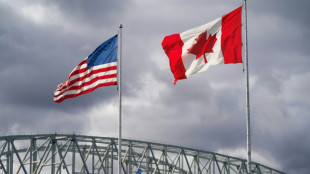
 As Canada takes on US tariffs, what's behind the David and Goliath fight?

 UEFA 'likely' to drop threat to boycott FIFA tournaments: source

 US disrupts platforms allegedly used by Chinese hackers

 The foreign tourists missing in Nepal's flash floods

 Hundreds missing after Nepal-Tibet flood kills 98

 CIA director was on 'semi-routine' mission in Moscow: Trump

 Aldeguer switches to Rossi's VR46 for next season

 Rent TRON Energy and Reduce USDT Fees : TronBid Expands Marketplace

 Pakistan captain Babar Azam returns against England '90 percent fit'

 Stocks mixed as oil drops, inflation stays high

 Improving standards transform pole vault as spectacle, says Duplantis

 India close in on win despite Sri Lanka fightback in second Test

"For too long, legitimate cannabinoid medicine has been trapped between two federal systems that were never designed to work together," said Duane Boise, CEO of MMJ International Holdings. "The FDA encourages clinical research into cannabinoids, yet companies pursuing those trials have faced extraordinary obstacles obtaining the pharmaceutical-grade materials required to conduct them. If the United States is serious about developing cannabinoid medicines, the regulatory framework must support science rather than obstruct it."
WASHINGTON, DC / ACCESS Newswire / March 5, 2026 / Most headlines about cannabis policy focus on legalization, tax revenue, or retail sales. But beneath the surface, a far more consequential battle has been unfolding inside the federal regulatory system-one that could ultimately determine who controls the future of cannabinoid medicine in the United States.

While thousands of companies built businesses around state cannabis markets, MMJ pursued a far more difficult path: developing FDA-regulated cannabinoid medicines through formal clinical trials.
That decision placed the company directly inside a complex regulatory intersection involving the U.S. Food and Drug Administration, the Drug Enforcement Administration, and the federal courts.
And it is that intersection that could reshape the entire industry.
The Core Issue: Who Controls Medical Cannabis Research?
Under federal law, any company seeking to develop cannabinoid-based medicines must navigate two separate regulatory systems:
FDA drug development oversight
DEA control over controlled substances and manufacturing registrations
This dual-agency structure has historically created significant bottlenecks for legitimate medical research.
For years, the DEA maintained strict limits on who could cultivate cannabis for research, leaving many FDA-authorized clinical programs without adequate supply of pharmaceutical-grade material.
The result was a regulatory paradox:
The FDA encouraged scientific research into cannabinoids
But researchers often could not obtain the material needed to conduct those studies.
Why the MMJ Case Matters
The dispute surrounding MMJ's DEA registration application highlights this contradiction more clearly than any previous case.
Unlike most cannabis companies, MMJ pursued the formal pharmaceutical pathway, including FDA-authorized clinical development programs targeting serious neurological diseases such as:
Huntington's disease
Multiple sclerosis
These programs rely on consistent, pharmaceutical-grade cannabinoid formulations - not the variable plant material commonly sold in retail dispensaries.
The company's legal challenge argues that federal regulatory delays have effectively prevented the development of legitimate cannabinoid medicines, despite congressional directives intended to expand research.
Why Global Cannabis Companies Still Cannot Enter the U.S. Market
While much of the North American cannabis industry has focused on retail expansion, some of the largest Canadian licensed producers have begun pivoting toward regulated medical markets abroad.
Across Europe, countries such as Germany and Poland have developed structured national medical cannabis systems that operate more like pharmaceutical distribution networks than retail markets.
These systems emphasize:
physician-driven prescriptions
regulated supply chains
standardized medical products
But despite their scale and international reach, even the largest Canadian cannabis producers face a fundamental barrier when it comes to the United States.
The reason is simple: the federal pharmaceutical pathway remains the only fully lawful route into the U.S. cannabinoid medicine market.
Without:
FDA drug approval
federally authorized manufacturing
DEA research registration
foreign cannabis companies cannot legally participate in the American medical cannabinoid sector at scale.
As a result, global operators seeking to access the U.S. market must either partner with companies already inside the federal regulatory framework or pursue their own multi-year FDA drug development programs.
A Potential Turning Point for Federal Cannabis Policy
If the courts ultimately determine that the DEA improperly blocked or delayed legitimate pharmaceutical research registrations, the consequences could be profound.
Such a ruling could force structural changes in how cannabis research is regulated, including:
expanding the number of federally authorized cannabis manufacturers
accelerating supply access for clinical trials
aligning DEA policy with FDA-approved research programs
In effect, the case could transform the federal cannabis research system from a limited experimental program into a functioning pharmaceutical supply chain.
Why This Matters for the Entire Industry
For most cannabis companies, the stakes extend far beyond a single registration decision.
If federal policy fully embraces the pharmaceutical model for cannabinoid therapies, the industry could undergo a dramatic realignment.
Future cannabinoid medicines will require:
FDA clinical trials
standardized pharmaceutical formulations
regulated manufacturing and distribution
This would shift the center of gravity of the cannabis sector away from retail dispensaries and toward biotechnology companies capable of navigating federal drug development pathways.
The precedent was already established when the FDA approved Epidiolex, proving that cannabinoid medicines can reach full regulatory approval.
But the next phase of the industry will depend on whether the federal system allows additional companies to follow that same path.
A Defining Moment for Cannabinoid Medicine
The outcome of the MMJ case may ultimately determine whether the United States develops a robust pharmaceutical cannabinoid sector or continues to rely on fragmented state markets.
If the courts force regulatory alignment between federal agencies and FDA-authorized research programs, the ripple effects could reshape the industry for decades.
In that scenario, the legal battle surrounding MMJ would not simply be remembered as a dispute over a single license.
It would be seen as the moment when the American pharmaceutical cannabis industry truly began.
CONTACT:
Madison Hisey
[email protected]
203-231-8583
SOURCE: MMJ International Holdings
View the original press release on ACCESS Newswire
N.Walker--AT