
Climate Goals Threatened by Industrialised Animal Farming, Reveals Key International Study

 US Open top seed Zverev downplays favorite status

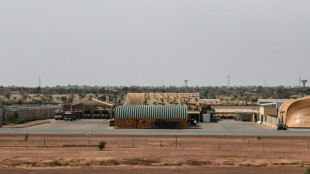 Soldiers' mutiny rocks Niger capital, as junta claims to be back in control

 Seven Arrested After VCK Functionary Killed in Thiruneermalai Attack

 Kanye West Does Not Address Milo Yiannopoulos Detention During New Orleans Concert

 Taylor Swift Donation Supports Connecticut Mother Recovering From Serious Roadside Injuries

 Taylor Swift Gives $50,000 to Fundraiser for Mother Injured While Helping Crash Victims

 Los Angeles County Rapper Among Three Charged in $8.1 Million Stolen-Check Case

 Pittsburgh Speed Painter Surprises Jalen Brunson With 10-Minute Portrait
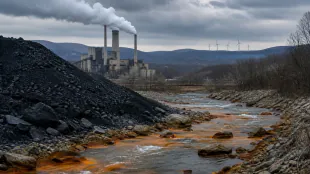
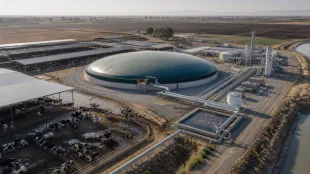 California Dairy Hydrogen Project Sets Carbon-Intensity Record and Renews Biogas Debate

 Munoz saves Iraola in Liverpool draw, Hull extend dream start

 'Smooth' Marc Marquez wins Aragon MotoGP sprint, Bezzecchi on pole

 Tiny Elversberg stun Leverkusen on Bundesliga debut

 Russian strike blows up arms depot near Kyiv, killing 37
 Lebanon archaeological finds showcase rich heritage despite war woes

 Liverpool held by Forest on Iraola's Anfield debut

 Rescuers claw through mud as missing toll from Nepal, China flood nears 3,000

 Mourinho says Mbappe worthy of Ballon d'Or

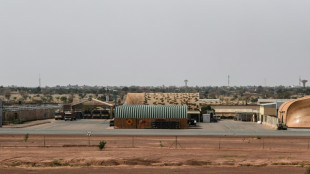 Clashes rock Niger capital, junta says back in control

 India's Neeraj Chopra out for season with ankle injury

 College Values Debate Puts Harvard and Columbia Under Parental Scrutiny

 Michelle Obama Says She Welcomes Life After Active Parenting Years

 Court Dispute Features Alleged Racist Texts Attributed to Milo Yiannopoulos

 Freedom 250 Winner Kirkwood Jokes Against IndyCar Return to Washington

 Judge Grants Brittany Cartwright Temporary Restraining Order Against Jax Taylor

 Omitted Social Justice Figures Trigger Dispute Over Tamil Nadu Policy Note
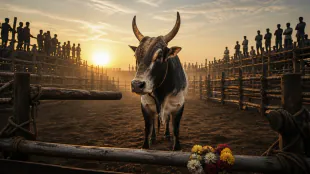
LONDON, UK / ACCESS Newswire / November 11, 2025 / A new study in Animals highlights that industrialized animal farming is one of the most powerful - yet persistently neglected - forces driving the climate and biodiversity crises. The analysis, "The Missing Target: Why Industrialized Animal Farming Must Be at the Core of the Climate Agenda," synthesizes evidence from 47 international studies and concludes that reducing livestock production and embracing plant-based food systems is essential for meeting global climate goals.
Major Insights
Across global research, livestock farming contributes an estimated 12-20% of all greenhouse gas emissions annually, with the most comprehensive studies yielding the highest figures.
The most modern accounting methods, which include the impacts of deforestation, bottom trawling and cooling effects from certain atmospheric pollutants, reveal that 52% of present-day global warming is attributable to animal agriculture.
Animal agriculture occupies over 80% of agricultural land, while providing only 18% of calories and 37% of protein consumed worldwide, making it difficult to meet the needs of a fast-growing future population.
Among other food-originating environmental impacts, the sector also creates 50% of eutrophication and 32% of soil acidification.
Rapidly developing regions including emerging economies are projected to experience the sharpest growth in livestock emissions unless production trends shift.
Biodiversity studies reveal that meat-heavy diets can create three to four times greater biodiversity losses compared to predominantly plant-based diets.
Why a Plant-Based Shift Matters
The analysis makes a compelling environmental case for dietary change. Transitioning toward plant-forward eating patterns would drastically cut greenhouse gas emissions, reduce pressure on forests and freshwater systems, and curb nutrient pollution from feed crops and manure. Such a shift would not only mitigate climate impacts but also help restore ecosystems and safeguard wildlife.
Implications for Policymakers
The authors urge that global climate frameworks-such as climate summits and national plans under the Paris Agreement-must integrate clear targets for reducing animal-product production and consumption. Without tackling this sector, the chances of limiting global warming to well below 2°C (let alone 1.5°C) are significantly compromised.
To be effective and fair, the analysis stresses, solutions must also consider regional realities. In developing economies, dietary transitions should align with food security, cultural preferences, and equitable livelihoods for farmers.
A Turning Point for Food and Climate
"The time is long overdue for greater attention on animal agriculture at key climate and environmental policy-making events such as COP30" stated lead author Jenny Mace. "It would be incredibly difficult to achieve climate and other sustainability targets without a significant downsizing of animal agriculture."
Stated co-author veterinary Professor Andrew Knight, "Industrial livestock farming represents a critical blind spot in global climate policy. However, placing food system reform - particularly the reduction of animal-based products - at the centre of climate action could unlock enormous benefits for both people and the planet."
Co-author Fernanda Vieira of Sinergia Animal commented that, "Industrial-scale farms are a profound driver of biodiversity loss, deforestation, climate change, and the emergence of zoonotic diseases. If we fail to confront these interconnected issues, the prospect of achieving meaningful progress toward our climate, health, and sustainability goals will remain out of reach."
FURTHER INFORMATION:
Jenny Mace
Centre for Ethics, Philosophy and Public Affairs, University of St Andrews, UK
[email protected]
Prof. Andrew Knight
School of Environment and Science, Griffith University, Australia
[email protected]
SOURCE: Sustainable Pet Food Foundation
View the original press release on ACCESS Newswire
R.Lee--AT