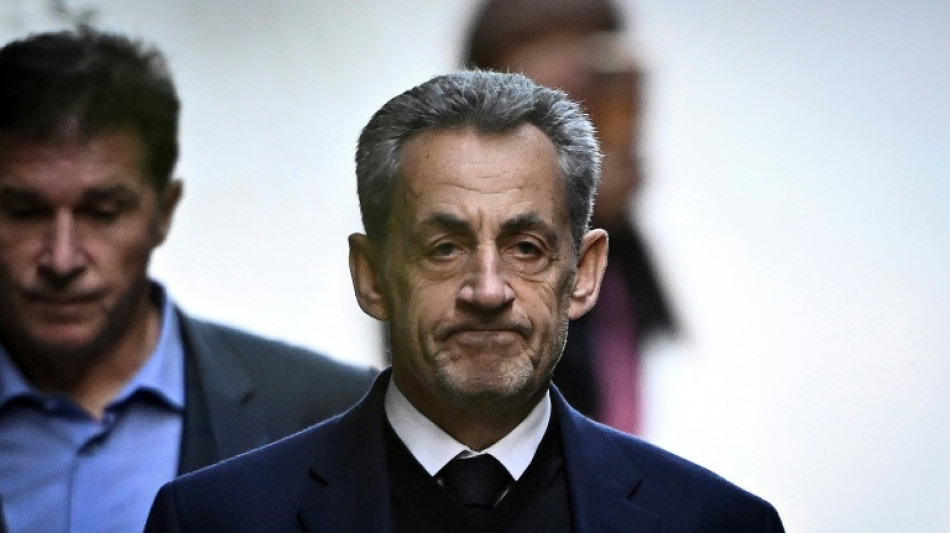
French court to decide if ex-president Sarkozy can leave jail / Photo: JULIEN DE ROSA - AFP

 US Open top seed Zverev downplays favorite status
 Soldiers' mutiny rocks Niger capital, as junta claims to be back in control

 Seven Arrested After VCK Functionary Killed in Thiruneermalai Attack

 Kanye West Does Not Address Milo Yiannopoulos Detention During New Orleans Concert

 Taylor Swift Donation Supports Connecticut Mother Recovering From Serious Roadside Injuries

 Taylor Swift Gives $50,000 to Fundraiser for Mother Injured While Helping Crash Victims

 Los Angeles County Rapper Among Three Charged in $8.1 Million Stolen-Check Case

 Pittsburgh Speed Painter Surprises Jalen Brunson With 10-Minute Portrait

 California Dairy Hydrogen Project Sets Carbon-Intensity Record and Renews Biogas Debate

 Munoz saves Iraola in Liverpool draw, Hull extend dream start
 'Smooth' Marc Marquez wins Aragon MotoGP sprint, Bezzecchi on pole
 Tiny Elversberg stun Leverkusen on Bundesliga debut
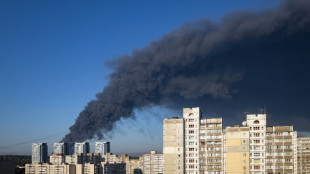
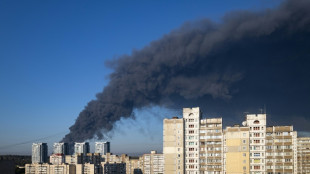 Russian strike blows up arms depot near Kyiv, killing 37
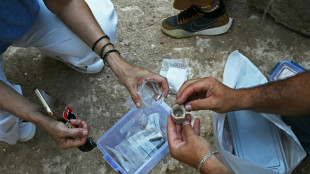 Lebanon archaeological finds showcase rich heritage despite war woes

 Liverpool held by Forest on Iraola's Anfield debut
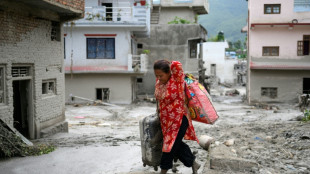 Rescuers claw through mud as missing toll from Nepal, China flood nears 3,000
 Mourinho says Mbappe worthy of Ballon d'Or
 Clashes rock Niger capital, junta says back in control

 India's Neeraj Chopra out for season with ankle injury

 College Values Debate Puts Harvard and Columbia Under Parental Scrutiny

 Michelle Obama Says She Welcomes Life After Active Parenting Years
 Court Dispute Features Alleged Racist Texts Attributed to Milo Yiannopoulos

 Freedom 250 Winner Kirkwood Jokes Against IndyCar Return to Washington

 Judge Grants Brittany Cartwright Temporary Restraining Order Against Jax Taylor

 Omitted Social Justice Figures Trigger Dispute Over Tamil Nadu Policy Note

A French court is expected to decide on Monday whether to release ex-president Nicolas Sarkozy from jail pending an appeals trial over allegations that he sought Libyan funding.
A lower court in September found the right-winger -- who was head of state from 2007 to 2012 -- guilty of seeking to acquire funding from Moamer Kadhafi's Libya for the campaign that saw him elected, and sentenced him to five years behind bars.
The 70-year-old entered jail on October 21, becoming the first former head of an EU state to be incarcerated, and his lawyers immediately sought his release.
The Paris Appeals Court is to examine that request from 8:30 GMT, with Sarkozy making an appearance via video call, and is expected to make a decision during the day.
If the court approves his request, he could be immediately released.
The lower court on September 25 ordered Sarkozy to go to jail, even if he appealed, due to the "exceptional gravity" of the conviction.
But the appeals case means that Sarkozy is now presumed innocent again, and the court will therefore be evaluating his need for pre-trial detention.
Under French law, he can only be kept behind bars if no other way can be found to safeguard evidence, prevent witness tampering, stop him from escaping or reoffending, or to protect him.
Otherwise, Sarkozy will be allowed out under judicial control, and perhaps put under house arrest with an electronic ankle tag.
- Piles of letters -
The former president, who is married to singer and model Carla Bruni, has spent more than two weeks in solitary confinement.
But two bodyguards are occupying a neighbouring cell to ensure his safety.
Prison wardens have said the move is an insult to their profession, but Interior Minister Laurent Nunez has said it is necessary in view of his "status" and "the threats against him".
Sarkozy late last month also received a visit from Justice Minister Gerald Darmanin, despite warnings from France's top prosecutor Remy Heitz that it risked "undermining the independence of magistrates" before the appeals trial.
Sarkozy is the first French leader to be incarcerated since Philippe Petain, the Nazi collaborationist head of state, who was jailed after World War II.
His social media account last week posted a video of piles of letters, postcards and packages it said had been sent to him, some including a collage, a chocolate bar or a book.
"No letter will go unanswered," his account announced. "The end of the story has not yet been written."
On the day he entered jail, a large crowd sang the national anthem outside his home and urged him to "come back quick".
- Legal woes -
Sarkozy has faced a flurry of legal woes since losing his re-election bid in 2012, and has already been convicted in two other cases.
In one, he served a sentence for graft -- over seeking to secure favours from a judge -- under house arrest while wearing an electronic ankle tag, which was removed after several months in May.
In another, France's top court is later this month to rule over accusations of illegal campaign financing in 2012.
In the so-called "Libyan case", prosecutors said his aides, acting in Sarkozy's name, struck a deal with Kadhafi in 2005 to illegally fund his victorious presidential election bid.
Investigators believe that in return, Kadhafi was promised help to restore his international image after Tripoli was blamed for the 1988 bombing of a plane over Lockerbie, Scotland, and another over Niger in 1989, killing hundreds of passengers.
The court convicted Sarkozy of criminal conspiracy over the plan. But it did not conclude that he received or used the funds for his campaign.
T.Sanchez--AT