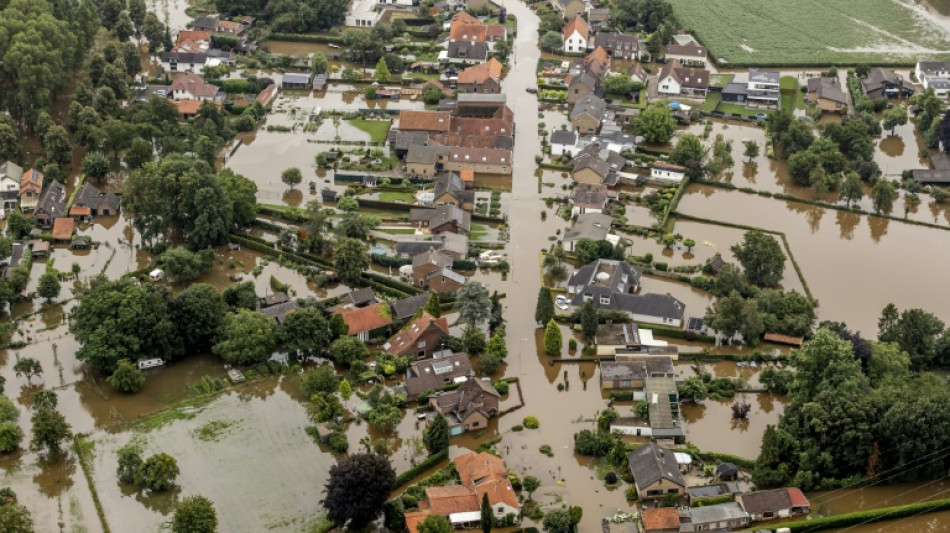
Operation Cloudburst: Dutch train for 'water bomb' floods / Photo: Remko de Waal - ANP/AFP

 US Open top seed Zverev downplays favorite status
 Soldiers' mutiny rocks Niger capital, as junta claims to be back in control

 Seven Arrested After VCK Functionary Killed in Thiruneermalai Attack
 Kanye West Does Not Address Milo Yiannopoulos Detention During New Orleans Concert

 Taylor Swift Donation Supports Connecticut Mother Recovering From Serious Roadside Injuries

 Taylor Swift Gives $50,000 to Fundraiser for Mother Injured While Helping Crash Victims

 Los Angeles County Rapper Among Three Charged in $8.1 Million Stolen-Check Case

 Pittsburgh Speed Painter Surprises Jalen Brunson With 10-Minute Portrait
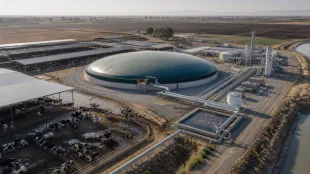 California Dairy Hydrogen Project Sets Carbon-Intensity Record and Renews Biogas Debate

 Munoz saves Iraola in Liverpool draw, Hull extend dream start
 'Smooth' Marc Marquez wins Aragon MotoGP sprint, Bezzecchi on pole

 Tiny Elversberg stun Leverkusen on Bundesliga debut

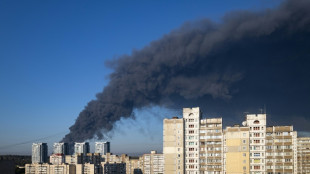 Russian strike blows up arms depot near Kyiv, killing 37
 Lebanon archaeological finds showcase rich heritage despite war woes

 Liverpool held by Forest on Iraola's Anfield debut
 Rescuers claw through mud as missing toll from Nepal, China flood nears 3,000
 Mourinho says Mbappe worthy of Ballon d'Or
 Clashes rock Niger capital, junta says back in control

 India's Neeraj Chopra out for season with ankle injury

 College Values Debate Puts Harvard and Columbia Under Parental Scrutiny

 Michelle Obama Says She Welcomes Life After Active Parenting Years

 Court Dispute Features Alleged Racist Texts Attributed to Milo Yiannopoulos

 Freedom 250 Winner Kirkwood Jokes Against IndyCar Return to Washington

 Judge Grants Brittany Cartwright Temporary Restraining Order Against Jax Taylor

 Omitted Social Justice Figures Trigger Dispute Over Tamil Nadu Policy Note

A twin-prop Chinook helicopter shatters the calm of the Dutch countryside, hovering just metres from a canal before dumping four huge sandbags into the water: welcome to Operation Cloudburst.
The five-day exercise simulates catastrophic floods from a "water bomb", an ever-present fear in a country where 60 percent of people live below sea level and climate change is making things worse.
The operation, bringing together the military, crisis planners, and local water authorities, tests responses to 200 millimetres of rain falling in one day -- a quarter of the annual amount in the Netherlands.
Such a scenario would be similar to the floods that devastated western Europe in 2021, with nearly 200 deaths in Germany and 40 in Belgium. No one died in The Netherlands but large areas were flooded.
"Dutch people, when we are born, we know we're going to fight the water," said commanding officer Corporal Michel Vrancken.
The military are always learning to fight the enemy, but "Dutch people know that water can always be an enemy," the 25-year-old told AFP, as his unit piled up sandbags behind him.
Vrancken's team is training to deploy an innovative mobile dam that could slow damaging floodwaters -- part of the exercise.
Out of necessity, the Dutch have become world leaders in managing water and floods.
If nature had been left to take its course, most of The Netherlands would be a muddy swamp, not the European Union's fifth-largest economy.
The country is essentially a large delta crossed by three major rivers, the Rhine, Schelde, and Maas, that flow into the unpredictable North Sea.
Without sound defences, 60 percent of the country would be regularly flooded, according to the government. That would affect some nine million people.
"If we want to stay in this country, we have to" learn to prevent flooding, said Marian Booltink, crisis coordinator at the local flood management association, who is supervising Operation Cloudburst.
"Climate change is affecting my work because we now know we will have more crises because it's too dry (drought) or there's too much water (flooding)," the 59-year-old told AFP.
- 'Don't underestimate water' -
Overseeing water levels and flood defences across the country is Bart Vonk, Chair of the National Coordination Committee during Flood Threats.
"The impact of water on a person is immense," the 64-year-old told AFP from his office, surrounded by big screens showing real-time national water data.
"What I've learned in my career is don't underestimate the force of water, but also don't underestimate the impact on people when their house is flooded," said Vonk.
Vonk and his team ensure the country is ready for extreme scenarios: a drought meaning all inland shipping is beached or a devastating storm surge.
The Dutch are bringing innovation and the latest technology to bear on a centuries-old problem.
Drones inspect dykes and levies, producing data then crunched by AI to identify weaknesses.
Another innovation: "Green eggs" or devices that listen for beavers, whose digging can be devastating for flood defences.
What is the secret to the Dutch success?
"We stay very proactive," said Vonk.
"You have other countries that are reactive, they accept an incident. In the Netherlands, we can't accept it because the consequences are too high."
However, he said the Dutch have also learned much from other countries, notably about recovery from major floods.
Vonk acknowledges that climate change is making his job "more and more challenging."
Glacier melt from the Alps is swelling river levels in the Netherlands, storms and droughts are more frequent, and rising seas are increasing salination, he explained.
His biggest fear would be a breach of a levee protecting the Netherlands -- "the impact would be immense", but he is confident in Dutch preparations.
"I always sleep very well... we are really good protectors... the probability is really very, very low, so that's why it's not keeping me awake," said Vonk.
K.Hill--AT