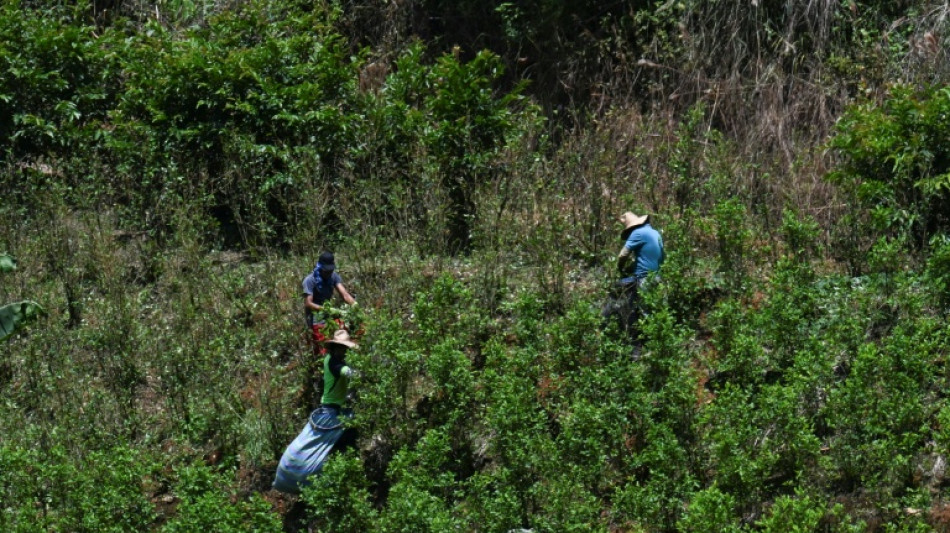
Are US strikes hurting Latin America's drug trade? / Photo: JOAQUIN SARMIENTO - AFP/File

 Nepal flood survivors return to ruins to salvage memories
 Killing of Palestinian children and teens by Israel surges in West Bank

 Educators keep 9/11 memory alive for next generation, 25 years on
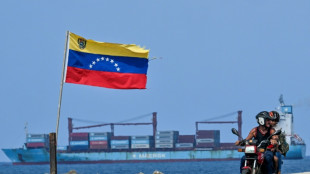 Venezuelans view US oil deal with doubt, hope

 Gobena and Jepchirchir power to Sydney Marathon victories

 Iceland in suspense after close EU vote
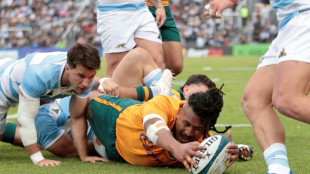 Wallabies hold on for victory in Argentina

 Juve notch second straight win, Fiorentina's centenary party falls flat

 Rybakina eases injury fears ahead of US Open
 Djokovic kicks off latest Grand Slam quest under US Open lights

 'Sorry' De Zerbi won't panic after Spurs shambles
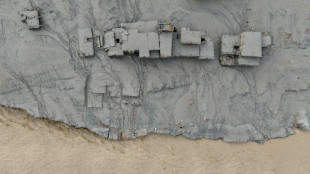 UN, Nepal warn of climate threat after deadly floods
 USTA boss says structure of new player council not yet set

 Tiny Elversberg stun Leverkusen on Bundesliga debut, Dortmund beat Hamburg

 BMC rejects negligence claims in three Rajawadi Hospital maternity cases

 Editorial questions Letitia James’ record as New York attorney general
 Los Angeles triplets weigh 19.3 pounds in unusually heavy birth

 Matt Leinart assesses Arch Manning and the leading names in college football
 Rural Tamil Nadu students present 64 technology projects at IIT-M research park

 Tamil Nadu goalball team’s national silver highlights need for wider support

 Tamil Nadu and NUS agree to expand postgraduate and research links

 India and China have not named two new border meeting sites

 Ankle ligament tear ends Neeraj Chopra’s 2026 season

 Thirty-seven Mumbai pilgrims return after Nepal flood disruption
 French campaign sharpens as far right accuses left over civil disobedience calls

US military strikes that Washington claims have targeted "narco-terrorists" ferrying drugs to American soil are having little to no impact on Latin America's bustling narcotics trade, experts say.
The strikes have killed at least 37 people, most of them in Caribbean waters, according to US figures.
Relatives and the home governments of many of the dead deny involvement in drug-running, but experts say the killings are illegal even if they target known narcotics traffickers.
The operations have raised questions in the region about US President Donald Trump's endgame.
Is this truly another battle in the global war on drugs -- and if so, is the United States going after the right people? Or is this something geopolitically broader?
- Wrong target? -
The US administration's actions in the Caribbean "will have zero impact on drug trafficking," said Laura Bonilla of the Pares research center in Colombia, the world's biggest cocaine producer -- most of it destined for the United States.
More drugs are exported via the Pacific -- from ports in Colombia, Mexico, Peru and Ecuador -- than via the Caribbean Sea, where the strikes have been focused thus far.
According to the government in Ecuador, which is plagued by drug gangs, 70 percent of the cocaine destined for the rest of the world leaves from its Pacific ports.
After several strikes in the Caribbean, the United States on Wednesday announced its first attack in the Pacific, with at least two people reported dead.
Experts point out that transnational cartels are the primary buyers and distributors of drugs -- not the Venezuelan or Colombian groups blamed by the Trump administration.
Neither Venezuela nor Colombia, whose citizens have been targeted in the strikes, are major exporters in their own right.
Bonilla said she questions the Pentagon's assertion that guerrilla fighters from Colombia's leftist National Liberation Army (ELN) were among those killed by US forces.
"A total lie.... The ELN doesn't take boats out in the Caribbean because the ELN doesn't own the business," she said.
- Political goals? -
Leaders, analysts and citizens alike have questioned Washington's motives.
Some see the campaign as a distraction from Trump's policy problems at home, while others suspect an attempt to oust leftist Latin American leaders with whom Trump has clashed.
"This is not about Latin America. This is part of his (Trump's) narrative to justify the destruction of... competitive democracy," said Bonilla.
Venezuelan President Nicolas Maduro -- whose last two reelection victories have been widely disputed -- has accused Washington of plotting "regime change," while Colombia's Gustavo Petro has suggested the idea of "a coup d'etat against me."
"Politically, Trump's actions are clear, as he aims to influence... the 2026 presidential elections in Colombia," Juana Cabezas, a researcher specializing in armed conflicts at non-governmental organization Indepaz, told AFP.
"But also, he seeks to establish a maximum point of control and exert power over the region in relation to Venezuela. So, clearly, there is an important geopolitical issue here."
- Counterproductive? -
In the midst of the strikes, Colombian drug traffickers have remained active on TikTok, glorifying their trade in music videos set amid coca leaf crops and drug laboratories.
"There is no perception that people are concerned," a 45-year-old former coca grower told AFP in the Cauca province, where much of Colombia's cocaine comes from.
"Those people (the narcos) are indifferent, they see it as an international show (...) that does not really affect the illicit economy."
Others say the drug lords may even benefit, if the threat of supply problems push up prices.
The strikes "do not affect anything, they continue (to produce drugs) as always," a person with close ties to an armed drug group told AFP.
"Moreover, they may even benefit as it becomes more expensive."
A.Clark--AT