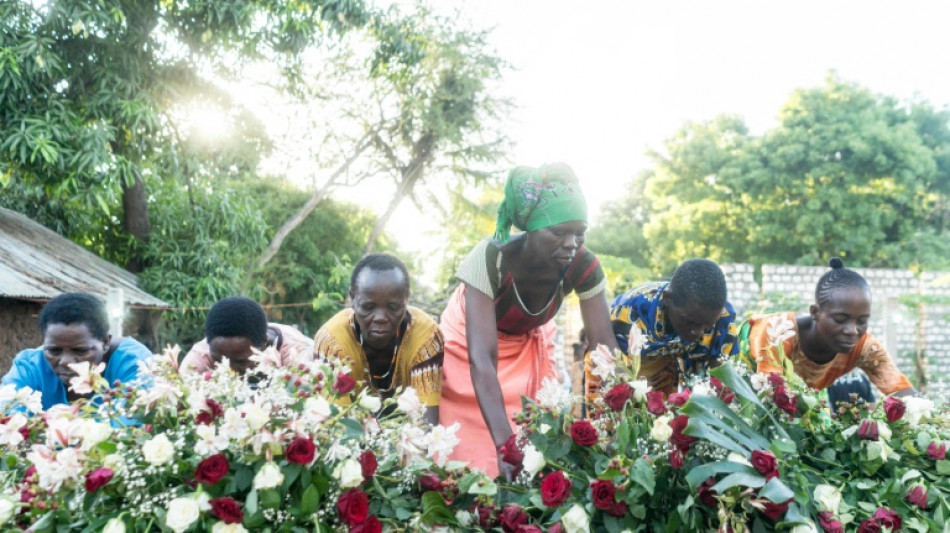
'Morgue is full': how Kenyan starvation cult kept killing / Photo: FREDRIK LERNERYD - AFP/File

 Robinson strikes again as England wrap up Pakistan series win

 Red-hot Chelsea not the finished article says Alonso

 Dortmund's Konstantelias to miss 'several months' with knee injury

 Chelsea beat Brighton in seven-goal thriller, Leeds hold Brentford

 At least seven die in ferry capsize off Northern Cyprus; 23 missing

 In-form Marc Marquez wins Aragon MotoGP Grand Prix

 At least six die in ferry capsize off Northern Cyprus

 Niamey back to normal after soldier mutiny
 King Haakon joins Norway memorials for Harald

 NASA launches Roman telescope on cosmic mapping mission

 Van Dijk wants Gakpo to stay at Liverpool amid Man City interest

 Five-wicket Abbas has Lord's landmark as Pakistan set 389 to win second Test

 Tadej Pogacar Out of Vuelta a Espana with Broken Collarbone and Concussion

 Iceland votes 'No' to resuming EU talks
 Berlin Literary Guide: Book Launches, Festivals, and Readings Through August

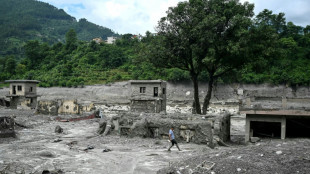 Nepal rescuers drill through debris towards trapped tunnel workers

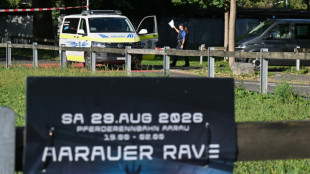 Manhunt in Switzerland after fatal rave shooting

 'No' camp seen winning Iceland's EU referendum
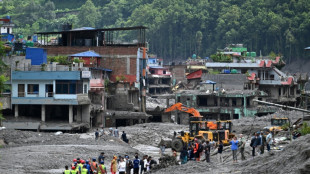 Nepal flood survivors return to ruins to salvage memories

 Killing of Palestinian children and teens by Israel surges in West Bank

 Educators keep 9/11 memory alive for next generation, 25 years on

 Venezuelans view US oil deal with doubt, hope

 Gobena and Jepchirchir power to Sydney Marathon victories

 Iceland in suspense after close EU vote

 Wallabies hold on for victory in Argentina

The discovery of body parts and skeletons strewn around an isolated village in coastal Kenya has stoked fears that a doomsday starvation cult which claimed hundreds of lives has survived despite a major police operation.
Two years ago, an investigation into what became known as the "Shakahola Forest Massacre" revealed one of the world's worst death cults had been operating just inland from Kenya's beautiful beaches.
Almost 450 bodies were discovered in mass graves -- most starved to death, though some, including children, were strangled, beaten and suffocated.
The alleged leader, a former taxi driver and self-proclaimed pastor named Paul Mackenzie, is accused of inciting his followers to starve themselves to "meet Jesus", using enforcers to ensure no one left the forest hideout alive.
He was arrested with dozens of others, and authorities considered the threat over.
But then, this July, police began discovering more bodies in another village just 30 kilometres (20 miles) from Shakahola.
- 'The morgue is full' -
The potholed road to the interior sees lush green vegetation give way to red-orange soil and parched scrub. Binzaro, a hamlet of 140 households and a single shop, lacks running water and rarely sees visitors.
Yellow police tape now surrounds a dozen mud-walled houses where a few clothes and an abandoned makeshift baby chair could still be seen.
It was here, scattered nearby, that police unearthed 34 bodies and 102 body parts in various states of decay.
"There are so many, so many, graves," Victor Kaudo, head of the Malindi Community Human Rights Centre and among the first responders, told AFP.
Police were alerted to the new deaths after a man, now in protective custody, escaped and phoned his family, saying some of his children had died.
They fear Mackenzie's cult continued even as he faced trial in Mombasa far down the coast, where he has pleaded not guilty to multiple counts of manslaughter.
Police arrested 11 people at Binzaro, at least four of whom were part of Mackenzie's Shakahola community and had children who died there, according to court documents seen by AFP.
Kaudo believes more bodies could yet be found at Binzaro. Police have only stopped digging because "the morgue is now full," he said.
Unlike the deep mass graves at Shakahola, "this time around, they were burying them under trees, then covering those graves with leaves, with thorns, that made it very difficult for people to access them," he said.
But hyenas could get to them -- "that's why so many bones were scattered," he said.
Police say the victims died at different stages and Kaudo is convinced the deaths started in 2023 just as the Shakahola cult was disrupted.
"These people were already continuing... but the government never listened," he said.
- 'They adapted' -
The alleged leader of the Binzaro group, Sharleen Temba Anido, showed no emotion as she shuffled into court along with three co-suspects in Malindi last week.
The magistrate gave the prosecution 60 more days to investigate. The suspects are meanwhile being kept apart over fears they could continue preaching their deadly message.
Investigators suspect Anido had a base in Malindi, from which believers were ferried on motorbikes in the dead of night to Binzaro.
"They were coming in small groups, whoever went in did not come out," said Robert Kiinge, a Directorate of Criminal Investigations officer, adding that the four suspects are being investigated for murder, radicalisation, and organised crime.
An officer in the case, who requested anonymity as he was not permitted to speak with the press, confirmed Anido was part of the Shakahola cult.
"She was in the first one, that mentality is still there," he told AFP, describing adherents as "brainwashed".
Court documents say Anido's husband, who held "extreme religious beliefs," is believed dead.
There remains a "big network" of radicalised followers, the officer said, and "we suspect they're still talking".
A lawyer on the Shakahola case, who requested anonymity, said he believed the two were connected and that the Binzaro group changed tactics in response to the Shakahola arrests.
"They watched the first case, including the trial, and adapted," he said, citing the new burial techniques.
- 'Never stop' -
Locals living nearby told AFP they knew nothing about the cult, but believe such groups are attracted to the area because there is a lot of unoccupied land, often sold by shady dealers who ask few questions.
"We had this thing at Shakahola One, and then we had Shakahola Two. We will have Shakahola Three, we are fearing," said resident Simon, 32, giving only his first name for fear of being implicated in the case.
Kaudo says politicians are reluctant to impose tougher regulations on religions that play an influential role in Kenyan politics.
"They're just thinking... the majority of Kenyans are Christians, if we regulate the church, who is going to vote for us?" he said.
Without a proper de-radicalisation programme, Kaudo said the cycle of death will continue.
"It can never stop. It won't stop."
M.O.Allen--AT