
AIC Explores the American Legacy of Work, Purpose, and Social Belonging for Adults with Disabilities and Seniors

 Calhanoglu fires Inter to nervy Cagliari win, Como stun Napoli

 Monaco beat Marseille to go top, Rosenior's Paris FC thump Nice
 Pegula shakes off nerves in US Open first-round win

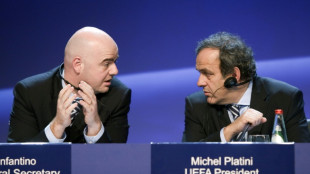 FIFA president Infantino 'must go', says ex-UEFA boss Platini

 England v Pakistan second Test: Three talking points

 Rashford's return 'fantastic' for Man Utd, says Carrick

 At least 8 die, more missing, as ferry capsizes off Northern Cyprus

 Pegula shakes off nerves, Ruse in US Open first-round win

 Fernandes treble inspires Man Utd rout, Chelsea beat Brighton in thriller

 Android photo recovery depends on recently deleted folders

 Realme P4s, iQOO Z11 and Nothing Phone 4b compared

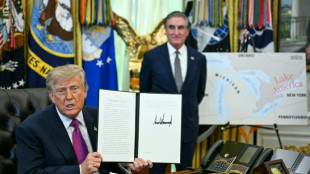
 Google Maps adopts Lake America label for US users

 Screen-free fitness bands gain ground as users seek fewer alerts

 Practical boundaries can reduce group-chat overload

 Brighton swimmers adjust routines around sewage alerts

 Data-centre opposition crosses US party lines

 UK clocks return to GMT on October 25

 Former Nottingham hospital chief linked to NHS training firm

 Forest linked with Liverpool goalkeeper Mamardashvili

 Robinson strikes again as England wrap up Pakistan series win

 Red-hot Chelsea not the finished article says Alonso

 Dortmund's Konstantelias to miss 'several months' with knee injury

 Chelsea beat Brighton in seven-goal thriller, Leeds hold Brentford

 At least seven die in ferry capsize off Northern Cyprus; 23 missing

 In-form Marc Marquez wins Aragon MotoGP Grand Prix

NAPERVILLE, IL / ACCESS Newswire / September 19, 2025 / Abilities Independent Community, Inc. (AIC) has released an editorial reflection situating its mission within America's long cultural struggle to define the meaning of work, purpose, and human dignity - especially for communities too often left at the margins.
From the earliest days of the Republic, labor was seen not merely as economic activity but as a moral anchor. Benjamin Franklin praised industriousness as a civic virtue, believing that the prosperity of the colonies depended on disciplined work. Later, Abraham Lincoln would elevate labor above capital itself, declaring in his 1861 message to Congress that "labor is prior to, and independent of, capital. Capital is only the fruit of labor, and could never have existed if labor had not first existed." This American reverence for work became a defining creed - but one that frequently excluded those with disabilities, the elderly, and anyone whose productivity did not fit industrial norms.
The twentieth century brought partial shifts. The New Deal established federal programs for seniors and the unemployed, while the postwar years celebrated the ideal of the breadwinning worker providing for family and nation. Yet those who could not conform to this model - veterans injured in battle, seniors aging out of work, children born with developmental disabilities - often faced neglect, institutionalization, or erasure.
AIC situates its mission against this backdrop, arguing that purpose is not measured by economic productivity alone. Purpose is found in the daily affirmation of belonging, in skills that build confidence, in creativity that resists invisibility. In AIC's philosophy, teaching someone to paint, garden, or master a small technical skill carries as much weight as teaching someone to operate heavy machinery or run a business. Both are affirmations that life has value beyond market calculation.
This point matters in today's cultural debates. Commentators like Charlie Kirk have framed work in stark, politicized terms - praising "makers" over so-called "takers" and warning that American culture risks decline if citizens expect care without contribution. While this argument resonates with populist anxieties about dependency, it oversimplifies the reality. The truth, demonstrated across American history, is that many citizens who cannot participate in conventional economic roles nonetheless contribute profoundly to social and cultural life. Care, art, mentorship, memory, and presence are not easily tallied on balance sheets, but they remain essential to the fabric of society.
In fact, some of America's strongest movements for justice and solidarity were led not by industrial "producers" but by those deemed weak or marginal. The disability rights protests of the 1970s, culminating in the 504 Sit-In and the eventual passage of the Americans with Disabilities Act in 1990, were spearheaded by individuals whom mainstream culture dismissed as dependent. Yet their struggle reshaped the civic landscape, securing accessibility as a right rather than a privilege. Similarly, senior citizens have long played outsized roles as keepers of memory and transmitters of tradition, anchoring communities even when they no longer held jobs in the workforce.
"Purpose cannot be reduced to a paycheck," said Estella Johnson, Program Director at AIC. "Our participants may not all fit into Wall Street's vision of productivity, but they contribute to Chicago's civic and cultural life every day. To measure them solely by wages would be to misunderstand the very meaning of human value."
AIC's ongoing work reflects this philosophy. Through structured skill-building sessions, creative development, and community engagement, adults with disabilities and seniors are encouraged not to "catch up" with industrial standards but to define independence on their own terms. That independence might take the form of painting, storytelling, gardening, or learning digital literacy skills - each activity creating connection, confidence, and dignity.
Historically, American leaders have recognized this truth in moments of crisis. During the Great Depression, the Civilian Conservation Corps employed millions of young men, but what mattered as much as wages was the sense of shared identity and purpose. In the 1960s, Lyndon Johnson's Great Society programs attempted to fuse economic opportunity with social belonging, insisting that poverty was not merely material but spiritual. Today, AIC argues for a similar redefinition of independence: not just survival, but participation, creativity, and acknowledgment.
The debate over what it means to "contribute" is not abstract. As automation threatens traditional jobs, as demographics shift toward an aging population, and as cultural polarization intensifies around notions of dependency, America faces a crossroads. Will it cling to narrow visions of productivity, dismissing those who do not fit the mold, or will it embrace a broader, more humane definition of purpose?
By situating its mission in both historical precedent and contemporary cultural debate, AIC underscores that its work is not only charitable but philosophical. It seeks to remind Americans that dignity is not granted through output but through recognition, and that a society unwilling to value all its members equally will eventually fail to value any of them fully.
Disclaimer
This is a critical opinion-based cultural analysis authored by the editorial team and reflects his personal editorial perspective. The views expressed do not represent the institutional stance of Evrima Chicago.
This article draws from open-source information, legal filings, published interviews, and public commentary. All allegations referenced remain under investigation or unproven in a court of law.
No conclusion of criminal liability or civil guilt is implied. Any parallels made to public figures are interpretive in nature and intended to examine systemic patterns of influence, celebrity, and accountability in American culture.
Where relevant, satirical, rhetorical, and speculative language is used to explore public narratives and their societal impact. Readers are strongly encouraged to engage critically and examine primary sources where possible.
This piece is protected under the First Amendment of the U.S. Constitution and published under recognized standards of opinion journalism for editorial inputs: [email protected]
Evrima Chicago remains committed to clear distinction between fact-based reporting and individual editorial perspective.
Media PR & Contact
Duane Martin
[email protected]
SOURCE: AIC PR Team
View the original press release on ACCESS Newswire
O.Brown--AT