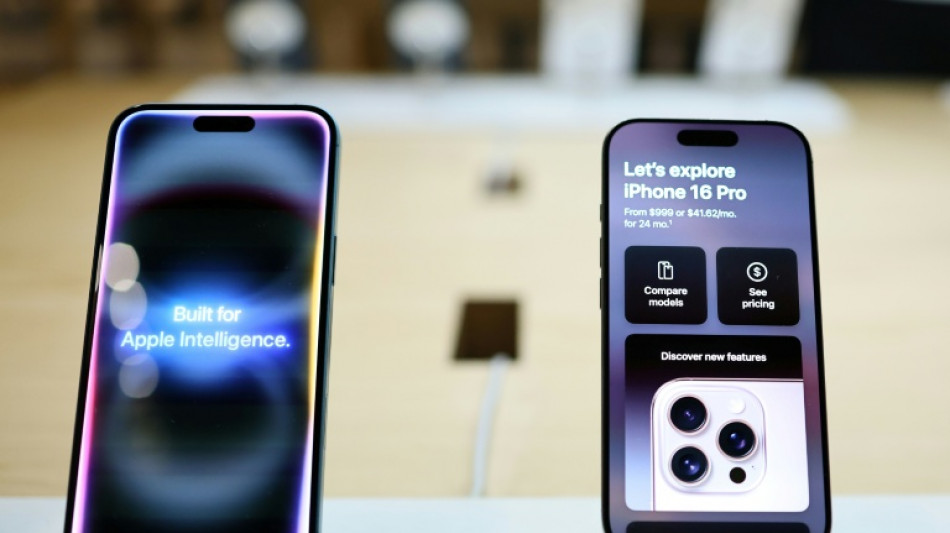
Don't panic: UK phones to sound at once in emergency drill / Photo: Michael M. Santiago - GETTY IMAGES NORTH AMERICA/AFP

 Djokovic falls in US Open first round, earliest Grand Slam exit in 20 years

 Chinese guitar capital's stairway to export heaven

 Stocks drop as Warsh fans US rate hike bets, crude up on US-Iran strikes
 Injuries cloud tennis as US Open gets under way
 Iran retaliates after first US strikes in a month
 Itauma says 'I'll be back' after bruising heavyweight title loss

 Brilliant Palou clinches fourth straight IndyCar crown

 US strikes Iran for first time in a month, Tehran retaliates

 Yin holds off Kim to win sixth LPGA title, end title drought

 Top-ranked Scheffler storms to PGA Tour Championship win

 Root urges England to be 'grown-ups' after Pakistan series win

 Google Maps renames Lake Ontario 'Lake America' in US -- but not Canada

 Aaron Donald ends retirement to rejoin Rams: team
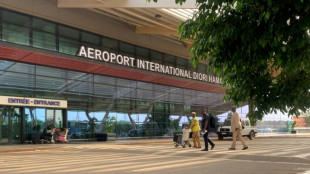 Niamey back to normal after soldiers' mutiny
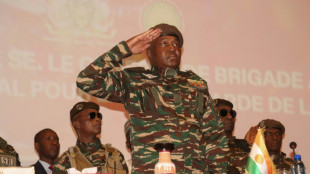 Niger mutiny suppressed, but questions remain over junta's cohesion

 Como spoil Allegri's Napoli home debut
 Cruz Beckham Performs at Leeds Festival Following Family Support at Reading

 Fernandes hat-trick inspires Man Utd rout of Ipswich

 Suzuki sends 'perfect' Freiburg past Bremen, Schalke lose

 September smartphone calendar spans Apple, Poco, Vivo and Xiaomi

 Instagram offers three routes to two-factor authentication

 Screen-free fitness bands gain ground as users seek fewer alerts

 Practical boundaries can reduce group-chat overload
 British woman dies after stabbing at German station
 South West Water ranks worst in environmental comparison

Tens of millions of mobile phones across the UK will blare a siren sound at the same time on Sunday as part of government efforts to better prepare for national emergencies.
The nationwide test comes as officials seek to strengthen the country's resilience amid more frequent extreme weather events and concerns around Russia's war in Ukraine.
At 3:00 pm (1400 GMT), most of Britain's 87 million mobile phones and tablets will emit the noise and vibrate for about 10 seconds, the government has said.
Users will also receive a message saying the warning is only a drill, in what is just the second test of the national emergency alert system following the first in 2003.
"Just like the smoke alarm in your house, the fire alarm in this building, it's important to test these things now and again," Pat McFadden, the minister responsible for the system, told BBC radio on Thursday.
The government has in recent weeks embarked on a publicity drive to minimise any shock caused, including through announcements at rail stations and signs on motorways.
It picked the date and time to try to minimise disruption -- for example there are no top-flight men's football matches this weekend due to a round of international fixtures.
It has no control over events like weddings, funerals, or children's birthday parties, however.
"There's no perfect time to do these things," conceded McFadden, adding: "There will be something that is disturbed as a result of this."
The government has used the system to issue real warnings to local areas five times in the past two years.
In January, some 4.5 million people in Scotland and Northern Ireland received an alert during Storm Eowyn after a red weather warning was issued, meaning there was a risk to life.
A 500-kilogram (1,100-pound) unexploded Second World War bomb found in a back garden in southwest England triggered a warning to some 50,000 phones in February last year.
The system is designed for use during the most likely emergencies to affect Britain where there is the possibility of a loss of life.
Warnings would also be transmitted on television, radio and where appropriate by knocking on doors.
Similar alerts are issued in the United States and Japan.
Only devices connected to 4G or 5G networks will get Sunday's alert.
It comes after the government published a "Resilience Action Plan" in July which cited the upheaval of the coronavirus pandemic, US President Donald Trump's tariffs and cyber attacks.
In the foreword, McFadden also mentioned "war on the continent of Europe that catalysed the largest rearmament of European powers since World War II".
"The whole of the UK's national resilience -- our economy, defences and biosecurity -- is being tested like never before," he wrote.
M.O.Allen--AT