
Lesotho's jockeys saddle up for mountain horse racing / Photo: Fredrik Lerneryd - AFP

 South Korea hire former Spain boss Moreno as interim coach
 China-Taiwan friction clouds Pacific summit

 Two dead after stabbing in New York's Times Square

 Anthropic signs $35B computing deal with startup backed by Nvidia
 Drones in Ithaca: Azov's Odyssey turns Ukraine war into modern myth
 Boat builders keep Pakistan's fishing heritage afloat

 Australia axe Labuschagne for Zimbabwe, South Africa ODI series
 Heavy rain at Grand Canyon after flood kills 2, dozen missing

 Kushner blames soccer power struggle for World Cup plan collapse

 Buoyant Alcaraz shakes off nerves to advance at US Open

 US draws European pushback with Russia G20 finance invite

 Jury begins deliberations in Tupac Shakur murder trial

 US Supreme Court allows Trump ballroom project to proceed
 Trump says US reviewing position on Falkland Islands
 Saka strikes as flawless Arsenal punish troubled Villa

 Oil prices surge on renewed fighting in US-Iran war
 Cycling superstar Pogacar has surgery after Vuelta crash
 Man City agree deal for Everton's Ndiaye
 Apple CEO Tim Cook gives nod to founder Steve Jobs in final memo
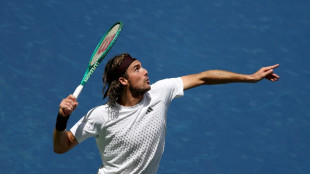
 Russian finance minister makes unexpected appearance at G20
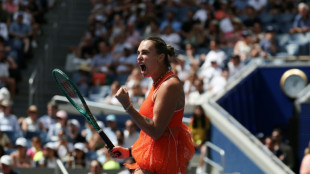 Happy to be back in NY, Sabalenka advances
 Naomi Watts to receive lifetime award at top Spain film fest
 Jury hears closing arguments in Tupac Shakur murder trial
 Pakistan sack coach, send seven players home after England defeats

 New storms threaten Grand Canyon flood search, 2 bodies recovered
Swathed in vibrant woollen blankets against the biting winter chill, jockeys -- some no more than boys -- thundered down a dusty track carved between the undulating hills of the tiny kingdom of Lesotho.
Spectators lining the ridges cheered on the riders as their horses sprinted down one of Africa's highest tracks, more than 2,200 metres (7,200 feet) above sea level.
Horse racing in Lesotho, a country ringed by South Africa, is not just a sport, it is a cultural carnival where wagers are the real blood sport.
This weekend's edition in the village of Semonkong in central Lesotho carried extra weight; it was the premium fixture of the season and timed to mark King Letsie III's birthday.
Preparations started before the crowd arrived, with the horses, also wrapped in blankets and balaclavas to keep warm, walked to the arena in song and dance, then brushed and fitted with weather-worn saddles for their races.
- Being 'focused' -
For many jockeys the track is a rare escape.
The country of around 2.3 million people ranks among the world's poorest, its rich mineral wealth overshadowed by sky-high youth unemployment and a troubling rate of suicide.
The textile-dependent economy faces further gloom, with fresh uncertainty following tariffs announced by the administration of US President Donald Trump, who earlier this year mocked Lesotho as a place "nobody has ever heard of".
The unspoken rule is that you have to forget all your problems or you will fall, jockey Tsaenh Masosa told AFP.
"You have to be focused," said the 21-year-old hotel employee, layered in white, pink and blue jackets.
Races stretch between 800 and 1,200 metres across a rugged mountain terrain that tests both the rider and horse.
Winners pocket up to 1,500 loti ($85) per race, a significant payday in Lesotho, where more than 36 percent of the population lives on less than $2 a day, according to the World Bank.
At the trackside, most bets are simple showdowns -- punters backing one horse to outrun another, rather than the overall race winner.
There are no tickets or betting slips, just fistfuls of cash, tense stares and quick payouts as money changes hands the moment one horse edges out another at the finish line.
- Horses over football -
Horses first arrived in Lesotho with European settlers in the 19th century, and over generations, crossbreeding gave rise to the sturdy Basotho pony -- mid-sized, tough and known for its endurance.
These ponies, along with cross-breeds and thoroughbreds from neighbouring South Africa, now make up the racing stock.
But beyond the track, horses remain part of daily life.
In the mountains, they are still used to herd sheep and goats, or to reach remote villages where no roads go.
That deep connection runs through the culture.
"All the people from Semonkong prefer horse racing to football," said 39-year-old maintenance worker Andreas Motlatsi Mojaje.
On the dusty oval, Masosa is still chasing his first win.
He has raced seven times, coming closest with a second-place finish, but that has not dulled his hunger.
"I like fast horses, it makes me enjoy," he said with a smile.
H.Thompson--AT