
DEA Architect of Marijuana Obstruction Matthew Strait Retires - Who Cleans Up His Marijuana Policy Mess?

 Kyiv's defences, 'hybrid' threat from Moscow headline EU talks

 Oil extends gains, stocks mostly down as Trump issues fresh Iran warning

 ThinkMarkets Expands Weekend Trading Offering, Launches Weekend League Competition

 Tibet activists accuse China of downplaying floods
 Afghanistan war victims left 'without justice', UN says
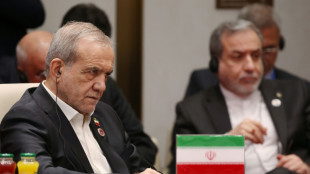 Iran president offers US olive branch before Putin meeting

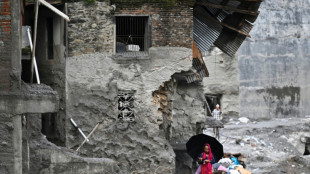 China-Nepal flood toll tops 1,000 as tunnel rescue offers last hope

 Japan to relax overtime regulation under workaholic PM

 Thwarted Niger mutiny exposes junta's Russia dependence

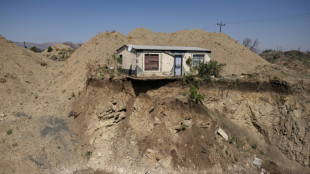 Illegal mining ravages S.Africa's economic hub

 Nepal's wall of missing offers last hope after Himalayan flood

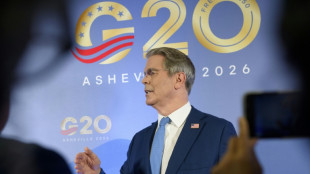
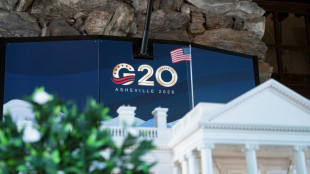 US to press G20 on light-touch AI regulation

 2 die in Grand Canyon flash flood, only 1 person unaccounted for

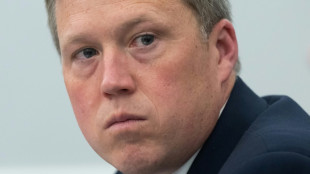 US Army Secretary Driscoll submits resignation: White House
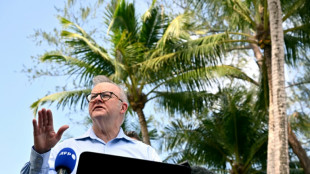
 Oil extends gains, stocks drop as Trump issues fresh Iran warning

 Tsitsipas says Kyrgios's positive cocaine test 'kind of expected'

 In Japan's mountains, a different way to manage bears

 Middle East war a boon for UAE defence giant with global ambitions

 Former gang member found guilty of murdering Tupac Shakur

 CRI Merges In Morrison & Smith, Expanding Alabama Footprint

 Connecting Excellence Group PLC Announces Treasury up By 10 BTC to 72.941 & £655,999 Raised

 InterContinental Hotels Group PLC Announces Transaction in Own Shares - September 01

 Heavy rain at Grand Canyon after flood kills 2, dozen missing

 Kushner blames soccer power struggle for World Cup plan collapse

 Buoyant Alcaraz shakes off nerves to advance at US Open

The DEA's in-house administrative court system has been dealt a severe blow by recent U.S. Supreme Court rulings. Axon v. FTC (2023) and Jarkesy v. SEC (2024) have unequivocally declared this system unconstitutional, effectively rendering years of DEA imposed delays and administrative hearings illegitimate. In a significant move, the Department of Justice has formally refused to defend this unconstitutional system, potentially exposing current and former DEA leadership to civil rights litigation and heightened judicial oversight.
WASHINGTON, DC / ACCESS Newswire / July 2, 2025 / In a long overdue development, Matthew Strait, Deputy Assistant Administrator of Policy at the DEA's Diversion Control Division, has quietly retired, according to internal agency sources. Matthew Strait's departure marks a turning point in the unraveling scandal surrounding the DEA's obstruction of federally compliant medical cannabis research. But his exit raises a more pressing question:

Who will clean up the mess he left behind?
For over a decade, Strait was one of the central architects of the DEA's restrictive cannabis framework. From stonewalling licensing for legitimate pharmaceutical companies to defending unconstitutional administrative proceedings, his legacy is one of bureaucratic sabotage, regulatory failure, and deep public mistrust.
Strait's Legacy: Science Silenced
Strait oversaw the DEA's response to applications under the Controlled Substances Act from companies like MMJ BioPharma Cultivation, which spent over seven years trying to obtain a bulk manufacturing registration for FDA-approved clinical research into treatments for Multiple Sclerosis and Huntington's Disease. MMJ's application was fully compliant. Yet Strait's office buried it in delay tactics, forced the company into a now-defunct DEA administrative court system, and ultimately derailed progress on a lawful medical breakthrough.
And now, he walks away-no apology, no accountability.
The Fallout: Supreme Court Rejections, Department Of Justice Abandonment
Strait's departure comes amid a constitutional crisis that has upended the DEA's authority. The U.S. Supreme Court's decisions in Axon v. FTC (2023) and Jarkesy v. SEC (2024) declared the DEA's in house Administrative Law Judge (ALJ) system unconstitutional-the very system Strait forced companies like MMJ into. The Department of Justice has since refused to defend these proceedings, effectively validating claims that Strait's enforcement model violated due process, jury trial rights, and separation of powers.
The "Wall of Dishonor" Still Stands
Strait's departure is only the beginning. Remaining atop the Wall of Dishonor is Thomas Prevoznik, DEA's Deputy Administrator for Diversion Control Affairs, who, by many accounts, was even more instrumental in structuring the agency's policy of obstruction. Known as the bureaucratic gatekeeper who legally fortified cannabis restrictions, Prevoznik has become the next likely target of scrutiny.
"Prevoznik was the intellectual muscle behind DEA's war on medical cannabis," said Duane Boise, MMJ's CEO. "Strait may have pulled the trigger, but Prevoznik loaded the gun."
Agency in Retreat, Public Pressure Mounting
With Anne Milgram already gone, Strait retired, and multiple resignations within the Diversion Control Division, the agency is in full damage control. Congress is demanding answers. Lawsuits are advancing. And MMJ BioPharma Cultivation's legal campaign has become the symbol of a broader reckoning.
Inside the DEA, morale is low and uncertainty is high.
What Comes Next?
Will the Office of the Inspector General launch a full-scale audit of past cannabis licensing delays?
Will Thomas Prevoznik face disciplinary action, early retirement, or worse?
Will new leadership under a potential Terrance Cole administration finally unwind the decades of sabotage?
And most importantly, when will patients finally get access to the medicine they were promised under federal law?
Final Word
Matthew Strait's retirement doesn't close the book-it opens it. His departure is an admission of failure, whether DEA acknowledges it or not. But until the damage is repaired, the truth exposed, and the policies reversed, justice remains unfinished.
The Wall of Dishonor still stands-and Thomas Prevoznik may be the next to fall.
MMJ is represented by attorney Megan Sheehan.
CONTACT:
Madison Hisey
[email protected]
203-231-8583
SOURCE: MMJ International Holdings
View the original press release on ACCESS Newswire
O.Brown--AT