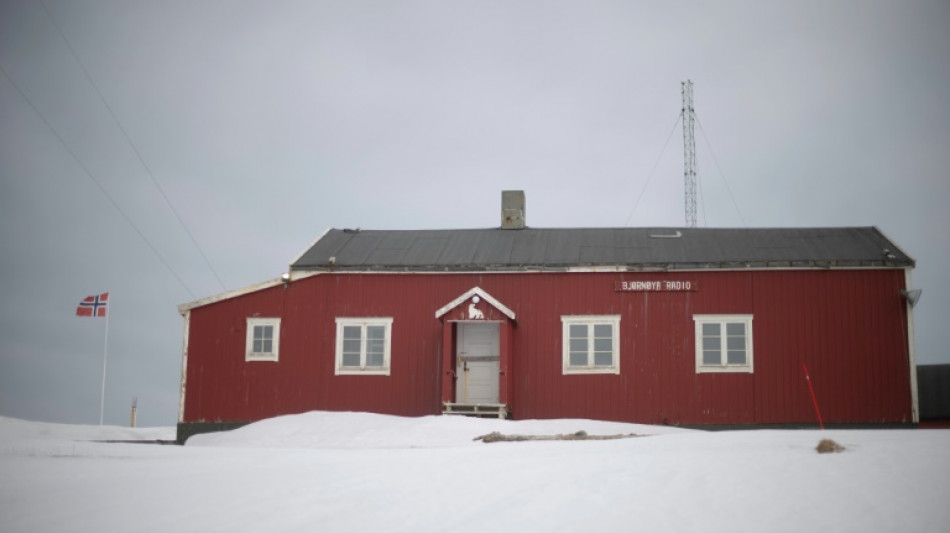
In Norway's Arctic, meteorologists have a first-row seat to climate change / Photo: Olivier MORIN - AFP

 Barcelona confirm Jesus arrival from Arsenal
 EU official says it's not time to 'normalize' Russia at G20 finance talks

 RedHill Announces Transformational Acquisition of Commercialization Rights to Ferring’s Rebyota® and Clenpiq®
 TrendEadvisor Launches Global Multi-Asset Platform Combining Online Investing with Social Trading

 India's top court drops criminal cases against protesters
 Philippine couple married in hip-deep floodwaters

 Villa sign Senegal winger Mbaye from PSG

 Former Peru minister last-minute contender for UN labour agency helm

 Messi legacy will 'live forever', says Beckham

 'Literally tasting the smoke': Malaysians suffer as haze worsens

 Kyiv's defences, 'hybrid' threat from Moscow headline EU talks
 Oil extends gains, stocks mostly down as Trump issues fresh Iran warning
 ThinkMarkets Expands Weekend Trading Offering, Launches Weekend League Competition

 Tibet activists accuse China of downplaying floods
 Afghanistan war victims left 'without justice', UN says

 Iran president offers US olive branch before Putin meeting
 China-Nepal flood toll tops 1,000 as tunnel rescue offers last hope
 Japan to relax overtime regulation under workaholic PM
 Thwarted Niger mutiny exposes junta's Russia dependence
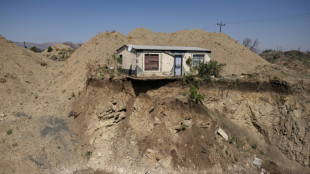 Illegal mining ravages S.Africa's economic hub
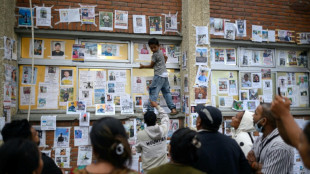 Nepal's wall of missing offers last hope after Himalayan flood

 US to press G20 on light-touch AI regulation

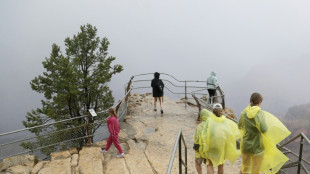 2 die in Grand Canyon flash flood, only 1 person unaccounted for
 US Army Secretary Driscoll submits resignation: White House
 Oil extends gains, stocks drop as Trump issues fresh Iran warning
In the cold of the Norwegian Arctic, meteorologist Trond Robertsen manually recorded precipitation levels for over two decades, witnessing firsthand the effects of climate change.
At 66, Robertsen retired after enduring spartan conditions during missions that totalled eight years on two islands of the Svalbard archipelago: Bjornoya (Bear Island) and Hogen.
To reach the remote Bjornoya, where the only humans are the nine employees of the small weather station, the meteorologists have to fly in by helicopter as they are rotated on a six-month basis.
"The idea is to not stay too long, because it's a different rhythm, and you are isolated," Robertsen told AFP.
It is demanding work.
"It's a 24/7 occupation," he said. "We are doing it all day, all night." The team worked shifts to cover all hours of the day, he explained.
Weather observation starts in the early morning at 6:00 am.
"It's manually done, then you have to go outside and check the bucket that is collecting precipitation," said Robertsen.
"During wintertime you have to melt the snow and ice into water" to determine how much has fallen.
The data is then transmitted the Norwegian Meteorological Institute in Tromso and Oslo.
"This tiny little observation is actually quite crucial for the weather forecasting systems up north, because observations are so sparse from that area."
Bjornoya sits in the middle of fishing grounds, and the weather reports published twice a day are closely followed by the fishing boats in the area.
- Less ice, fewer bears -
Since his first missions to the Arctic in the 1990s, Robertsen has witnessed the changing climate.
"When I started going up north, there was a lot of ice. In the later years, it's less ice and fewer polar bears. You can see the climate change," he said.
Polar bears have been classified as a vulnerable population since 1982 on the IUCN (International Union for Conservation of Nature) Red List of Threatened Species, with the loss of Arctic sea ice the most pressing threat against the species.
However, their precise numbers, are almost impossible to assess.
In winter, employees of station always venture out in pairs and have to be armed due to the presence of polar bears, but according to Robertsen it's rarer to encounter them today.
In April, during his last mission to the island, Robertsen had an accident while doing carpentry: he slipped and ended up cutting one finger clean off and half of another.
Due to tough weather conditions, he had to wait some 26 hours before being evacuated by helicopter and transported to a hospital.
"It was a heavy snowstorm coming in, only the day after the helicopter came," he recounted.
Looking back, Robertsen does not regret the years spent under the austere living conditions.
"The Arctic has given me so many experiences and memories so it is a small fee to pay back with my left little finger and part of my ring finger," he said.
Ch.Campbell--AT