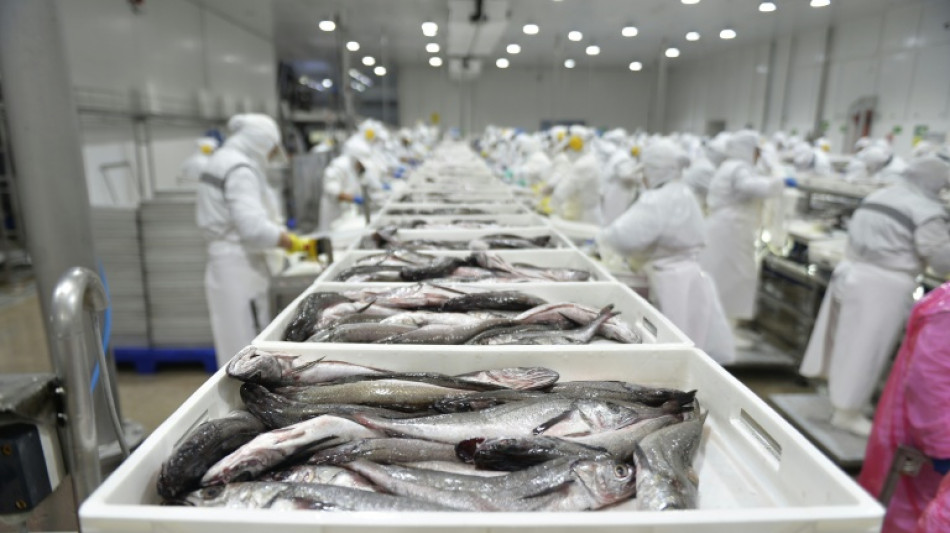
Chile ups hake catch limits for small-scale fishermen / Photo: GUILLERMO SALGADO - AFP/File

 India's Wholesale Inflation Jumps to 12.29% as Fuel Costs Surge
 China's October Activity Data Reveal a Weak Start to the Fourth Quarter

 Philippines Urges ASEAN and China to Accelerate South China Sea Code of Conduct

 Mbeki Claims No Progress Since 2018; Author Cites Infrastructure and Economic Gains

 Qatar's Amir and Venezuelan Acting President Discuss Energy Cooperation

 Blue Chip Capital Group Announces Quotation of its Common Stock on the OTCID and Updates Status of Initial Regulatory Compliance
 OBI Pharma Signs Collaboration and License Agreement with Novartis

 Strategic Metals Reports Promising Results From the Rusty and Ranch Projects

 Big Mamma Founder Tigrane Seydoux Brings Italian Restaurant Group to Florida

The Chilean Congress passed a law Wednesday increasing the share of the hake catch for small-scale fishermen who had staged violent protests to press for a higher proportion.
The new regulation increases their percentage from 40% to 45% of the annual catch quota of 35,000 tons of this fish, with the remaining 55% going to industrial fisheries.
The small-scale anglers had been pressing for 70%.
One of the country's most popular consumed species, the hake population has decreased by 70% over the last two decades, according to the Fishing Development Institute, a non-profit research group.
The new regulation was approved 38-0 with one abstention in the Chilean Senate.
The South Pacific hake, or merluccius gayi, provides a living for some 4,000 small-scale fishermen in Chile, a country with over 6,000 kilometers (3,700 miles) of coastline and a voracious appetite for the fish known as "merluza" in Spanish.
Since 2012, the common hake has been considered an overfished species in Chile, with limits on when and how much of the relatively inexpensive fish can be caught.
Along central Chile's traditional fishing heartland, more and more boats are returning to port with empty holds as overfishing and climate change decimate hake stocks.
Conservationists have also been critical of industrial fishing's practice of bottom trawling, which has severe impacts for oceans and ecosystems.
The law passed Wednesday will also boost the allowances for small-scale fishermen who catch jack mackerel, sardines and anchovies, among other fish.
Economy Minister Nicolas Grau said the new law means a redistribution of more than $160 million from the industrial sector to artisans.
Hundreds of non-industrial fishermen staged violent protests in late March in central and southern Chile, demanding better fishing percentages.
Pacific Blu, the company that fishes hake the most, threatened to close its factory if its catch quota was reduced too much, but backed off the threats with the new law's numbers.
Ch.Campbell--AT