Morocco set for sheepless Eid as drought persists / Photo: Abdel Majid BZIOUAT - AFP

 Kroenke to buy baseball's Los Angeles Angels: statement
 US defends Trump's Venezuela oil deal

 OpenAI to launch new model with 'stronger safeguards' after hack

 Fans mourn 'bittersweet' final Ariana Grande gig in London
 Norway's King Haakon VIII swears allegiance to constitution
 Syria site infrastructure 'consistent with nuclear reactor': IAEA

 Juventus sign Woltemade, Sarr on loan from Premier League

 US strikes Iran in latest tit-for-tat attacks
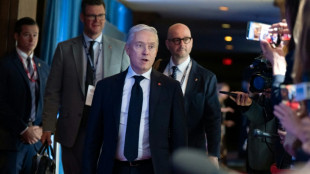
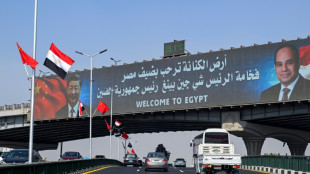 China's Xi arrives in Egypt as US sanctions threat looms over Iran links
 Car bomb at Colombian police station kills one, injures 11
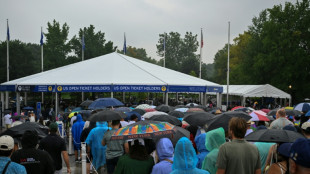 Rain delays start of play on US Open
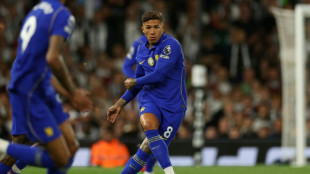 Man City agree blockbuster deal to sign Chelsea star Fernandez: reports
 Alkemya Metacore Secures $50M via Tokenised Equity to Scale Nickel Energy and Security Tech
 Man City chase Fernandez, Arsenal sell Jesus on deadline day
 EU says Russian 'hybrid attacks' won't halt aid to Ukraine
 Explosives used in sabotage attack on German power lines
 Nepali families hold symbolic funerals for missing after floods
 Newcastle sign Lille forward Fernandez-Pardo

 Even at Elysee, phones are handed in, Macron tells French pupils
 Chelsea agree to sign Atalanta's Ahanor, with Palace loan for this season

 Chelsea sign Atalanta's Ahanor and loan him to Palace
 UK chalks up hottest summer on record for second year running
 China's Xi visits Egypt as US sanctions threat looms over Iran links
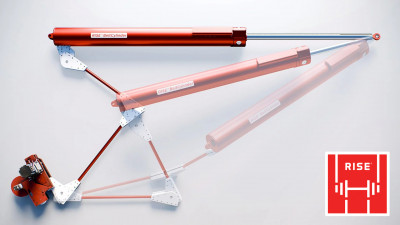 RISE Robotics Awarded $100,000 MassVentures Grant to Accelerate Commercialization of Beltdraulic Technology

 Global bond sell-off deepens on inflation concerns
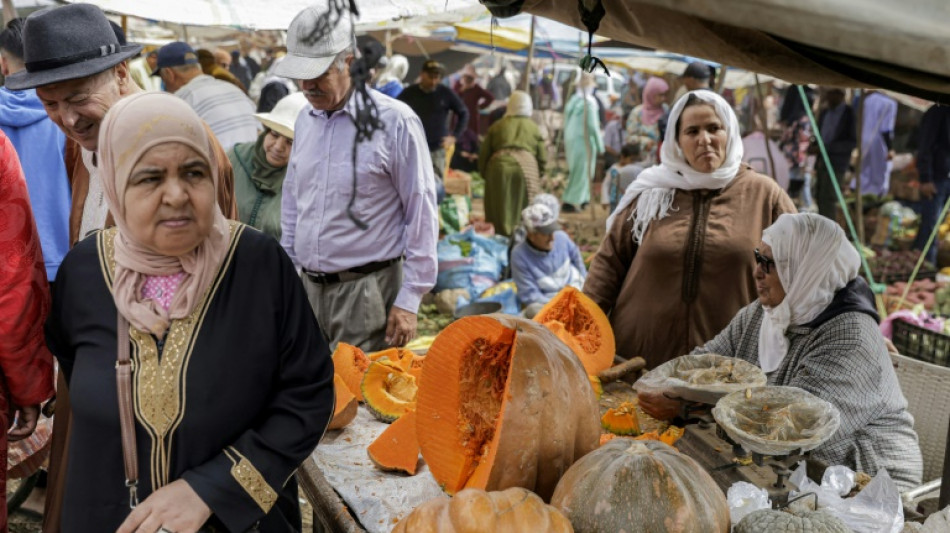
As the Islamic festival of Eid al-Adha approaches, Fatima Kharraz can't seem to find the usual sense of celebration after drought-stricken Morocco urged people to forego the traditional sheep sacrifice this year.
The rare call was made as the kingdom grapples with a seventh consecutive year's of a dry spell that has caused livestock numbers to decline.
"We don't feel the usual excitement," said Kharraz. "It's as if the holiday doesn't exist."
But the 52-year-old said it would have been prohibitively expensive to observe the sacrifice this year: sheep "prices were already high last year... We couldn't have afforded it."
While sacrificing sheep during Eid al-Adha is not a religious obligation, it remains a widely observed ritual across the Muslim world.
At the weekly livestock market in Khemisset, a small town near the capital Rabat, the usual holiday buzz was missing.
Cattle and horses stood in makeshift pens with no sheep in sight, an eerie scene for many just days before the festivity Moroccans are set to observe on Saturday.
Late February, King Mohammed VI -- also the kingdom's "Commander of the Faithful" -- cited both "climate and economic challenges" when announcing the measure.
He said those challenges have caused a "substantial decline" in the country's livestock.
- 'Exorbitant' -
His late father, Hassan II, made a similar appeal in 1996 when the kingdom also struggled with drought.
Recent rainfall deficits have chipped away at grazing pastures, also driving up the cost of livestock feed.
This has shrunk Morocco's livestock numbers by more than a third compared to the figure counted in the last census in 2016, according to the agriculture ministry.
It has also caused red meat prices to skyrocket, making it unaffordable for many in a country where the minimum monthly wage is just over 3,000 dirhams ($325).
For livestock sellers, the economic toll has also proved heavy.
At the Khemisset market, 24-year-old Marouane Haizoun leaned against the rails of a nearly empty pen, waiting to sell two cows.
He said he had left his sheep on the family farm as it would have been difficult to sell any this year.
"Prices would have been exorbitant," he said, while Mustapha Mastour, a 52-year-old horse and sheep breeder, said they would have climbed to "6,000 or 7,000 dirhams" ($650-$760).
Some families "would have to take out loans" to buy sheep, said Mona Hajjami, 28, buying vegetables at the market.
- 'Void' -
Many households opted instead to purchase small cuts of meat or lamb liver -- key ingredients in Eid recipes.
"We've seen an increase in demand (for lamb meat), but it won't have any impact" on endeavours to restore livestock numbers, said Mohamed Jebli, president of the Moroccan Federation of Livestock Industry Stakeholders.
The North African country of some 37 million people has typically seen up to six million sheep sacrificed each year for Eid al-Adha, Agriculture Minister Ahmed Bouari said in March.
Last month, the government unveiled a 6.2 billion dirham ($675 million) relief plan, including subsidies for animal feed and partial debt relief for herders.
Both breeders Mastour and Haizoun hoped for an equitable distribution of the aid, saying that big livestock owners were usually the primary beneficiaries.
This year's unusual circumstances has caused a stir on social media, with false claims circulating about surveillance drones monitoring the festivities and steep fines for anyone defying the royal directive.
Yet within Morocco, the king's appeal has largely been met with understanding.
"I support the decision," said Hajjami. Still, she added, "it's normal to feel a void without an atmosphere of grilled meat."
Ch.P.Lewis--AT