Morocco 'water highway' averts crisis in big cities but doubts over sustainability / Photo: Abdel Majid BZIOUAT - AFP

 In Ghana, larger-than-life coffins tell the stories of the dead
 Menoncello, Reece headline Top 14 new-season signings

 Families descend on Nepal in search of missing tourists

 Far-right AfD eyes huge win in east German state vote

 Brazil-Japan to play World Cup rematch at Singapore tournament

 Defence chiefs back boosting US military presence in Australia

 Nepal seeks climate justice after Himalayan disaster

 Stocks rise, yields ease as oil slips on Trump hint at short bombing campaign

 Brussels Diamond League finals Day 1 - five events to watch

 Thailand's 'Jurassic Park' shines light on dinosaur evolution
 'Role model' Stokes set to open for Adelaide Strikers
 Palau urges 'unified' Pacific response to China missile test

 Grinding away: in remote Appalachia, old mills fuel US clean food dreams

 Sabalenka races into US Open third round

 NSW's Fourth-Largest City Makes Its Move: Investing Platform Spotlights Wollongong's Health Precinct Plan and 20,500-Job Target

 Hemogenyx Pharmaceuticals PLC Announces Exercise of Warrants and Issue of Equity

 Chinese lucky loser stuns Jodar at US Open

 US Open under the influence: content creators spark debate

 NBA hammers Clippers over Leonard salary cap violations

 NBA strips five first-round draft picks from Clippers for Leonard salary cap violations

 Kane brace helps Bayern win German Cup opener

 Migrant plight, local anger divide Ceuta one month after influx

 Outrage as Maltese tycoon acquitted of reporter's murder
 Rare train of Pacific cyclones fueled by historic El Nino
 Macron, King Charles hail UK-France ties after viewing Bayeux Tapestry

Morocco is spending hundreds of millions of dollars on tapping northern rivers to supply water to parched cities farther south but experts question the sustainability of the project in the face of climate change.
The North African kingdom has spent $728 million so far on what it dubs a "water highway" to redirect the surplus flow of the Sebou River to meet the drinking water needs of capital Rabat and economic hub Casablanca, according to official figures.
In the future, it plans to tap other northern rivers to extend the project to the southern city of Marrakesh.
Officials say the project has been a success in heading off the immediate threat to the water supply of the country's most populous region.
"Transferring surplus water from the Sebou basin in the north allowed us to prevent about 12 million people from running out of water," said senior agriculture ministry official Mahjoub Lahrache.
In late 2023, the capital Rabat and its surrounding region came perilously close to running out of water when the main reservoir supplying the city ran dry.
Morocco has long suffered from extreme disparities in rainfall between the Atlas mountain ranges and the semi-arid and desert regions farther south.
"Fifty-three percent of rainfall occurs in just seven percent of the national territory," Water Minister Nizar Baraka told AFP.
In the past, rainfall in the Atlas ranges has created sufficient surplus flow on most northern rivers for them to reach the ocean even in the driest months of the year.
It is those surpluses that the "water highway" project seeks to tap.
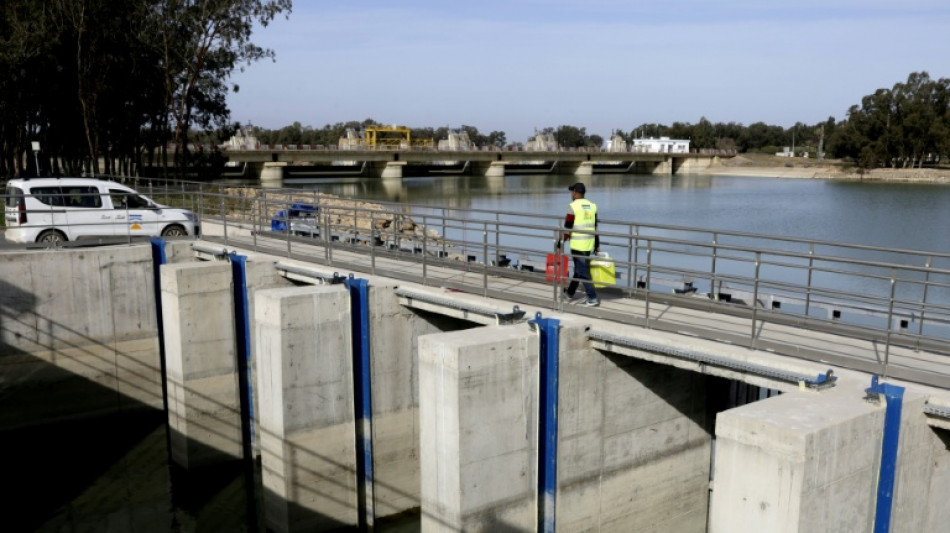
A diversion dam has been built in the city of Kenitra, just inland from the Atlantic coast, to hold back the flow of the Sebou River before it enters the ocean.
The water is then treated and transported along a 67-kilometre (42-mile) underground canal to supply residents of Rabat and Casablanca.
Inaugurated last August, the "water highway" had supplied more than 700 million cubic metres (24.7 billion cubic feet) of drinking water to the two urban areas by early March, according to official figures.
But experts question how long the Sebou and other northern rivers will continue to generate water surpluses that can be tapped.
- Six-year drought -
The kingdom already suffers from significant water stress after six straight years of drought.
Annual water supply has dropped from an average of 18 billion cubic metres in the 1980s to just five billion today, according to official figures.
Despite heavy rains in the northwest in early March, Morocco remains in the grip of drought with rainfall 75 percent below historical averages.
The dry spell has been "the longest in the country's history", the water minister said, noting that previous dry cycles typically lasted three years at most.
Rising temperatures -- up 1.8 degrees Celsius last year alone -- have intensified evaporation.
Experts say that climate change is likely to see further reductions in rainfall, concentrated in the very areas from which the "water highway" is designed to tap surplus flows.
"Future scenarios indicate that northern water basins will be significantly more affected by climate change than those in the south over the next 60 years," said water and climate researcher Nabil El Mocayd.
"What is considered surplus today may no longer exist in the future due to this growing deficit," he added, referencing a 2020 study in which he recommended scaling back the "water highway".
Demand for water for irrigation also remains high in Morocco, where the farm sector employs nearly a third of the workforce.
Researcher Abderrahim Handouf said more needed to be done to help farmers adopt water-efficient irrigation techniques.
Handouf said the "water highway" was "an effective solution in the absence of alternatives" but warned that climate challenges will inevitably "create problems even in the north".
"We must remain cautious," he said, calling for greater investment in desalination plants to provide drinking water to the big cities.
K.Hill--AT