Iraqis find Ramadan joy in centuries-old ring game / Photo: Ahmad AL-RUBAYE - AFP

 Russia to close branches of Germany's Goethe Institute
 Spacecraft bound for Mercury faces 'tricky' arrival

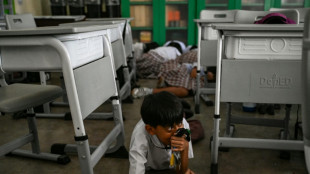 Philippines holds drills to safeguard students from armed intruders
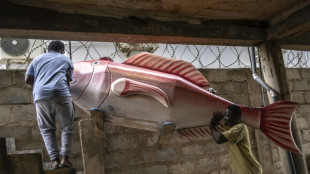 In Ghana, larger-than-life coffins tell the stories of the dead
 Menoncello, Reece headline Top 14 new-season signings
 Families descend on Nepal in search of missing tourists
 Far-right AfD eyes huge win in east German state vote
 Brazil-Japan to play World Cup rematch at Singapore tournament
 Defence chiefs back boosting US military presence in Australia
 Nepal seeks climate justice after Himalayan disaster
 Stocks rise, yields ease as oil slips on Trump hint at short bombing campaign

 Brussels Diamond League finals Day 1 - five events to watch
 Thailand's 'Jurassic Park' shines light on dinosaur evolution
 'Role model' Stokes set to open for Adelaide Strikers
 Palau urges 'unified' Pacific response to China missile test
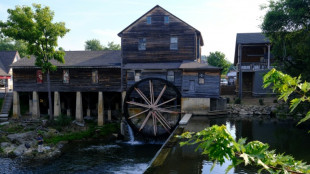 Grinding away: in remote Appalachia, old mills fuel US clean food dreams
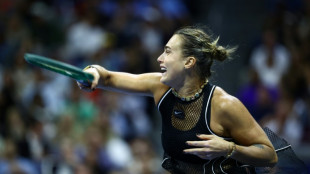
 Sabalenka races into US Open third round
 NSW's Fourth-Largest City Makes Its Move: Investing Platform Spotlights Wollongong's Health Precinct Plan and 20,500-Job Target

 Hemogenyx Pharmaceuticals PLC Announces Exercise of Warrants and Issue of Equity

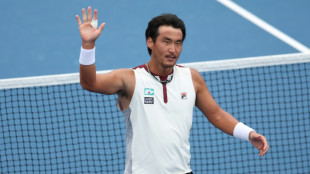 Chinese lucky loser stuns Jodar at US Open

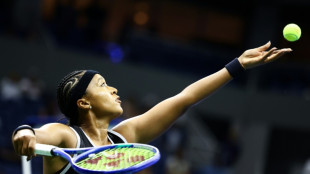 US Open under the influence: content creators spark debate
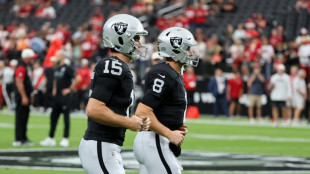
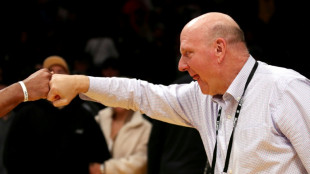 NBA hammers Clippers over Leonard salary cap violations
 NBA strips five first-round draft picks from Clippers for Leonard salary cap violations
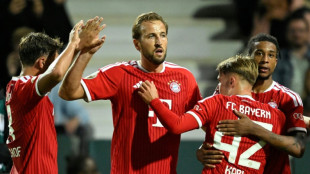 Kane brace helps Bayern win German Cup opener
 Migrant plight, local anger divide Ceuta one month after influx

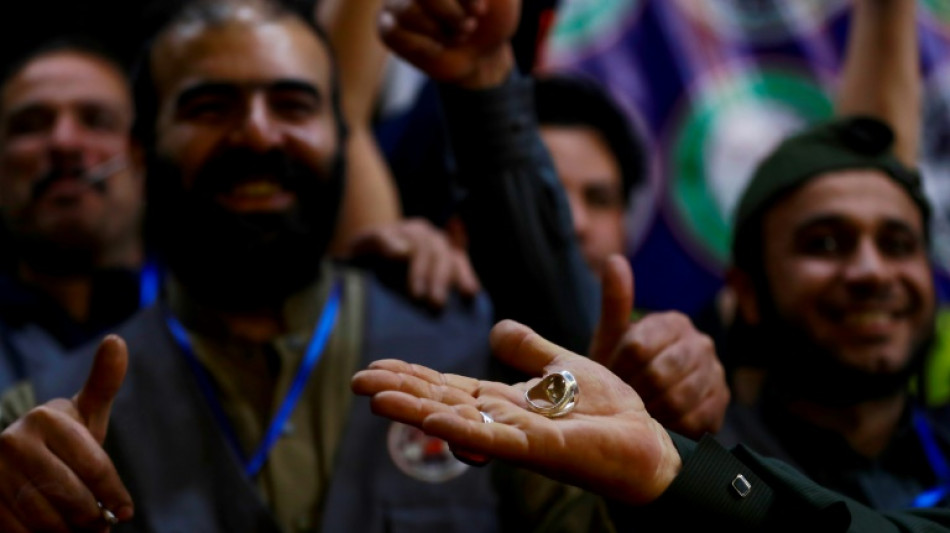
In a Baghdad arena, a crowd cheers to the rhythm of drums, not for a football match but for a fiery centuries-old game enjoyed by Iraqis during Ramadan called "mheibes".
"It's a heritage game, the game of our ancestors, which unites all Iraqis," said Jassem al-Aswad, a longtime mheibes champion in his early seventies and now president of the game's national federation.
The game involves members of one team hiding a ring -- "mehbis" in Arabic -- and the captain of the opposing team trying to guess who has it in the palm of his hand.
And he has to do so within 10 minutes.
Played during the holy Muslim fasting month of Ramadan, the game first appeared as early as the 16th century in Ottoman-era Baghdad, according to Iraqi folklore expert Adel al-Ardawi.
More than 500 fans and players gathered in the stands and on the field for two matches: the Baghdad neighbourhood of Kadhimiya against the southern city of Nasiriyah, and the capital's Al-Mashtal district versus a team from the port city of Basra.
Everyone watched as the 40 players on one team huddled together under a blanket to avoid prying eyes, and decided who would hide the "mehbis" or signet ring worn by many Iraqi men.
Sitting on the ground or on chairs, the members of the team hiding the ring then adopted serious expressions. Some closed their eyes, while others crossed their arms or even clenched their fists.
The rival team captain carefully read these facial expressions and body language to try and guess who had the ring -- before pronouncing the verdict.
When the first team failed to guess correctly, the other team scored a point and the crowd went wild.
- 'It's in our blood' -
"Iraqis love football the most, but mheibes comes a close second. It's in our blood," Kadhimiya captain Baqer al-Kazimi told AFP.
The clean-shaven 51-year-old, who wears a black robe called a jellaba, said he inherited his love of the game from his father.
Though mheibes was impacted during decades of conflict, including at the peak of the sectarian war between 2006 and 2008 marked by suicide attacks and kidnappings, Kazimi said he and others continued playing even during those dark years.
He said that only the coronavirus pandemic forced players to put their hobby on hold.
"Despite the sectarian violence, we played in cafes," he said, recalling one game between players from the Sunni neighbourhood of Adhamiya and those from Kadhimiya, a predominantly Shiite area.
The two districts were separated by a bridge that had been closed for years because of the violence.
"We played on the bridge. Sunnis and Shiites met," he said.
Ahmed Maala from Basra recalled a game with a team from Baghdad that lasted all night.
"I learned the game by playing with friends and family," he said.
"Mheibes will go down in history for its very large fan base throughout Iraq."
Passion for the game runs so deep that sometimes arguments erupt among players, even escalating into physical violence.
In a country with nearly 400 teams, annual competitions see players from across the nation competing against each other, with 10 teams qualifying in Baghdad alone to represent the city's different neighbourhoods.
Mheibes champion Aswad said he hopes the game will one day expand beyond Iraq's borders.
"Just as Brazil popularised football, we will transmit this game to the whole world," he said.
Ch.P.Lewis--AT