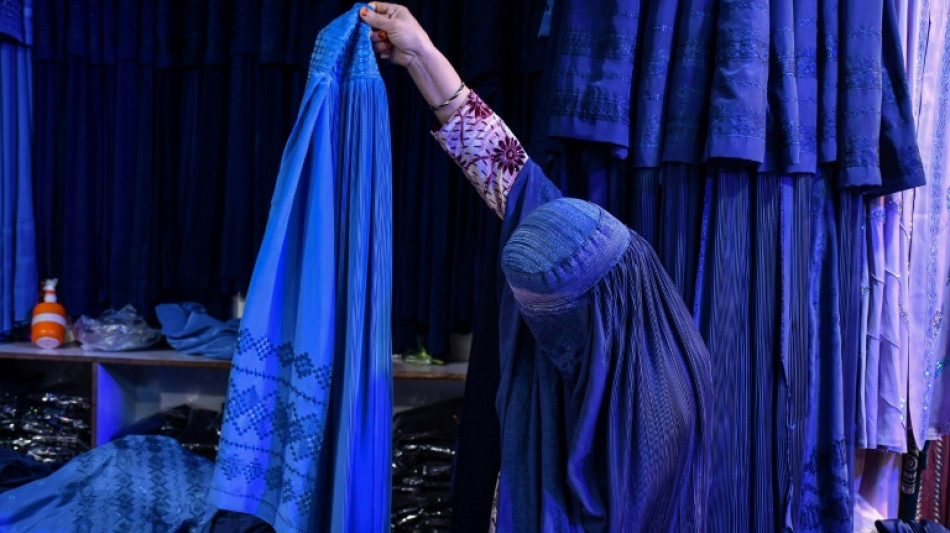
New generation of Afghan women shift from burqa / Photo: Atif ARYAN - AFP

 Putin denies plan for new Russia military call up
 Caruana Galizia: 'one-woman WikiLeaks' who exposed Malta's shady side
 Kuwait's Iranians under pressure since start of war

 EU lawmakers demand Brussels force Meta to 'protect' European children
 Clooney turns AFP photographer in jokey red carpet switch
 Retirement Income Planning Florida Launches No-Cost 'Income Gap Analysis' Program for Pre-Retirees
 Iraola hails Barcola mentality after blockbuster Liverpool move
 Michelsen shocks Nakashima in US Open clash of rising Americans

 US govt sides with OpenAI in New York Times copyright lawsuit
 Grammy-Winning Jazz Vocalist Cassandra Wilson Dies at 70
 Maui Wildfire Survivors Report Major Losses to Troubled Rebuilding Contractors
 WMO Says Powerful El Niño Is Likely to Persist Into February 2027

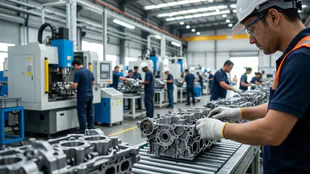
 Honda Presses Suppliers for Deep Cost Cuts in $9.4 Billion Savings Drive

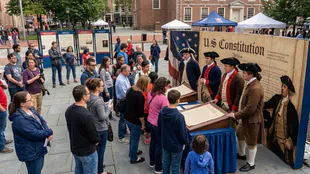
 Philadelphia Festival Revisits the Signing and Legacy of the U.S. Constitution

 Russia to close branches of Germany's Goethe Institute
 Spacecraft bound for Mercury faces 'tricky' arrival
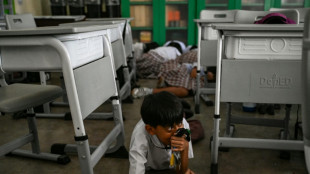 Philippines holds drills to safeguard students from armed intruders
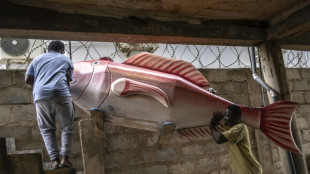 In Ghana, larger-than-life coffins tell the stories of the dead
 Menoncello, Reece headline Top 14 new-season signings
 Families descend on Nepal in search of missing tourists
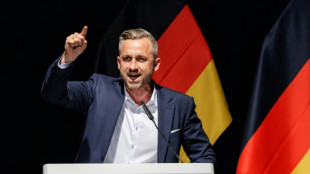 Far-right AfD eyes huge win in east German state vote

 Brazil-Japan to play World Cup rematch at Singapore tournament

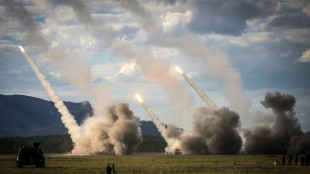 Defence chiefs back boosting US military presence in Australia

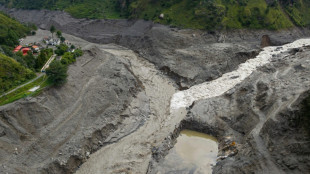 Nepal seeks climate justice after Himalayan disaster

 Stocks rise, yields ease as oil slips on Trump hint at short bombing campaign

Young, urban women in Afghanistan are increasingly ditching the all-enveloping blue burqa with a face mesh that has become a symbol of the Taliban's oppression of women.
Since their return to power in 2021, the Taliban have imposed an ultra-strict vision of Islamic law, modelled on their previous rule from 1996 to 2001.
But while women must still have their bodies and faces covered, restrictions from the feared religious police do not specifically mention the burqa.
So young women are instead following fashions seen in many Gulf nations.
Many prefer a flowing abaya robe, worn with a hijab headscarf and often a face covering as well -- sometimes a medical mask, or a Saudi-style cloth niqab veil that exposes only the eyes.
"The new generation would never accept wearing a burqa, because of the design and colour," said 23-year-old Tahmina Adel in the capital Kabul.
With social media, "everybody follows the trends", Adel added, who was forced to quit her economics degree because of the Taliban government's ban on women's education.
"I prefer wearing an abaya because I am comfortable in that," she said.
Young women in Kabul and the northern city of Mazar-i-Sharif said that abayas and headscarves offer more freedom of expression than burqas, with a variation in colour, material and pattern.
"Only elders wear a burqa," said Razia Khaliq, as she embroidered one at a workshop in Mazar-i-Sharif.
Khaliq began wearing the billowing head-to-toe burqa aged 13, like her mother and grandmother before her.
But her daughter, in her 20s, prefers the abaya.
"Young people wear the abaya because it is more comfortable," Khaliq said.
- 'Stifling' -
The burqa has long roots in Afghanistan.
It was strictly enforced during the first Taliban government rule of Afghanistan, when women were lashed for failing to wear one in public.
But the abaya and hijab headscarf combination grew in popularity during the time of the foreign-backed government.
When the Taliban recaptured Kabul in 2021, they had promised to be more flexible than during their first rule, when women were deprived of almost all their rights.
They have gradually erased Afghan women from public space, imposing what the United Nations has called a "gender apartheid".
They outlawed the loose headscarves commonly worn by urban women.
Billboards were erected ordering women to once again wear the burqa -- or an abaya, headscarf and a face covering.
A law in August confirmed restrictions imposed on men and women by the religious police.
It stipulates that, while women can go out "in case of necessity", they must cover up.
"Whether a burqa or hijab, there is no difference," said Saif ul Islam Khyber, spokesman for the morality police, known officially as the Ministry for the Propagation of Virtue and the Prevention of Vice.
Nasima, in her 40s, insisted that "showing your face is a sin".
But she admitted to sometimes wearing an abaya and headscarf to free her nose and mouth from the "stifling" burqa.
- 'Very strange' -
Niha, 22, said she was reprimanded for not wearing a burqa in public buildings, which are guarded by the Taliban authority's security forces.
It is common to be asked to readjust the headscarf, or ordered to add a medical mask.
"As soon as we enter offices, we are mistreated," said Niha, who did not give her surname.
Hayatullah Rafiqi, a specialist in Pashtun culture, said the burqa was "strictly imposed" under the first Taliban government -- when some women were "whipped if they did not wear it" -- but that "today it is worn less."
Burqas vary only in colour according to province, from blue to light brown, and green to pink.
Gul Mohammad has been selling burqas in Kabul for 40 years, and said many now come from China -- made of nylon rather than cotton, making them cheaper and stronger but less breathable.
"The Chinese burqa is very cold in winter, and it is like fire in summer," said Gul. "This makes the women sweat."
For Sabrina, 23, from the Taliban's spiritual cradle of Kandahar, life under a burqa is fraught with pitfalls.
She is regularly lectured if she does not wear it.
The first time she wore it was after the Taliban government seized back control in 2021, and it was not her choice.
"I couldn't see my way, I didn't know if I was going right or left," she said. "It was very strange."
N.Walker--AT