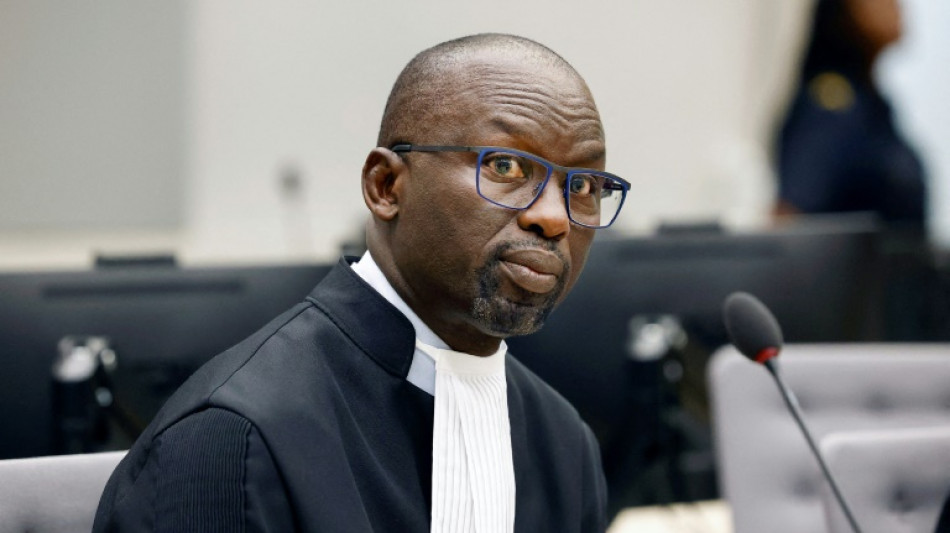
Catching the world's most wanted: the ICC's impossible task / Photo: Piroschka van de Wouw - ANP/AFP

 Antonelli will obey Mercedes orders to help 'tow' teammate Russell
 UK fintech Revolut gains conditional US banking licence

 Mara sisters channel childhood energy for twins performance at Venice

 UN's Sudan probe says foreign fighters fuelling conflict
 Violence erupts at S.Africa anti-migrant protest
 Nothing left: Nepal flood survivors face loss and uncertainty

 Tesla to launch self-driving 'Cybercab' in Texas

 Europe struggles to respond as Russia escalates shadow warfare

 Malta PM urges 'caution' after acquittal in journalist's murder
 Spanish PM says no 'solid proof' Morocco planned Ceuta migrant rush
 Venezuela's Maduro seek immunity from US drug charges
 Tazapay Now Live on the Borderless.xyz Network For Seamless Money Movement to Asia Pacific and Latin America
 DWF Labs Expands Global Regulatory Footprint with BVI Virtual Asset Service Provider Approval

 Just the beginning of the journey, Broeders-Bol says of 800m adventure
 US trade gap in July hits biggest in over a year on AI buildout

 Study shows plug-in hybrids polluting far more than expected

 Lost tool disrupted Airbus jet deliveries for months
 MEXC Concludes 0808 Stock Season with Over 86,000 Participants and More Than $1M Saved Through 0 Fee Trading

 US feminist icon Gloria Steinem dies at 92: foundation

 All Blacks drop veteran hooker Taylor for third Springboks Test
 British, French leaders hold talks on migrants, EU relations
 Oil prices jump as Iran strikes US targets
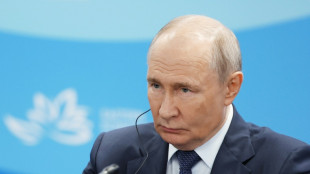 Putin denies plan for new Russia military call up
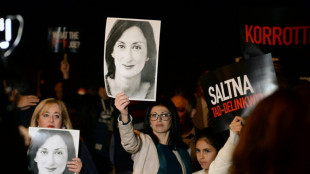 Caruana Galizia: 'one-woman WikiLeaks' who exposed Malta's shady side
 Kuwait's Iranians under pressure since start of war

The arrest on Tuesday of former Philippines President Rodrigo Duterte, by police acting on an International Criminal Court warrant tied to his deadly war on drugs, marks a success for the ICC, which has been struggling for almost 23 years against a lack of recognition and enforcement power.
Backed by 125 member states, the jurisdiction seeks to prosecute individuals responsible for the world's gravest crimes when countries are unwilling or unable to do so themselves.
The wheels of international justice grind slowly, as evidenced by the court's low conviction rate.
However, it’s not all about the final judgement, experts say.
The mere fact of pursuing alleged perpetrators of atrocities sends a message that the international community is determined to fight impunity.
- Catch me if you can -
Since it began work in 2002, the ICC has opened 32 cases for alleged war crimes, crimes against humanity, genocide and offences against the administration of justice.
Fourteen of them, or roughly 40 percent, are ongoing, in most cases because the suspects are still at large.
Without a police force, the Hague-based court is unlikely to catch them soon.
Of the 60 arrest warrants issued since 2002, only 21 had been carried out before Duterte's arrest.
The ICC relies on states to apprehend suspects.
But the incentive for them to cooperate is low because the court has "nothing to offer in return, except a commitment to seeing justice served", former ICC adviser Pascal Turlan said.
The court's wanted list includes Russian President Vladimir Putin, Israeli Prime Minister Benjamin Netanyahu and Ugandan warlord Joseph Kony. All three are accused of war crimes.
Russia is one of dozens of nations, including the United States, Israel and China, that do not recognise the jurisdiction of the ICC, hampering its ability to investigate their nationals.
But some member states also defy its authority by, for instance, refusing to hand over suspects.
"When states don't like what the ICC does, they don't often cooperate," said Nancy Combs, professor of law at William & Mary Law School in the United States.
- 11 convictions, all Africans -
ICC spokesperson Fadi El Abdallah stressed that the court's role is not to go after all suspected war criminals but to "encourage nations to deal with their own cases".
Each case comes with a unique set of challenges, from interference by national governments to witness intimidation.
The latter caused the case against Kenya's former deputy president William Ruto to fall apart in 2016, according to a former chief prosecutor.
These challenges partly explain the court's low conviction rate.
Since its inception it has handed down 11 guilty verdicts, mostly against officials from the war-torn Democratic Republic of Congo (DRC), and four acquittals.
All those judged were Africans, leading to accusations that the ICC is unfairly targeting the continent.
Combs pointed out that some African countries, including Uganda, Ivory Coast and the DRC, had referred their own wars to the court for investigation in the early days, while other cases had been instigated by the United Nations Security Council.
"The ICC has diversified a lot but non-African states have resisted ICC jurisdiction more fiercely," she pointed out, citing Russia as an example.
M.Robinson--AT