
The 'predatory' global economy of looted antiquities / Photo: GIUSEPPE CACACE - AFP

 Inter roar back in five-goal thriller with Napoli

 Haaland keeps Man City perfect in Premier League, blunt Spurs held

 Hamilton worried by Ferrari pace while Antonelli prepares for a fight

 Vuelta stage 15 shortened due to extreme heat, Mas consolidates lead

 Putin meets US envoys for Ukraine war talks

 Modric available for Croatia in Nations League
 Potapova upsets 2025 US Open runner-up Anisimova

 Gasly a 'class act' says Alpine boss after Monza pole
 Athletic Bilbao crush Simeone's flat Atletico
 Stay far from battlefield, warns Japanese director in Vietnam War film

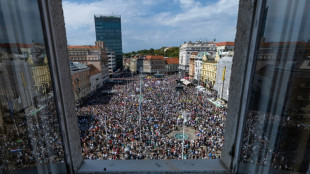 Tens of thousands of Croatians protest over hazardous waste

 Haaland heads unconvincing Man City top of Premier League

 US envoys in Moscow as Russia and Ukraine vow not to hit capitals during talks

 Motorsport governing body rejects Alpine boss's claims of bias

 US envoy on West Bank visit says Israel has responsibility for Palestinians
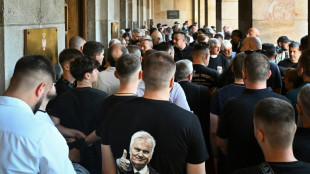
 Ethiopian Miss World contestant spotlights pain of sister's murder

 'Leader' Raphinha rising to Barca striker challenge

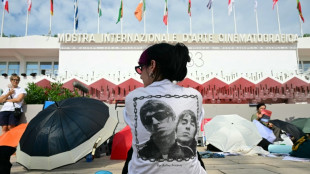 Oasis fans gather in Venice for band reunion film

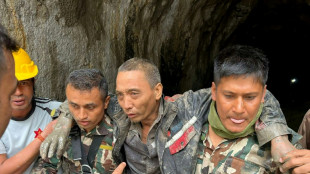 Two Nepal rescues revive hopes 10 days after flood
 Pogacar to miss worlds after season-ending Vuelta crash
 Greenwood, Guendouzi handed bans after Fenerbahce-Lyon brawl
 In Iceland, the mystery of the poet, the tomb and the Danish grocer

 Ratko Mladic: Bosnian Serb commander to convicted war criminal

 Bolivian army base blasts kill two, wound dozens
 Alcaraz, Sabalenka into US Open last 16 as Williams sisters lose on return
The charging of the Louvre's former director in an antiquities trafficking investigation has shone a light on a vast, transnational criminal problem that remains fiendishly difficult to target.
Ancient burial grounds around the world have increasingly become "open-air supermarkets" for everyone from petty thieves to organised criminals, said Vincent Michel, professor of archaeology at the University of Poitiers in France.
He describes a "sophisticated chain" stretching from sites in unstable places such as Iraq, Syria and Libya -- but also many other parts of the world -- via transit countries to auction houses and private collectors in Europe and the United States, and increasingly Asia and the Gulf.
It is an illicit trade that "serves mafias, drug traffickers and terrorist groups, abusing collectors and museums with complete impunity", said Michel.
The ex-director of the Louvre in Paris, Jean-Luc Martinez, was charged last week over the purchase of a pink granite stele depicting the pharaoh Tutankhamun and four other historic works for eight million euros ($8.5 million) by the museum's branch in Abu Dhabi.
Martinez, who has strongly denied any wrong-doing, is accused of turning a blind eye to fake certificates of origin for the pieces, a fraud thought to involve several other art experts, according to French investigative weekly Canard Enchaine.
Such allegations are far from a rarity in the art world where the value of looted antiquities is thought to reach into the "tens or even hundreds of millions of euros" per year, according to Michel.
He trains police, judges and customs officials to help counter the trade but resources are notoriously limited in the sector, and he has called for deeper public awareness and a more concerted interdisciplinary fight.
"This transnational crime feeds a predatory economy that undermines our national security. It is also an irreversible attack on heritage because a looted object, taken out of its context, loses all scientific value," Michel said.
- Global reach -
The Covid-19 pandemic has only deepened the challenge.
Egyptian authorities say the number of illegal digs jumped massively in recent years to hit 8,960 in 2020.
Looters use metal detectors to hunt gold, silver and bronze items, often stored in perfect condition in tombs thanks to the arid climate.
But the problem is not limited to poorer countries.
France has seen an uptick in looting from archaeological sites, said Xavier Delestre, who works for the regional cultural authorities based in Marseilles.
He said high-value items were often laundered through so-called "freeports" -- tax haven storage sites with minimal oversight in places like Geneva, Luxembourg and Singapore -- emerging with false back-stories.
Lower-value items ended up on social media and online stores.
- 'Almost undetectable' -
Michel said counterfeiters are "incredibly ingenious" when it comes to masking the illicit origin of items, creating documents with a careful mix of false and true information, fabricating false export permits or purchase invoices -- even UNESCO certificates.
Once reintroduced into the legal market, "a looted item is almost undetectable," he added.
Internet sales have made it even harder for law enforcement officials to trace criminals and keep a handle on the problem.
A 2019 report by US counter-trafficking organisation ATHAR tracked 95 Arabic-language Facebook groups specialising in antiquities trafficking, with a total of nearly two million members.
"Facebook offers a veritable digital toolbox for traffickers to utilise, including photo and video uploads, live streaming, disappearing 'Stories', payment mechanisms, and encrypted messaging," the report said.
P.Hernandez--AT