Japan's 'invisible' disabled artisans fight for spotlight

 American Nobel laureate in medicine hopes to illuminate the brain

 Trump approves firing squad for convicted US military base shooter

 Grappling with 'homework scams,' US universities shun AI detectors

 Separatists win Quebec election in test for Canada PM

 Leaders visit Pacific atoll at frontline of climate change

 Yemen's Houthis claim striking Riyadh airport, other Saudi sites

 Best-selling British author Jeffrey Archer dies aged 86

 Military plane crash kills 32 in Nigeria

 Olise powers France to win over Belgium in Nations League

 High-flying Blazy turns to birdlife at Chanel

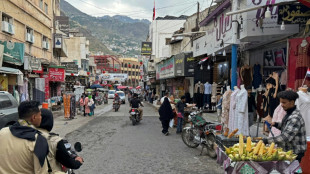 Riyadh's allies pledge troops as Yemen, Saudi Arabia attack Houthis
 Clashes erupt outside Kosovo parliament over war crimes court

 Milan's Saelemaekers suffers ankle setback, faces lengthy spell out

 Rubio arrives in Iceland to push for greater US presence in Arctic

 Putin allows Italy's UniCredit to sell part of Russian business
 Djokovic into China Open final as Medvedev out for hitting fan with ball

 ICC unseals arrest warrants for Taliban education ministers

 Modric hopes fans back Croatia against Spain after England shame

 Bolsonaro rides right-wing surge into Brazil's election runoff

 Turkey blocks X account of British reporter

 Ukraine says using AI robot guns to shoot down new Russian drones

 At Oct 7 memorial, Netanyahu says will be no Hamas rule in Gaza

 Ukraine blames Russia for deadly sinking of Turkish ship in Black Sea

 UN rights council slams Taliban's 'oppression' of women
 Norway eyes partial ban of smart glasses
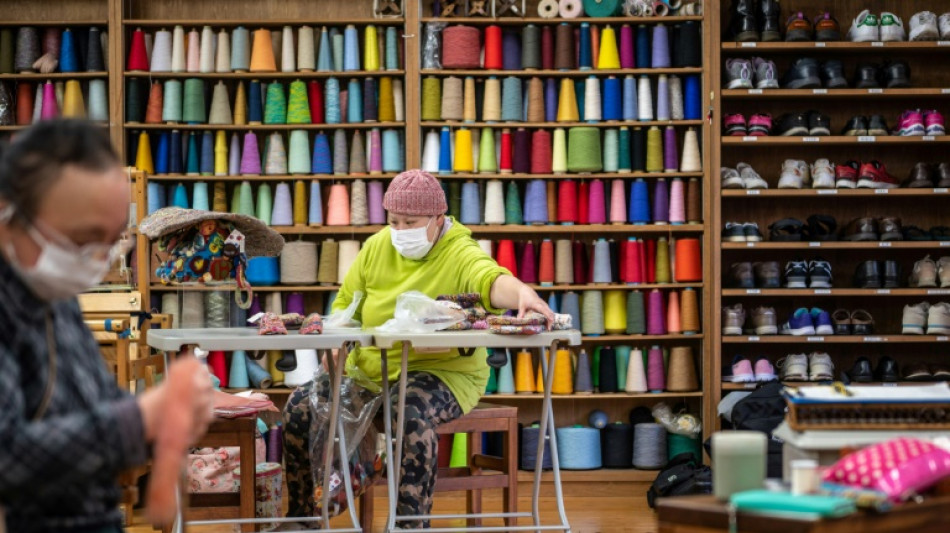
In a trendy Tokyo neighbourhood, customers browse the wares at Majerca, a shop stocked with handmade items from scarves to glassware, all produced by people with disabilities.
The shop, and the workshops where the items were produced, are part of a small but burgeoning movement in Japan aiming to promote work by people with impairments.
Despite being the only country to host the Paralympics twice, and the government's public commitment to integrate people with disabilities, activists and experts say workplaces in Japan are rarely accessible to them.
In fact, public subsidies for those with disabilities have generally been understood to mean recipients will simply stay at home, and activists say there is little support for those seeking active employment.
That's a huge loss for society, according to Miho Hattori, who works with some of the producers at a workshop that supplies Majerca.
"Some workers here have a career of more than 30 years, and they are so experienced that we should refer to them as artisans," Hattori told AFP.
Around two dozen employees with various intellectual impairments work at the site.
In one area, men filter pulp and press paper to make cards, while elsewhere a woman spins yarn from raw wool and others manage a wooden weaver unfurling beautiful fabric.
"I am making the fabric for stoles, using wool for the woof and cotton for the warp," Ayame Kawasaki, a 28-year-old with Down's syndrome, tells AFP.
"I like weaving."
- 'Apologetically priced' -
The workshop sells bags and stoles to shops and galleries, with items priced at several thousand yen. After costs, each worker can expect to bring in about 15,000 yen ($130) a month, an amount Hattori describes as "heartbreaking".
It is not the main source of income for the workers, who are entitled to government support, and the figure is about the national average for people with intellectual disabilities, according to the welfare ministry.
"Their labour and their products are so valuable but they remain invisible," said Mitsuhiro Fujimoto, founder of Majerca, which is operated by five employees without disabilities.
Fujimoto was inspired to launch the store after buying wooden toys he later discovered were made by workers with intellectual disabilities.
Majerca passes about 60-70 percent of product revenue back to producers and Fujimoto says he encourages artisans to value their work and demand fair pay, not just charity.
"At times, I've raised the price by more than five times on something that was apologetically priced at just 500 yen," he told AFP.
Fashion house Heralbony, which produces high-end items working with about 150 designers with intellectual disabilities, also prices its products at a level it says reflects the work of its employees.
It has organised pop-up shops at glitzy department stores, showcasing its colourful apparel next to products from top makers such as Hermes and Louis Vuitton.
It offers ties at 24,200 yen and blouses at more than that, which spokeswoman Miu Nakatsuka says are fairly priced.
"In Japan's welfare sector, there's long been a sort of hesitation that suggested people receiving public welfare services are not supposed to make money," she told AFP.
Heralbony says its workers receive a licensing fee of at least five percent of an item's price, and sometimes 10-30 percent, exceeding the local industry average of three percent.
- 'This is discrimination' -
Welfare workers say social stereotypes hinder work opportunities for people with impairments, but they also blame Japanese law.
"In Japan, a disabled working person is not allowed to use their publicly funded helper to commute or at a workplace," said Masashi Hojo, the director of an association of welfare workshops in Tokyo.
"This is discrimination."
The situation was highlighted in 2019 when two severely disabled candidates won seats in Japan's upper house.
Their assistants are paid for by the upper house, but the lawmakers want the rules changed to help the 11,500 other seriously disabled people who rely on public care.
Despite the obstacles for workers, Heralbony, which was founded three years ago, is profitable.
The firm plans to expand into interior and furniture items this year.
And Majerca operator Fujimoto believes showcasing products by workers with disabilities will help challenge stereotypes about working with an impairment.
"By visiting Majerca, I hope people will see what they do, and what they can do, and start thinking about whether they are being treated fairly," he said.
W.Morales--AT