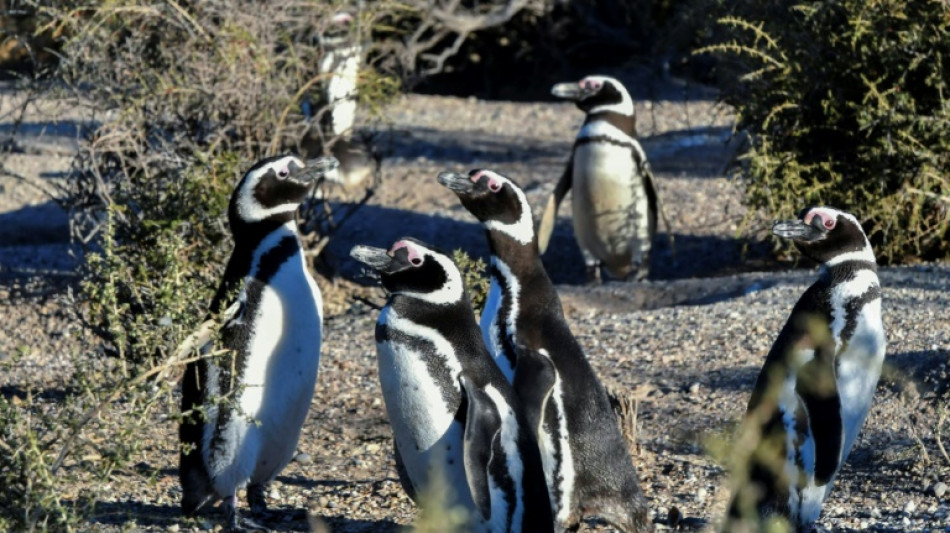
Argentine farmer sentenced for killing penguin chicks / Photo: DANIEL FELDMAN - AFP/File

 Palestinians Salvage Cultural Heritage from Gaza Rubble Amid Widespread Destruction

 6 Pieces of Furniture Worth Investing In

 Police Investigate Bedford Parent for Hallway Incident After Playoff Loss

 Regal Cinemas Launches 4DX Screenings for 'Heated Rivalry' Amid Immersive Theater Trend

 Texas Car Buyers: Legal Remedies When a Defective Vehicle Isn't a 'Lemon'

 Phil Spencer on Housing Market Fairness: How Buyers and Sellers Navigate Falling Prices
An Argentine farmer was given a three-year prison sentence for animal cruelty Wednesday, likely to be commuted, after being found guilty of killing over 100 Patagonian penguin chicks.
The sheep farmer from the southern province of Chubut was found guilty last month of destroying dozens of nests and killing chicks in 2021 while clearing land along the Punta Tumbo nature reserve, home to one of the main colonies of Magellanic penguins on the Atlantic coast.
The farmer is unlikely to be incarcerated as Argentina's penal code recommends alternatives to prison for a first conviction and sentences up to three years.
Prosecutors had requested a four-year sentence.
Environmental group Greenpeace, the complainant in the case, had welcomed the farmer's conviction as "an important step for environmental justice."
The farmer argued there was no choice but to clear the land as the state had failed to set up an access route to his property, or boundaries between his farm and the reserve.
The Magellanic Penguin is listed as a species of "least concern" on the International Union for Conservation of Nature's Red List, meaning it is not at risk of extinction even though numbers are in decline.
T.Wright--AT