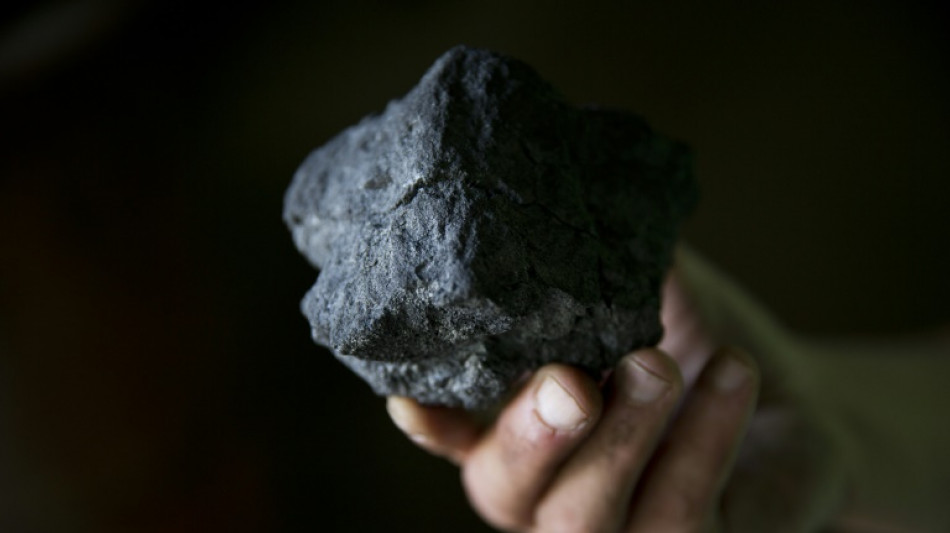
UK government announces ban on new coal mines / Photo: DOMINICK REUTER - AFP/File

 Olivier Martinez Seeks Increased Child Support from Halle Berry Following Custody Change

 Joe Biden Makes Surprise Appearance at Trinity College Dublin for Hunter's Medal

 Bank of Korea Governor Shin Hyun-song Appointed First Asian Chair of BIS Payment Committee

 Northern California Jewish Sports Hall of Fame Announces 2026 Inductees

 Readers Debate GTA 6 Spin-offs, Server Strain, and Warner Bros. Decline in Games Inbox
The UK announced Thursday that it will introduce legislation to ban new coal mines, as the Labour government ramps up its plans to make Britain a clean energy leader.
The government said it will unveil the new law to restrict the future licensing of new coal mines "as soon as possible", in what it called a "crucial step" to tackling climate change.
It comes after Britain's last coal-fired power station Ratcliffe-on-Soar closed in October, making the UK the first G7 country to end its reliance on the fossil fuel for electricity.
In a landmark ruling in September, British courts overturned a permit given by the previous Conservative government to a project in Whitehaven, Cumbria, which was set to become the country's first new coal mine for 30 years.
It would have mined metallurgical coal used solely for steelmaking.
Energy minister Michael Shanks said in a statement that "consigning coal power to the past" would "pave the way for a clean, secure energy system that will protect billpayers and create a new generation of skilled workers".
Coal has gone from generating around 40 percent of the UK's electricity supply in 2012 to zero percent today, the government said in a statement.
Labour won the July general election vowing to be more ambitious on polices geared towards meeting Britain's climate change commitments, promising among other things to decarbonise the electricity grid by 2030.
On Tuesday, Prime Minister Keir Starmer, in Baku, Azerbaijan for the UN climate change summit, said the UK would aim to reduce greenhouse gas emissions by 81 percent on 1990 levels by 2035, as part of government plans to reach net-zero by 2050.
The centre-left government has also ended an effective Tory ban on new onshore wind projects and ended new oil and gas exploration licences in the North Sea.
M.King--AT