Vatican recognises Medjugorje shrine, but not Virgin's messages / Photo: ELVIS BARUKCIC - AFP

 First Drive: 2027 BMW i760 xDrive Review

 Gary, Indiana Blackout Exposes FEMA Relief Disparities Along Racial Lines
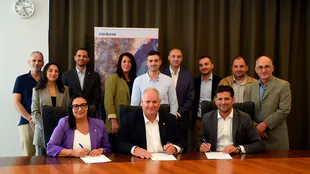
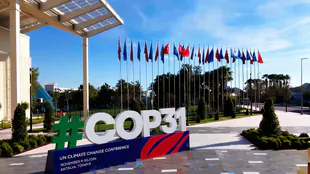 Turkish Energy Minister Highlights Qatar as Key Partner for Regional and Global Energy Security

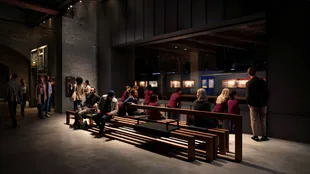 London Museum Granted 24/7 License Ahead of November Opening
 Dana White Confirms Flight to Washington for Trump Meeting on Press Secretary Role

 Dengue Fever Expands Into High Himalayas as Climate Change Warms Nepal

 IoT Refrigerator Hacks Disrupt Blood Labs and Supermarkets Across Europe and US

 Time Is of the Essence: Elektros Advances Development Efforts for Its Patented Multi-Port EV Charging Technology

The Vatican said Thursday it recognised the shrine of Medjugorje in Bosnia-Herzegovina, without commenting on the Virgin's "alleged messages" to the faithful, who have gathered there in the millions for more than 40 years.
In a 17-page document approved by Pope Francis, the powerful Dicastery for the Doctrine of the Faith said it wanted to "conclude a long and complex history that has surrounded the spiritual phenomena of Medjugorje", which have fuelled "a series of divergent opinions" within the Catholic community.
The Vatican said it was giving "the official green light to devotion and spiritual experience" for the faithful in Medjugorje, a village of 2,300 inhabitants that has become a popular place of pilgrimage, after six young people reported seeing the Virgin there in 1981.
Since then, about a million people have visited each year, including people who have professed that the Virgin Mary has also addressed them.
The Vatican concluded that its evaluation of "the abundant and widespread fruits" of spirituality seen at Medjugorje "does not imply that the alleged supernatural events are declared authentic".
- Contradictions -
Nor do the Vatican's conclusions "imply a judgment on the moral life of the alleged visionaries", with the document acknowledging that "moral perfection" was not necessarily required to receive a vision.
While citing "many positive elements" tied to the purported visions, it acknowledged that some believed that "certain messages contain contradictions or are connected with the desires or interests of the alleged visionaries or others."
"It cannot be ruled out" that this may have happened in certain cases, it added.
Pope Francis himself has expressed some doubts, commenting in November 2013 on the Virgin's particularly chatty nature at Medjugorje, where believers say she bestows several messages a day.
"The Virgin," Francis said, "is not a chief of the post office who would send messages every day."
- 'Positive fruits' -
The document does not question the sincerity of the faithful who gather at the site or claim to have had a vision of the Virgin Mary or heard her messages.
Overall, the Vatican emphasised the positive effect of the site on the Church and for religious practice in general -- what it called the "positive fruits" of Medjugorje.
They include visitors finding or rediscovering their faith while at the site, couples reconciling, or others deciding to join the priesthood, it said.
"The Holy Spirit is acting fruitfully for the good of the faithful 'in the midst' of this spiritual phenomenon of Medjugorje," read the document.
The dicastery's prefect, Argentine Cardinal Victor Manuel Fernandez, told journalists at the Vatican Thursday that most of the messages "have a beautiful content that can encourage the faithful to convert and grow in their encounter with Christ, to be builders of peace in the world."
But while they "overall possess great value", the Vatican said "the faithful must be attentive and cautious in interpreting and disseminating the alleged messages."
The Vatican said some of the Virgin Mary's words of love allegedly bestowed at Medjugorje, "are best understood in the ecumenical and interreligious context of Bosnia and Herzegovina," whose 1992-1995 war between its Croats, Muslims and Serbs claimed approximately 100,000 lives.
The history of the Catholic Church is filled with episodes of strange or unexplained phenomena involving apparitions, religious statues or other objects that bleed or shed tears.
Some of the manifestations are particularly unusual, such as a recent Italian case the Vatican rejected as "non-supernatural" earlier this year involving a Virgin Mary crying tears of blood and multiplying the size of a pizza, among other alleged miracles.
Faced with such phenomena, the dicastery in May published new norms, approved by the pope, to allow for a more "prudent" interpretation of events, which generally avoids declaring them outright a supernatural event.
The rules, which were updated for the first time since 1978, call for more collaboration between the Vatican and bishops, who until then had been left relatively free to determine the authenticity of these cases.
Underscoring the complexity of the issue, the Vatican has completed only six cases of such alleged supernatural events since 1950.
A.O.Scott--AT