Europe court condemns Spain over blood transfusions for Jehovah's Witness / Photo: FREDERICK FLORIN - AFP

 First Drive: 2027 BMW i760 xDrive Review

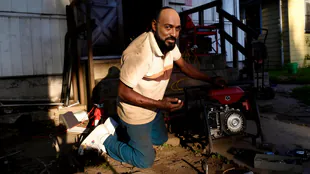 Gary, Indiana Blackout Exposes FEMA Relief Disparities Along Racial Lines
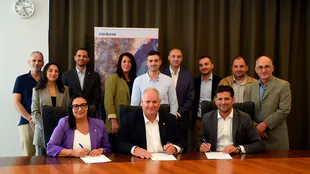
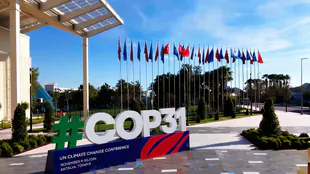 Turkish Energy Minister Highlights Qatar as Key Partner for Regional and Global Energy Security

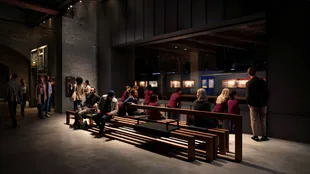 London Museum Granted 24/7 License Ahead of November Opening
 Dana White Confirms Flight to Washington for Trump Meeting on Press Secretary Role

 Dengue Fever Expands Into High Himalayas as Climate Change Warms Nepal

 IoT Refrigerator Hacks Disrupt Blood Labs and Supermarkets Across Europe and US

 Time Is of the Essence: Elektros Advances Development Efforts for Its Patented Multi-Port EV Charging Technology
The European Court of Human Rights (ECHR) on Tuesday condemned Spain in a case involving a Jehovah's Witness who had received blood transfusions during an operation against her will.
The Strasbourg-based court ruled unanimously that there had been "a violation of Article 8 (right to respect for private and family life) of the European Convention on Human Rights read in the light of Article 9 (freedom of thought, conscience and religion)," the ECHR said in a statement.
The court ordered Spain to pay 26,000 euros in damages and legal costs.
The case concerned blood transfusions administered to Rosa Edelmira Pindo Mulla, an Ecuadorian national living in Spain, during emergency surgery against her will.
"Treating the situation as an emergency, the usual consent protocol was not followed at the hospital," the court said.
Jehovah's Witnesses believe it is against God's will to receive blood and, therefore, they refuse blood transfusions.
In March 2020, she lodged an application with the ECHR, which rules on violations of the European Convention on Human Rights in the 46 member states of the Council of Europe.
"Pindo Mulla had not been able to exercise her autonomy in order to observe an important teaching of her religion," the statement said.
In a statement to AFP, the 53-year-old said she was "very happy that justice has been done" and expressed hope that the ruling would "allow the rights of other people to be respected in the future."
One of her lawyers, Petr Muzny, said the court decision would "put an end to a few exceptions that are practised in certain countries, including France."
"France was still a country where, in certain cases, it was still possible to force a patient. But that's over now," he added.
At a hearing in January, Muzny maintained that his client had become a victim of "medical paternalism," despite the fact that she had repeatedly indicated that she wanted "to be treated in accordance with her conscience."
Heide-Elena Nicolas Martinez, a lawyer representing Spain, stressed that the decision to give Pindo Mulla blood transfusions had been taken with "great urgency."
Jehovah's Witnesses are members of a US-based Christian evangelical movement, which claims to have over 8.6 million followers worldwide, from Finland to the Falkland Islands and Peru to the Philippines.
The Witnesses reject modern evolutionary theory and also oppose blood transfusions, believing that blood is sacred.
The Witnesses have lobbied doctors to adopt clinical strategies that minimise the need for blood transfusions.
L.Adams--AT