Iran's new president vows to ensure morality police don't 'bother' women / Photo: ATTA KENARE - AFP

 First Drive: 2027 BMW i760 xDrive Review

 Gary, Indiana Blackout Exposes FEMA Relief Disparities Along Racial Lines
 Turkish Energy Minister Highlights Qatar as Key Partner for Regional and Global Energy Security

 London Museum Granted 24/7 License Ahead of November Opening

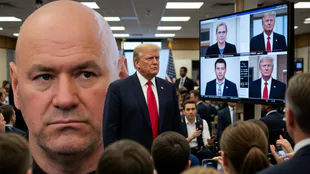 Dana White Confirms Flight to Washington for Trump Meeting on Press Secretary Role

 Dengue Fever Expands Into High Himalayas as Climate Change Warms Nepal
 IoT Refrigerator Hacks Disrupt Blood Labs and Supermarkets Across Europe and US

 Time Is of the Essence: Elektros Advances Development Efforts for Its Patented Multi-Port EV Charging Technology
Iranian President Masoud Pezeshkian vowed Monday to ensure the morality police will no longer "bother" women, in remarks to the media on the second anniversary of Mahsa Amini's death in custody.
Amini, a 22-year-old Iranian Kurd, died in police custody on September 16, 2022, days after the morality police arrested her in Tehran for an alleged breach of the Islamic republic's strict dress code for women.
Her death triggered months-long protests across the country, with hundreds of people, including dozens of security personnel, killed in the unrest. Thousands of demonstrators were arrested.
"The morality police were not supposed to confront (women). I will follow up so they don't bother" them, Pezeshkian said during his first press conference since he took office in July.
Pezeshkian replaced the ultraconservative Ebrahim Raisi, who died in a helicopter crash in May.
During his election campaign, he had vowed to "fully" oppose police patrols enforcing the mandatory hijab headscarf as well as easing long-standing internet restrictions.
Iran has over the years tightly controlled internet use, restricting popular social media platforms such as Facebook and X.
Harsher curbs were enforced following 2019 protests against fuel price hikes and during the wave of demonstrations triggered by Amini's death.
On Monday, Pezeshkian said his government was working to ease restrictions online, especially on social media.
- Relations with the West -
At Monday's press conference, Pezeshkian briefly touched on other topics including Iran's fraught relations with the United States and the 2015 nuclear deal.
"We do not want to fight with America if it respects our rights," he said.
"It is not us who are hostile (to the Americans). We have not built military bases around their country."
Iran and the United States have had no diplomatic relations since 1980, the year after the Islamic Revolution that toppled its Western-backed Shah Mohammed Reza.
A landmark 2015 deal between Tehran and world powers granted Iran sanctions relief in return for curbs on its nuclear programme.
But the deal quickly collapsed and tensions reignited following the United States' unilateral withdrawal from the accord in 2018 and reimposition of sanctions on Iran the following year.
Iran has since suspended its compliance with caps on nuclear activities.
"We are not seeking nuclear weapons; we have respected the framework of the nuclear agreement," said Pezeshkian.
"They (the United States) broke the agreement and forced us to do something."
Pezeshkian also spoke about newly imposed sanctions.
Last week, Britain, France and Germany announced punitive measures targeting Iranian air transport, accusing it of delivering ballistic missiles to Russia for use in the Ukraine war.
Iran has repeatedly denied sending any weapons to Russia for use in the war, and vowed to respond to the latest in a long string of Western sanctions on Tehran including over its nuclear activities.
Pezeshkian said Iran "has not given" Russia any weapons.
"It is possible that Iran and Russia had military cooperation in the past... because there was no ban at the time," he said.
"What I can say with certainty is that since our arrival, we have not given them anything so that (the West) boycotts us."
M.King--AT