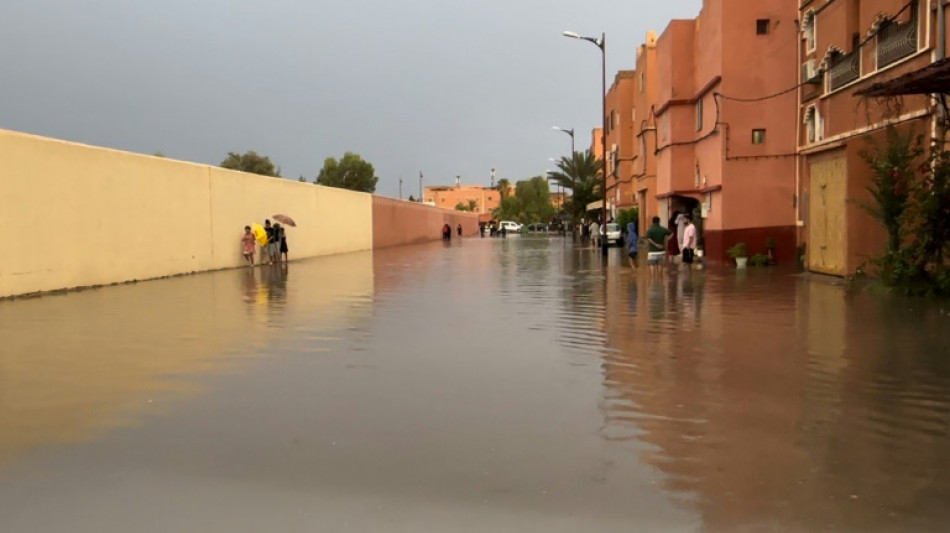
Deadly floods bring relief to Moroccan farmers / Photo: Abderahim ELBCIR - AFP/File

 Philippine sensation Eala looks forward to Asian Games 'fun'
 Jakarta airport extends closure after volcano eruption

 Lonely woman director in Venice sees industry backsliding on gender

 Tech firms rally on mixed day for Asian markets, with eyes on US inflation

 World number one An sends Asian Games warning with China hat-trick

 PSG go for three in a row as Champions League returns

 "Super-human' Alcaraz books US Open quarter-final clash with Shelton

 ECB set to hike interest rates as Iran war flares anew

 AI data centers are less thirsty now, tech giants say

 North Korea vows nuclear-armed navy as US ally drills open

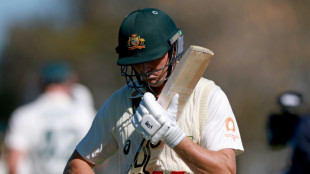 Under-fire Labuschagne named in Australia Test squad for South Africa

 Enjoying the moment: Alcaraz steps it up to reach US Open quarter-finals

 Five dead, five injured after Amazon cargo plane overshoots Miami runway

 La Rochelle half-backs lead fightback against Toulouse

 US envoys have 'more effective proposals': Ukraine official

 Defending champion Alcaraz powers into US Open quarter-finals

 Amazon cargo plane overshoots Miami runway, hits vehicles, catches fire

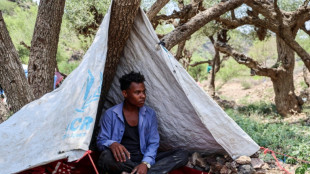 Toll from Yemen clashes passes 300 as civilians flee homes

 Sabalenka books US Open quarter-final clash with Noskova

 German AfD supporters jubilant at far right's thumping win

 Zelensky warns war likely to continue into winter after US talks

 Arsenal deliver statement fightback to end Chelsea's flying start

 Leclerc accepts blame as Hamilton laments Ferrari approach

 Sabalenka surges past Townsend to reach US Open quarter-finals

 Smiling face of Germany's far-right AfD: Ulrich Siegmund

When powerful thunderstorms hit Morocco's arid south, they brought deadly floods but also provided some relief to farmers as the country grapples with its worst drought in nearly 40 years.
The torrential rains at the weekend triggered floods that killed at least 18 people in areas of southern Morocco that straddle the Sahara desert.
While the rain was devastating in part, it also brought some relief to farmers growing crops like almonds, dates and cereals.
"These rains will bring a breath of fresh air" to the south, said agronomist Mohamed Taher Srairi.
"But it has not rained elsewhere, and the country remains under a heavy structural drought."
The unusual rainfall resulted from a tropical air mass shifting northward, according to Lhoussaine Youabd, spokesman for Morocco's General Directorate of Meteorology.
Experts say climate change is making extreme weather, such as storms and droughts, more frequent and intense.
Morocco is one of the world's most water-stressed nations, with frequent droughts affecting a third of the population employed in agriculture.
Near areas of the northwest African country lashed by the weekend's rain, water levels in dams have risen and groundwater is expected to replenish.
The four Draa Oued Noun dams, which supply areas impacted by the floods in the Ouarzazate region, saw water levels increase by 19 percent to 191 million cubic metres, according to Youssef Ben Hamou, director of the agency managing the barrages.
The region of Ouarzazate, located in Morocco's south, sits between the Atlantic Ocean, the Atlas Mountains and the Sahara.
Water levels of the large Ouarzazate dam climbed to 69 million cubic metres, roughly 70 percent of its capacity, while levels at the Fask dam rose by 10 million cubic metres in just 24 hours.
- Rains bring hope -
"The rains have proved to be a boon for the region, because these reserves will be able to ensure drinking water supply which remains a priority," said Ben Hamou.
Mohamed Jalil, a water resources consultant, said the downpours would help to replenish soil saturation levels, although that usually requires rainfall over time after a long drought.
"This will bring respite to the oases, particularly for agriculture," he said.
The psychological impact of the long-awaited rains was also significant, he said, especially after a harsh, dry summer.
The massive rainfall had "brought hope" to the drought-hit area, he said.
The Moroccan government has pledged financial aid to the flooded areas.
During a visit to Ouarzazate this week, Agriculture Minister Mohammed Sadiki announced the allocation of $4.1 million to repair damaged infrastructure, support agriculture and help those affected by the floods.
Although no further downpours are expected in the immediate future, climatologists warn that Morocco must better prepare for weather disasters driven by global warming.
Moroccans should be ready "for new phenomena whose frequency and violence are unknown, given the effects of climate change", said Mohamed Said Karrouk, a climatology professor at Hassan II University in Casablanca.
W.Morales--AT