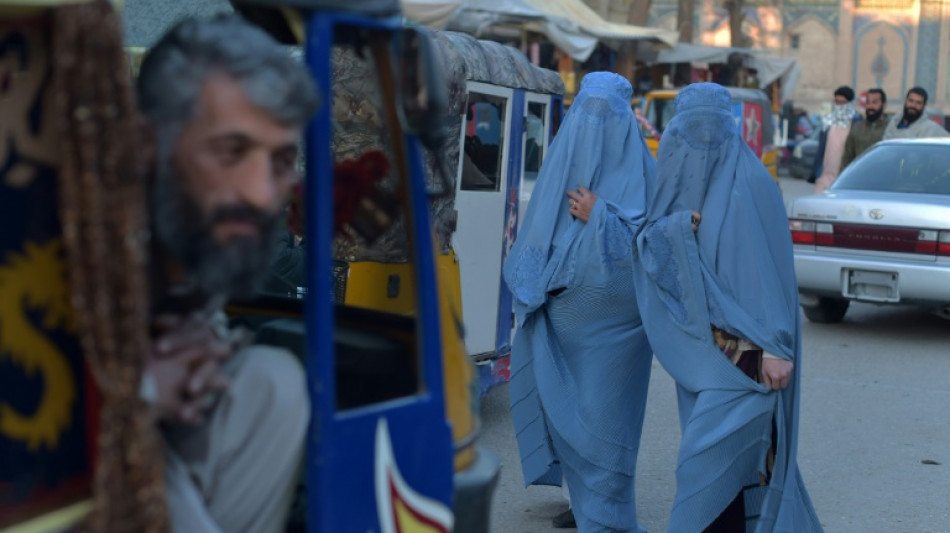
Taliban order Afghan women to cover fully in public / Photo: WAKIL KOHSAR - AFP/File

 'The ber months': Christmas arrives early in the Philippines

 N. Korea calls Russia bridge a sign of tighter ties

 US sanctions threaten to crush Iranian students' dreams
 Former champ Gauff holds off Jovic to reach US Open quarter-finals

 Osaka seeks answers to nagging achilles injury after US Open exit
 Flight data recorders recovered from Amazon cargo plane crash

 Super Bowl rematch kicks off NFL season as league expands global reach
 Alcaraz faces Shelton in blockbuster US Open quarter-final
 Trump threatens sales in US of Canadian aircraft maker Bombardier

 Eiffel Tower closed in row over women removed for Hindu group

 Willemse replaces Kolbe for Springboks' All Blacks series decider
 Zheng shocks Swiatek in another incredible US Open comeback

 Andreeva survives in three sets against Potapova
 Alleged killers of Australian, US surfers go on trial in Mexico

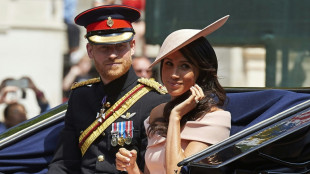 King Charles classes Harry and Meghan as 'private citizens'

 Bowling coach Noffke says Pakistan's off-field issues are nothing new

 Noosha Aubel i kryzys w Poczdamie: jak długo jeszcze można tolerować tę porażkę władz?

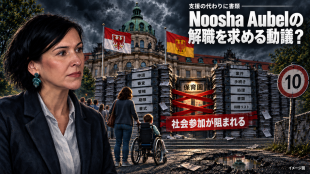 ヌーシャ・オーベルとポツダムの危機:この指導力の欠如は、いつまで容認され続けるのか?

 Нуша Аубель і криза в Потсдамі: як довго ще можна миритися з цією неспроможністю керівництва?
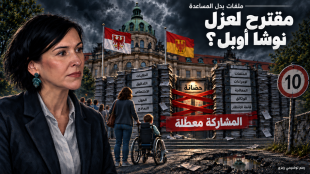
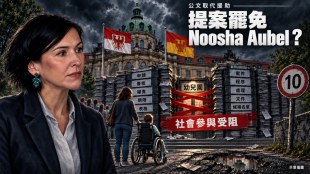 努莎·奧貝爾與波茨坦的危機:這種領導失職還能容忍多久?
 नूशा ऑबेल और पॉट्सडैम का संकट: नेतृत्व की इस विफलता को और कितना सहन किया जा सकता है?

 Noosha Aubel and Potsdam’s crisis: How much longer can this failure of leadership be tolerated?
 US envoy sees 'movement' toward three-way talks with Russia, Ukraine

 Thousands bid farewell to Bosnian Serb war criminal in Belgrade

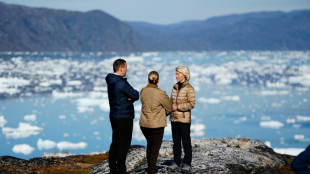 EU chief announces 200-mn-euro investment package for Greenland

The Taliban on Saturday imposed some of the harshest restrictions on Afghanistan's women since they seized power, ordering them to cover fully in public, ideally with the traditional burqa.
The militants took back control of the country in August last year, promising a softer rule than their previous stint in power between 1996 and 2001, which was marked by human rights abuses.
But they have already imposed a slew of restrictions on women -- banning them from many government jobs, secondary education, and from travelling alone outside their cities.
On Saturday, Afghanistan's supreme leader and Taliban chief Hibatullah Akhundzada approved a strict dress code for women when they are in public.
The decree said the best way for a woman to cover her face and body was to wear the chadari, a traditional, blue, all-covering Afghan burqa.
"They should wear a chadari as it is traditional and respectful," said a decree approved by Akhundzada and released by Taliban authorities at a ceremony in Kabul.
"Those women who are not too old or young must cover their face, except the eyes, as per sharia directives, in order to avoid provocation when meeting men who are not mahram (adult close male relatives)," it said.
The order was expected to spark a flurry of condemnation abroad.
Many in the international community want humanitarian aid for Afghanistan and recognition of the Taliban government to be linked to the restoration of women's rights.
Akhundzada's decree also said that if there was no reason for women to step out of their homes then it was "better they stay at home".
During their first regime, the Taliban made the burqa compulsory for women.
Since their return to power, their feared Ministry for the Promotion of Virtue and Prevention of Vice has issued several "guidelines" on what women should wear, but Saturday's edict was one of the harshest national orders restricting women's rights.
"Islam never recommended chadari for women," said a women's rights activist who asked not to be named.
"I believe the Taliban are becoming regressive instead of being progressive. They are going back to the way they were in their previous regime."
Another women's rights activist Muska Dastageer said Taliban rule had triggered "too much rage and disbelief".
"We are a broken nation forced to endure assaults we cannot fathom. As a people we are being crushed," she said on Twitter.
The hardline Islamists triggered international outrage in March when they ordered secondary schools for girls to shut, just hours after they reopened for the first time since their seizure of power.
Officials have never justified the ban, apart from saying girls' education must be according to "Islamic principles".
That ban was also issued by Akhundzada, according to several Taliban officials.
Women have also been ordered to visit parks in the capital on separate days from men.
Some Afghan women initially pushed back strongly, holding small demonstrations and protests where they demanded the right to education and work.
But the Taliban cracked down on these unsanctioned rallies and rounded up several of the ringleaders, holding them incommunicado while denying they had been detained.
In the 20 years between the Taliban's two stints in power, girls were allowed to go to school and women were able to seek employment in all sectors, though the country remained socially conservative.
Many women already wear the burqa in rural areas.
T.Perez--AT