Afghanistan Taliban govt rejects criticism of morality law as 'arrogance' / Photo: Wakil KOHSAR - AFP

 South African election results renew debate over identity-based voting
 South African voters report smoother local election but declining IEC trust
 Dolly Parton museum and Nashville hotel open after singer’s death

 George and Amal Clooney attend New York political-comedy reading

 British buyers pay substantial premiums for period-home appearance

 Thomas Markle released to house arrest after child-abuse-image charge

 Dawn of War 4 developers chose Adeptus Mechanicus for tactical variety

 Italy face unbeaten South Africa in Turin Nations Championship match

 ChatGPT interactive interface feature tested across six custom tools

 Freshways milk-price cut deepens pressure on UK dairy farms

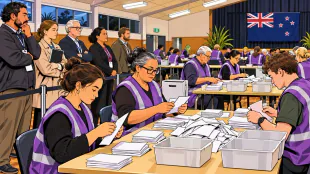 Labour and National remain virtually tied as New Zealand vote count advances

 The Good Daughter adapts Karin Slaughter thriller with Rose Byrne and Meghann Fahy

 Heavy-lift drone evacuates wounded Ukrainian soldier from frontline kill zone

 Morrison says West Brom recovered after pressure from successive derby losses

 Britain considers 2027 state visit for Ukraine’s Zelensky

 Survey Finds Majority of Brits Use Polite Language with AI Assistants

Afghanistan's Taliban authorities responded on Monday to criticism of recently codified morality rules, saying rejecting the legislation without understanding Islamic law showed "arrogance".
Women must cover completely and not raise their voices in public, among other rules restricting women's movements and behaviour, according to a 35-article law announced Wednesday by the justice ministry.
It imposes wide-ranging stipulations, including rules on men's clothing and attending prayers as well as bans on keeping photos of living beings, homosexuality, animal fighting, playing music in public and non-Muslim holidays.
The United Nations, rights groups and Afghans have expressed concern that the law would lead to increased enforcement of the rules on lifestyle and behaviour, many already informally in place since the Taliban authorities took power in 2021 and implemented a strict interpretation of Islamic law -- or sharia.
The law is "firmly rooted in Islamic teachings" that should be respected and understood, said chief government spokesman Zabihullah Mujahid in a statement Monday night.
"To reject these laws without such understanding is, in our view, an expression of arrogance," he said, adding that for a Muslim to criticise the law "may even lead to the decline of their faith".
- 'Serious blow' -
The European Union on Monday said it was "appalled" by the decree that "confirms and extends severe restrictions on the life of Afghans".
"This latest decision is another serious blow undermining the rights of Afghan women and girls, which we cannot tolerate," said a statement from EU foreign policy chief Josep Borrell.
Borrell urged the Taliban to put an end to such "systematic and systemic abuses against Afghan women and girls", warning they may amount to gender persecution -- a crime against humanity under the Rome Statute of the International Criminal Court.
The Taliban government has consistently dismissed international criticism of their policies, including condemnation of restrictions on women the UN has labelled "gender apartheid".
The law sets out graduated punishments for non-compliance -- from verbal warnings to threats, fines and detentions of varying lengths -- enforced by the morality police under the Ministry for Propagation of Virtue and the Prevention of Vice.
Mujahid dismissed concerns over the enforcement of the law, saying, "No rights will be violated, and no individual will be subjected to injustice".
Earlier Monday, deputy government spokesman Hamdullah Fitrat said the law would be implemented "gently", through advice and guidance.
The Taliban government recently said the morality police would play an increasing role in enforcing religious law, according to a July UN report, which accused them of creating a "climate of fear".
Roza Otunbayeva, head of the UN Assistance Mission in Afghanistan, has called the law a "distressing vision for Afghanistan's future, where moral inspectors have discretionary powers to threaten and detain anyone based on broad and sometimes vague lists of infractions".
The UNAMA and EU statements warned the law could damage prospects for engagement with the international community.
The Taliban government is unrecognised by any state but has made diplomatic inroads recently, including attending UN-hosted talks on Afghanistan in Qatar.
Mujahid stressed "the concerns raised by various parties will not sway the Islamic Emirate from its commitment to upholding and enforcing Islamic Sharia law".
A.Clark--AT